Introduction: The Mirage of the Perfect Equity Curve
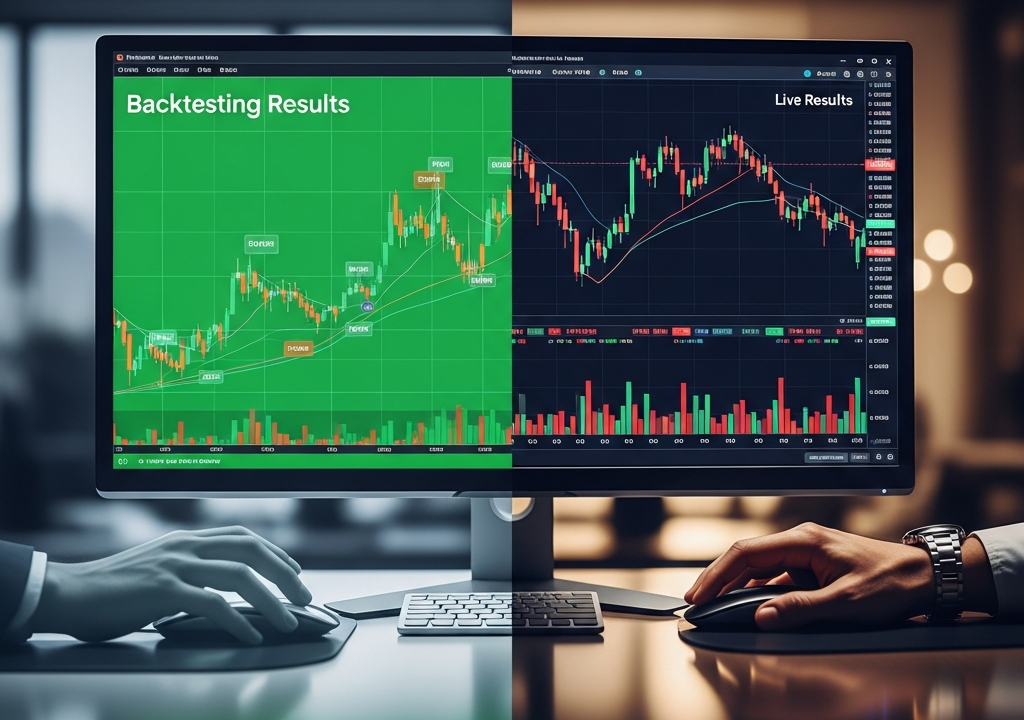
In the high-stakes world of algorithmic trading, every trader seeks the ‘Holy Grail’—that perfect sequence of code that generates consistent profits while they sleep. However, anyone who has spent more than a week in the markets knows the sinking feeling of seeing a beautiful, upward-sloping backtest graph crumble the moment the bot is applied to a live account. The discrepancy between forex robot backtesting vs live results is perhaps the most significant challenge facing retail traders in 2026.
As we navigate an era where artificial intelligence and high-frequency execution are standard, understanding why this gap exists is not just academic; it is vital for capital preservation. Backtesting is a simulation, and like all simulations, it is only as good as the data and assumptions fed into it. This article explores the technical, psychological, and environmental reasons why live markets often humble the most sophisticated Expert Advisors (EAs).
Defining the Terms: Backtesting vs. Live Trading
What is Backtesting?
Backtesting is the process of applying a trading strategy to historical price data to see how it would have performed in the past. In 2026, tools like MetaTrader 5 (MT5) and specialized cloud-based simulators allow traders to crunch years of data in minutes. The goal is to verify the viability of a strategy before risking real money.
What are Live Results?
Live results represent the actual profit and loss (P&L) generated in real-time market conditions. This includes the impact of real-world variables like variable spreads, execution delays (latency), slippage, and broker-side requotes—elements that are often ignored or poorly modeled in basic backtests.
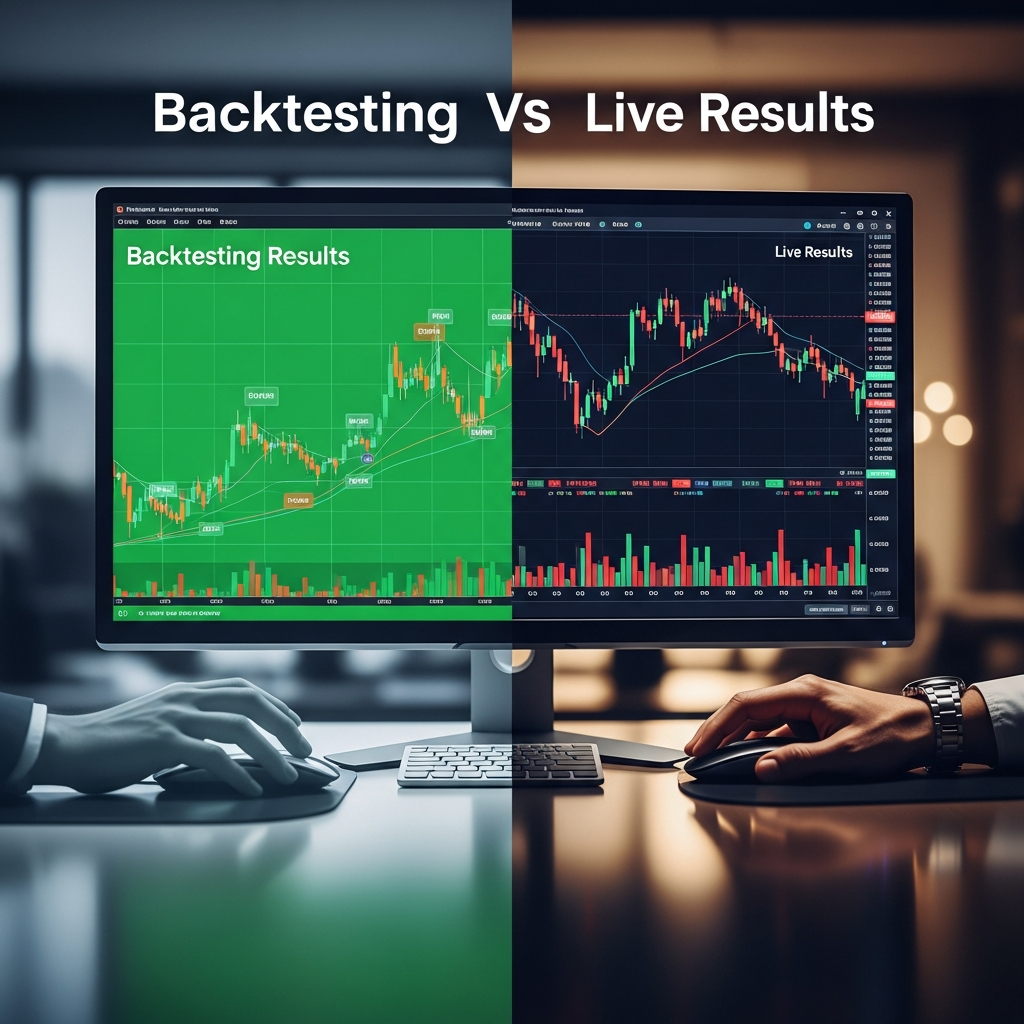
The Primary Culprit: Over-Optimization (Curve Fitting)
The most common reason for the failure of the forex robot backtesting vs live results comparison is ‘curve fitting.’ When a trader optimizes a robot, they are essentially telling the computer to find the exact parameters that would have worked best for a specific window of time.
For example, if the market was trending strongly in 2026, an optimizer might suggest a very wide stop loss and a long take profit. However, if the market moves into a range-bound phase in 2026, that same robot will fail miserably. The robot hasn’t ‘learned’ to trade; it has simply ‘memorized’ the historical data. This leads to a spectacular backtest that has zero predictive power for the future.
The ‘Invisible’ Costs: Slippage and Spread
In a backtest, the environment is often sterile. Most standard strategy testers assume that your order is filled exactly at the price you requested. In the live market, this is rarely the case.
Variable Spreads
During a backtest, many traders use a ‘fixed spread’ (e.g., 2 pips). However, in live trading, spreads fluctuate based on liquidity. During major news events or the ‘rollover’ period (the hour when the New York market closes and the Asian market opens), spreads on pairs like EUR/USD can widen from 0.5 pips to 10 pips or more. If your robot relies on small gains (scalping), these widened spreads will turn a winning backtest into a losing live account.
Slippage
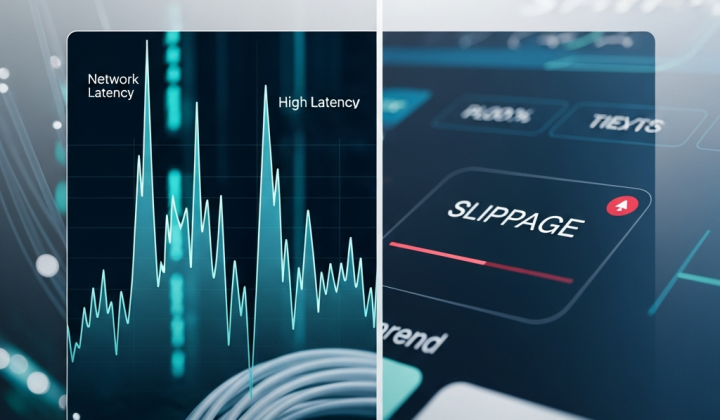
Slippage occurs when your order is filled at a different price than requested. This usually happens during high volatility. In 2026, even with fiber-optic connections to liquidity providers, the ‘last look’ execution model used by many brokers can result in negative slippage. A backtest cannot accurately predict which way the slippage will go, usually defaulting to the ‘perfect’ scenario.
Latency: The Silent Performance Killer
Latency is the time it takes for your trading signal to travel from your computer (or VPS) to the broker’s server and finally to the liquidity provider. In the context of forex robot backtesting vs live results, latency is often the missing variable. A backtest assumes instantaneous execution. In reality, a delay of even 50 milliseconds can result in a different entry price, which, over hundreds of trades, dramatically alters the equity curve.
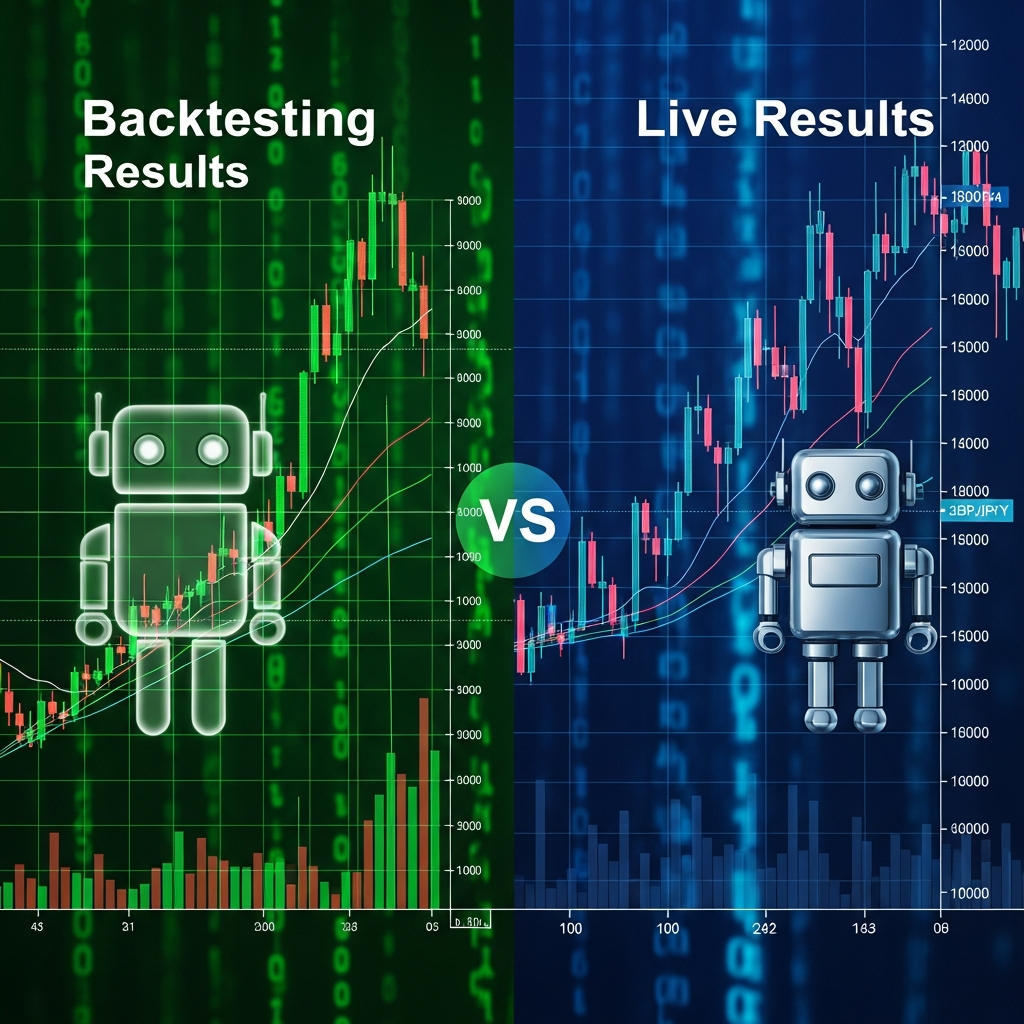
The Quality of Historical Data
Not all data is created equal. Many traders use ‘1-minute’ data to backtest strategies that operate on a 5-minute timeframe. This is a mistake. To get anywhere near realistic results, you must use ‘Tick Data’—the actual individual price fluctuations that occurred. Without 99.9% tick quality data, the backtester ‘interpolates’ (guesses) the price movement within the bars, often missing stop-losses or hitting take-profits that wouldn’t have been touched in real life.
The Broker Factor: Demo vs. Live Servers
Many traders attempt to bridge the gap by ‘forward testing’ on a demo account. While this is better than backtesting alone, it still isn’t ‘live.’ Brokers often host demo accounts on different servers with faster execution and no ‘b-book’ interference. To truly compare forex robot backtesting vs live results, one must use a ‘Cent Account’ or a small live account, where the broker’s real execution bridge is engaged.
Advanced Strategies for 2026: Bridging the Gap
How can a professional trader ensure their backtesting matches reality as closely as possible? The answer lies in advanced validation techniques.
1. Walk-Forward Analysis (WFA)
WFA involves optimizing a robot on a segment of data (the ‘In-Sample’ period) and then testing it on a segment of data the robot has never seen (the ‘Out-of-Sample’ period). If the performance holds up across multiple ‘windows’ of data, the strategy is robust and less likely to be curve-fitted.
2. Monte Carlo Simulations
A Monte Carlo simulation takes your backtest results and introduces random variations. It might shuffle the order of trades or randomly slightly widen the spreads. If the strategy still stays profitable under these ‘stress tests,’ it has a much higher chance of surviving the chaos of the live market.
3. Adding ‘Slippage Padding’
When running a backtest in 2026, professional quants often add a ‘tax’ to every trade. If the spread is 1 pip, they might set the backtest to 2.5 pips. By intentionally making the backtest environment harder than the live environment, they create a ‘margin of safety.’ If the robot is still profitable with inflated costs, it will likely perform well in live conditions.
The Psychological Gap
While this article focuses on technical aspects, we cannot ignore the human element. When a backtest shows a 20% drawdown, the trader clicks ‘OK’ and moves on. When a live account shows a 20% drawdown, the trader often panics, interferes with the robot, or turns it off right before the recovery begins. This discrepancy in human behavior often accounts for ‘bad’ live results even when the robot is performing exactly as it did in the backtest.
The Checklist: Before You Go Live
To ensure your forex robot backtesting vs live results align, follow this checklist:
- Use Tick Data: Ensure you have 99% or 100% tick quality with real variable spreads.
- Include Commissions: Many traders forget that ECN brokers charge a commission per lot. This must be factored into the backtest.
- Test on a VPS: Ensure your live environment has the lowest possible latency to your broker’s server.
- Run a Cent Account: Before committing five or six figures, run the EA on a small real-money account for at least one month.
- Check for ‘Look-Ahead’ Bias: Ensure your code isn’t accidentally using future information (like high/low of the current bar) to make decisions.
Conclusion: Respect the Process
The gap between forex robot backtesting vs live results is not a sign that algorithmic trading is a scam; it is a sign that the market is a complex, living entity. Backtesting provides the map, but the live market is the terrain. In 2026, with the tools at our disposal, we can make that map incredibly accurate, but we must never mistake the simulation for the reality.
By treating backtesting as a tool for elimination rather than a guarantee of profit, you place yourself ahead of 90% of retail traders. Build for robustness, account for the ‘invisible’ costs of trading, and always maintain a healthy skepticism toward a ‘perfect’ backtest. Success in the forex market belongs to those who prepare for the worst while coding for the best.