The Evolution of the Trading Stack: Why Python is Now Essential for MT5
For decades, MetaQuotes Language 5 (MQL5) was the undisputed king of the MetaTrader ecosystem. It was fast, integrated, and purpose-built for the platform. However, as we move through 2026, the retail and institutional trading landscapes have merged in ways few predicted. The primary catalyst for this shift is the Python integration for MetaTrader 5 (MT5). While MQL5 remains excellent for low-latency execution and internal indicator development, Python has become the bridge to the world’s most advanced financial engineering tools.
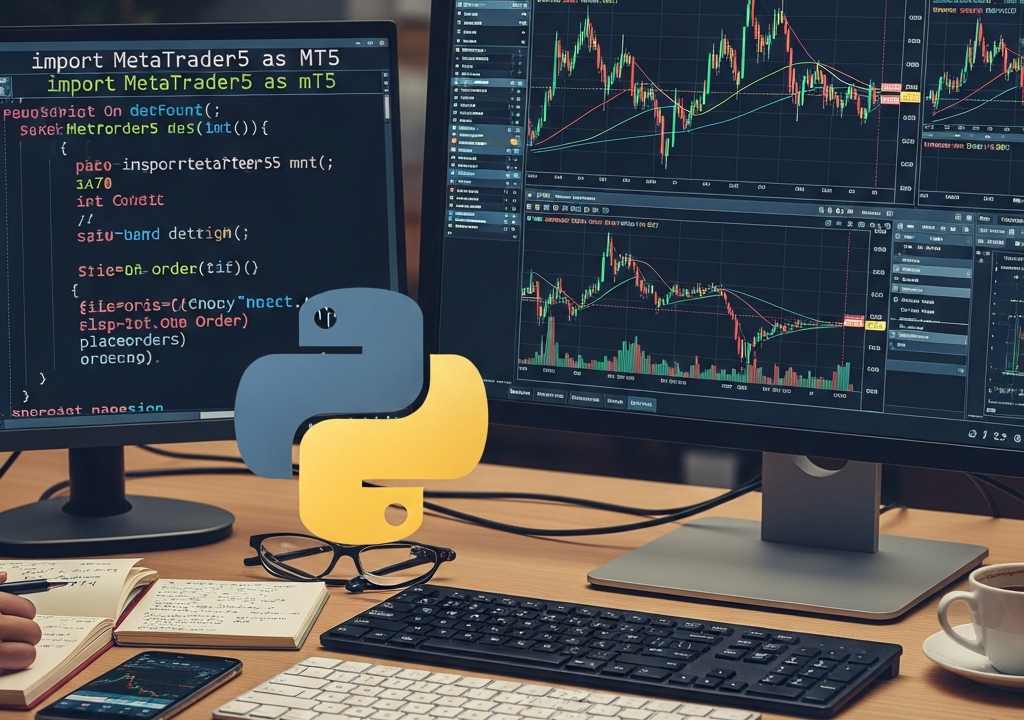
Today, a modern Expert Advisor (EA) is rarely just a collection of moving averages. It is an ensemble of machine learning models, sentiment analysis scripts, and complex risk management layers that require the extensive library ecosystem Python offers. By integrating Python with MT5, traders can leverage Scikit-Learn, TensorFlow, PyTorch, and Pandas directly alongside their broker’s execution engine. This guide explores how to build this integration effectively, moving beyond simple scripts into production-grade automated trading systems.
Setting Up Your Professional Environment
Before writing a single line of code, you must ensure your environment is optimized for stability. Unlike standard data science projects, a Python-based EA must handle real-time data streams and socket connections without dropping frames. In 2026, the standard practice involves using a virtual environment to manage dependencies, preventing version conflicts that could crash a live trading bot.
Prerequisites
- MetaTrader 5 Terminal: Ensure you are running the latest build, as MetaQuotes frequently updates the terminal-to-Python bridge.
- Python 3.10+: While older versions work, modern async features in newer Python versions are vital for handling multiple currency pairs.
- The MetaTrader5 Library: This is the official package provided by MetaQuotes that allows Python to communicate with the terminal’s internal API.
Installation is straightforward via pip:
pip install MetaTrader5 pandas numpy
Establishing a Robust Connection
The foundation of any Python EA is the connection bridge. In a professional setup, you don’t just ‘connect’—you implement a handshake protocol that verifies the state of the account, the terminal, and the network connectivity.
The mt5.initialize() function is your gateway. However, a common mistake is failing to handle the teardown process. If your script crashes without calling mt5.shutdown(), you risk leaving phantom processes that can lock your terminal or interfere with subsequent execution. A robust initialization block should check if the terminal is actually open and if the ‘Algo Trading’ button is toggled on, which remains a security requirement even when using the Python API.
Data Acquisition: Beyond the CSV
One of the strongest arguments for using Python with MT5 is the ease of data manipulation. In MQL5, building a multi-timeframe dataframe is a chore. In Python, it’s a few lines of code. Using mt5.copy_rates_from_pos or mt5.copy_ticks_from, you can pull massive amounts of historical and real-time data directly into a Pandas DataFrame.
By 2026, the focus has shifted toward ‘Feature Engineering’ within the EA. Instead of simple price action, traders are using Python to calculate fractal dimensions, Hurst exponents, and volatility clusters on the fly. This data is then fed into the model to determine the ‘regime’ of the market—ranging from trending to mean-reverting—before any trade logic is even considered.
Example: Pulling Real-Time Data
To create a truly responsive EA, your data pipeline must be efficient. Rather than polling for new data every second, successful quants utilize time-delta checks to ensure they are only processing new candle closes or significant tick changes. This reduces CPU overhead and allows the Python script to run more smoothly alongside the MT5 terminal.
Building the Logic: Integrating Machine Learning
The true power of Python MT5 integration lies in the ‘Brain’ of the EA. While MQL5 is limited to its own math libraries, Python allows you to import a pre-trained XGBoost model or a Recurrent Neural Network (RNN) that has been trained on years of tick data. The workflow typically looks like this:
- Offline Training: Train your model using historical data exported from MT5.
- Model Serialization: Save your model using
jobliborpickle. - Live Inference: Your Python EA loads the model at startup, feeds it real-time data from the
mt5library, and receives a prediction (Buy, Sell, or Hold).
This approach separates the ‘strategy’ from the ‘execution,’ a hallmark of institutional-grade systems. It allows you to update your model without changing your execution code, facilitating a continuous integration and deployment (CI/CD) pipeline for your trading bot.

Order Execution and Management
Sending a trade via Python requires a specific dictionary structure that the MT5 terminal can interpret. The mt5.order_send() function is the primary tool here. However, 2026’s volatility requires more than just a ‘Market Order.’ Your execution logic must include:
- Slippage Control: Defining the maximum deviation you are willing to accept.
- Magic Numbers: Essential for tracking trades if you are running multiple Python EAs on a single account.
- Position Tracking: Using
mt5.positions_get()to monitor open trades, implement trailing stops, or manage partial closes.
A critical aspect often overlooked is the ‘Asynchronous Execution.’ In a fast-moving market, you don’t want your script to hang while waiting for the broker to confirm an order. Implementing your execution logic using Python’s asyncio library ensures that the bot can continue monitoring other pairs while waiting for a server response.
Risk Management: The Quantitative Approach
Advanced Python EAs don’t just use fixed lot sizes. They use libraries like PyPortfolioOpt to calculate the Kelly Criterion or Conditional Value at Risk (CVaR). By 2026, many retail traders have adopted ‘Dynamic Position Sizing,’ where the size of the trade is inversely proportional to the current market volatility (ATR-based sizing) or the model’s confidence score.
Your Python script can calculate these complex metrics in milliseconds, updating the lot size for the order_send request dynamically. This level of mathematical precision is what separates high-performing bots from those that eventually blow up due to poor capital allocation.
The Challenges of Python-MT5 Integration
While powerful, this setup is not without its pitfalls. Understanding these challenges is key to maintaining a 99.9% uptime for your EA.
1. Latency
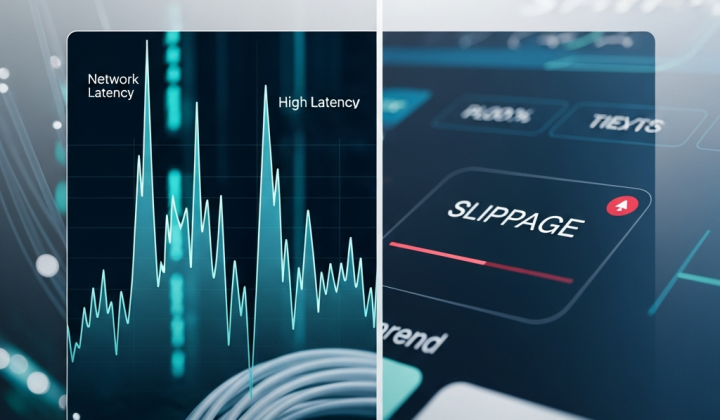
Python is an interpreted language, which means it is inherently slower than C++ or MQL5. While the difference is negligible for swing or day trading (milliseconds), it is significant for High-Frequency Trading (HFT). If your strategy relies on microsecond advantages, Python might not be the right tool for execution, though it remains superior for signal generation.
2. Stability and Memory Leaks
Running a Python script 24/5 requires careful memory management. Pandas dataframes can quickly grow in size if not cleared periodically. Ensure your EA has a ‘garbage collection’ routine and that you are logging all errors to an external file for weekend review.
3. Connectivity Gaps
Internet flickers or broker server resets can desync your Python script from the MT5 terminal. Implement a heartbeat check that attempts to re-initialize the connection if it detects the terminal has gone offline.
The Future in 2026: Local LLMs and Sentiment Analysis
We are currently seeing a surge in EAs that integrate local Large Language Models (LLMs) to process news feeds in real-time. By using the Python MT5 integration, a bot can scrape headlines from economic calendars or financial news sites, use an LLM to determine the sentiment (Hawkish vs. Dovish), and adjust its trading bias before the market even reacts. This ‘multimodal’ trading approach—combining price data with textual sentiment—is the current frontier of algorithmic trading.
Conclusion: Bridging the Gap
The integration of Python with MetaTrader 5 represents more than just a technical update; it represents the democratization of sophisticated financial modeling. No longer restricted by the limitations of a platform-specific language, traders can now bring the full power of the Python ecosystem to the global markets.
Building a successful Python EA requires a blend of software engineering, data science, and traditional market knowledge. By focusing on robust connection handling, sophisticated feature engineering, and disciplined risk management, you can create a system that is not only automated but truly intelligent. As we move further into 2026, the traders who succeed will be those who view their trading bots not as ‘set and forget’ scripts, but as evolving software products that leverage the best tools available in both the MT5 and Python worlds.