The New Landscape of Funded Trading in 2026
Prop firm trading has undergone a massive transformation over the last few years. As we move through 2026, the industry has matured, shifting away from the ‘get rich quick’ marketing of the early 2020s toward a more professional, institutionalized model. For traders aiming to secure and maintain six-figure funded accounts, the margin for error has never been thinner. This is where Expert Advisors (EAs) have become the primary tool for those who understand that human emotion is often the biggest obstacle to hitting a payout.
Passing a challenge is one thing; keeping the account is another. In 2026, prop firms have become incredibly sophisticated at identifying ‘toxic flow’ and high-risk gambling behaviors. To succeed today, your EA needs to do more than just generate pips—it needs to manage risk with surgical precision, respect strict drawdown limits, and adapt to the increasingly volatile macro-economic shifts we are seeing in the global markets.

Why Manual Trading is Losing Ground in the Prop Space
The core difficulty of a funded account isn’t the profit target; it’s the drawdown constraints. Most firms impose a 5% daily loss limit and a 10% maximum total loss limit. For a human trader, watching an equity curve dip toward that 4% mark triggers a physiological ‘fight or flight’ response. This leads to revenge trading, over-leveraging, and the eventual loss of the account.
EAs eliminate this biological failure point. A well-coded bot doesn’t feel the sting of a losing streak. It doesn’t try to ‘win back’ money in the London session after a bad New York open. In 2026, the best EAs for funded accounts are built with ‘hard stops’ that are hard-coded into the logic, ensuring that even if the market gaps, the risk is mitigated before the prop firm’s automated liquidation system kicks in.
The Evolution of EA Logic: Beyond Simple Indicators
Gone are the days when a simple RSI crossover bot could pass a Topstep or FTMO challenge. Today’s high-performing EAs utilize machine learning layers to filter out low-probability environments. They look at multi-timeframe correlation, liquidity zones, and even sentiment analysis before placing a trade. When searching for the best EAs for funded accounts this year, we are looking for ‘smart’ execution that prioritizes capital preservation over raw percentage gains.
Top Categories of EAs for Prop Firms
1. The Low-Drawdown Scalper
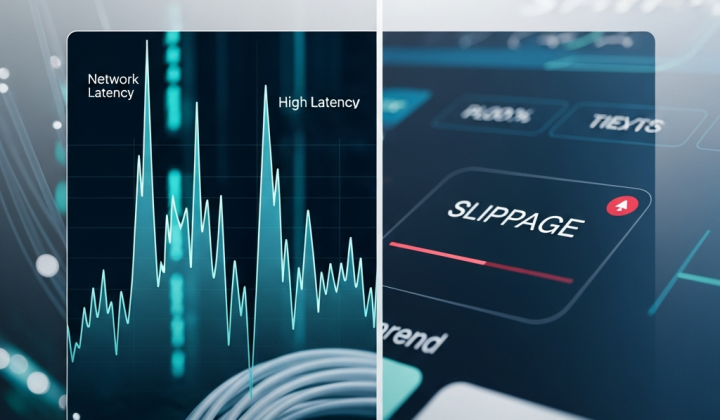
Scalping remains the most popular strategy for funded accounts because it minimizes ‘time at risk.’ These EAs look for small price inefficiencies, often during the crossover between the New York and Tokyo sessions. In 2026, the best scalpers use sophisticated slippage protection, which is vital because many prop firms now use B-book execution models that can widen spreads during high volatility.
2. Adaptive Grid Systems (With a Safety First Approach)
Grid EAs used to be the ‘black sheep’ of the trading world due to their association with Martingale blowouts. However, the 2026 generation of adaptive grids is different. These systems use dynamic positioning based on ATR (Average True Range). If the market moves against the position, the EA doesn’t blindly double down; it calculates the optimal exit point to break even or take a small loss, ensuring that the 5% daily drawdown limit is never breached.
3. The Institutional Trend Follower
For traders with 2-step evaluations that allow for longer holding times, trend-following EAs are the gold standard. These bots identify ‘smart money’ moves and ride the momentum. The key advantage here is the high Reward-to-Risk ratio. While a scalper might have a 70% win rate with a 1:1 R/R, a trend follower might only win 40% of the time but hits 1:5 or 1:10 trades, which makes the ‘Consistency Rule’ many firms now enforce much easier to satisfy.
Key Features to Look for in a 2026 Funded EA
When you are vetting a bot for a $200,000 or $500,000 account, you cannot afford to guess. Here are the non-negotiables for the current trading year:
- News Filtering: Many prop firms now ban trading 2 minutes before and after high-impact news (like CPI or NFP). Your EA must have a built-in news filter that automatically pauses trading based on an economic calendar.
- Hard Equity Protection: The EA should have an independent ‘Emergency Stop’ setting. If your total account equity hits a specific dollar amount, the EA must close all positions and disable itself for the day.
- Low Latency Requirements: With the rise of HFT (High-Frequency Trading) in the retail space, your EA needs to be hosted on a low-latency VPS (Virtual Private Server) and be optimized for fast execution to avoid the ‘hidden’ loss of slippage.
- No Grid/Martingale without Logic: If an EA simply doubles the lot size every time it loses, it will eventually fail a prop challenge. Ensure the EA uses a ‘weighted’ or ‘hedged’ approach if it uses any recovery logic.
The Top Performers: Our Picks for the Best EAs
The ‘Sentinel’ Scalper (Best for MT5)
The Sentinel has become a favorite in the 2026 prop community due to its focus on the EUR/USD and GBP/USD pairs. It utilizes a mean-reversion strategy that only triggers when price deviates significantly from the 20-period VWAP. What makes it perfect for funded accounts is its ‘Prop Mode,’ which automatically adjusts lot sizes based on the remaining daily drawdown allowance. If you are 3% down for the day, the EA automatically cuts its risk by half.
The ‘Apex Trend’ Bot (Best for Gold/XAUUSD)
Gold remains the most traded instrument in the prop firm world due to its volatility. The Apex Trend bot is designed specifically for the XAUUSD pair. It avoids the ‘noise’ of the mid-day chop and focuses on the high-volume volatility of the New York open. It uses a trailing stop-loss that locks in profits quickly, which is essential for passing the Phase 1 profit targets without risking a major reversal.
The ‘Quant-Flow’ Multi-Asset EA
For those who prefer a diversified approach, Quant-Flow trades a basket of 28 currency pairs plus major indices. By spreading the risk across multiple uncorrelated assets, the equity curve remains much smoother. This is the ‘slow and steady’ approach. It might take longer to pass a challenge, but the likelihood of hitting a catastrophic drawdown is significantly lower.
Setting Up Your EA for Success
Buying the best EA is only 50% of the battle. The remaining 50% is the infrastructure and the ‘set and forget’ mentality. Many traders fail because they interfere with the bot during a losing streak. In 2026, the ‘managed’ approach is the way to go.
1. Use a Dedicated VPS
You cannot run a professional EA on a home laptop. A power outage or a 2-second internet lag can be the difference between a successful trade and a violated account. Use a London or New York-based VPS with sub-1ms latency to the broker’s server.
2. Backtesting vs. Forward Testing
Backtesting in 2026 requires ‘Real Tick’ data with variable spreads. Most EAs look great in a backtest with fixed spreads, but they fail in the real market. Always run your EA on a demo account for at least two weeks to see how it handles the specific spread and execution speed of your chosen prop firm.
3. Understanding ‘Relative’ Drawdown
Many firms in 2026 have moved toward ‘relative’ or ‘trailing’ drawdown. This means the drawdown limit follows your highest reached balance. If your EA doesn’t account for this, you could technically be in profit and still lose your account. Ensure your EA’s risk management settings are configured to ‘Account Balance’ rather than ‘Initial Deposit’ if your firm uses trailing drawdown.
The Risks of Using EAs on Funded Accounts
While EAs provide a massive advantage, they are not a ‘magic button.’ You must be aware of ‘Prop Firm IP Tracking.’ Some firms have terms of service that prohibit multiple users from using the exact same EA with the exact same settings, as they want to avoid ‘Copy Trading’ risks. To circumvent this, the best EAs allow for ‘parameter randomization’—slight tweaks to entry and exit offsets that make your trading footprint unique while maintaining the core strategy’s integrity.
Additionally, beware of ‘Black Box’ EAs sold on social media. If a seller refuses to show a verified MyFxBook link or live tracking from a funded account, walk away. In 2026, transparency is the only currency that matters in the dev community.
Conclusion: The Path to Consistent Payouts
Success in the funded account space in 2026 is about longevity. The best EAs for funded accounts are those that prioritize the protection of the capital over the speed of the profit. By choosing a system with hard-coded drawdown protections, news filters, and adaptive risk logic, you position yourself in the top 1% of traders who actually see a monthly payout.
Remember, the goal of a prop firm isn’t just to find someone who can trade; it’s to find someone who can manage risk like a professional. Using a high-quality EA is the most efficient way to demonstrate that discipline. Whether you choose a high-frequency scalper or a slow-moving trend follower, ensure your infrastructure is solid, your risk is capped, and your expectations are realistic. The era of the automated funded trader is here, and those who adapt to the 2026 standards are the ones who will thrive.