Passing and Scaling: The Definitive Guide to Prop Firm Expert Advisors in 2026
The landscape of proprietary trading has undergone a massive transformation over the last few years. As we move through 2026, the ‘wild west’ era of prop firms has been replaced by a more regulated, sophisticated environment. Traders are no longer just looking for a quick way to pass a challenge; they are seeking sustainable, long-term partnerships with firms that provide deep liquidity and fair execution. At the heart of this evolution is the use of Expert Advisors (EAs).
Finding the best prop firm expert advisors today requires a shift in perspective. The strategies that worked in 2026—often reliant on high-risk martingale or simple grid systems—are frequently flagged by modern risk management software used by top-tier firms. Today, success is defined by low-correlation portfolios, equity-based risk management, and algorithmic precision.
The New Landscape of Funded Trading in 2026
In 2026, prop firms have transitioned from being ‘challenge providers’ to becoming true talent incubators. This shift means their rules have become more nuanced. Most reputable firms now permit EAs, but with significant caveats regarding ‘copy trading’ and ‘identical strategies.’ If ten thousand traders are all using the exact same ‘off-the-shelf’ EA with the same magic numbers, firms will likely flag those accounts for lack of originality, citing risk concentration.
Modern expert advisors must therefore be customizable. The best bots in the current market are not just ‘set and forget’ tools but rather frameworks that allow traders to implement unique risk parameters, time filters, and asset preferences. This ensures that your footprint on the firm’s servers remains distinct from the crowd.
Why Most EAs Fail the Prop Firm Test
Statistically, over 90% of traders fail their prop challenges, and the failure rate for those using unoptimized EAs is even higher. The reasons usually boil down to three main factors: drawdown management, news volatility, and latency.
The Drawdown Dilemma
Prop firms typically impose a daily drawdown limit (often 3-5%) and a total drawdown limit (8-12%). Most EAs are designed for retail accounts where a 20% or 30% drawdown might be acceptable in pursuit of high returns. In the prop world, hitting a 5% intraday dip means immediate disqualification. The best prop firm EAs in 2026 prioritize Equity Protection over raw profit. They include ‘Hard Stop’ features that close all positions if a certain percentage of equity is lost within a 24-hour window, regardless of what the strategy dictates.
News Events and Slippage
In 2026, high-impact news events carry more weight than ever. Central bank digital currency (CBDC) announcements and AI-driven economic shifts can cause massive slippage. An EA that does not have a built-in news filter—a mechanism that pauses trading before and after major releases—is essentially a ticking time bomb for a funded account. Professional-grade EAs now use real-time API feeds to stay synchronized with the economic calendar.
Top-Rated Expert Advisors Categories for 2026
When selecting an EA, it is helpful to categorize them by their underlying logic. Not all bots are created equal, and some are better suited for the ‘Challenge Phase’ while others are designed for ‘Funded Performance.’
1. The Adaptive Trend-Follower
Trend-following algorithms remain the gold standard for long-term funded trading. In 2026, these EAs have evolved to use multi-timeframe analysis to ensure they aren’t entering at the tail end of a move. They typically utilize trailing stops to lock in profits, which is a favorite among prop firms because it demonstrates a professional approach to trade management. Look for EAs that avoid ‘averaging down’ and instead focus on ‘pyramiding’ into winning positions.
2. Smart Mean Reversion Systems
The markets spend a majority of their time in consolidation. Mean reversion EAs capitalize on this by identifying overextended price points and betting on a return to the average. However, the ‘smart’ version of these bots in 2026 includes volatility filters (like ATR-based boundaries). They won’t attempt to fade a move during a high-momentum breakout, protecting the account from the ‘runaway trend’ that destroys standard oscillators.
3. Statistical Arbitrage and Correlation Bots
More advanced traders are turning to statistical arbitrage. These EAs trade the relationship between two correlated assets (like Gold vs. Silver or EURUSD vs. GBPUSD). When the correlation diverges beyond a certain threshold, the EA takes a hedge position. These are highly favored by prop firms because the market-neutral nature of the strategy results in a very smooth equity curve, which is exactly what firms want to see from their funded partners.

Essential Features for a 2026 Prop Firm EA
Before purchasing or deploying an EA, ensure it checks the following technical boxes. In the current trading environment, these are non-negotiable:
- Dynamic Lot Sizing: The EA should calculate position size based on a percentage of current equity, not a fixed lot size. This ensures that as your account grows, your risk remains proportional.
- Hidden Stop Losses: Some EAs keep stops ‘mental’ or ‘virtual’ to prevent stop-hunting by low-tier brokers, but for prop firms, you want ‘hard’ stops sent to the server to ensure compliance with risk rules.
- Trailing Drawdown Awareness: Many firms use a trailing drawdown (where the limit moves up with your profit). A top-tier EA should have a setting to track this ‘high-water mark’ and adjust its aggression accordingly.
- IP Diversification/Unique Magic Numbers: The ability to easily change the internal identifiers of trades to avoid being flagged as part of a ‘copy-trading’ ring.
The Technical Setup: VPS and Latency Optimization
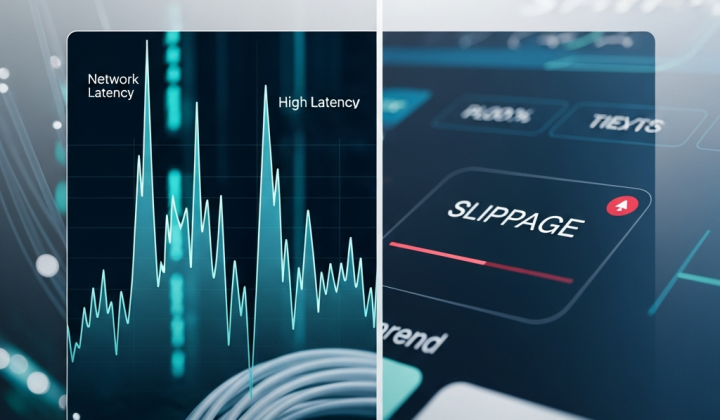
Even the best EA will fail if it is running on a laggy home computer. In 2026, the distance between your trading server and the prop firm’s broker server (often located in London, New York, or Tokyo) is measured in milliseconds. High latency leads to slippage, and in the world of prop trading, a 1-pip slip can be the difference between staying within your drawdown limit and losing the account.
Professional traders use dedicated Virtual Private Servers (VPS). The best practice is to select a VPS provider that offers ‘cross-connects’ to the specific broker the prop firm uses. In 2026, many EAs come pre-optimized for specific VPS environments, allowing for execution speeds of under 5ms.
Managing the ‘Human Element’
One of the biggest mistakes traders make is thinking that an EA removes all human responsibility. In reality, you are the ‘Portfolio Manager.’ You must decide when to turn the EA off. If the market is experiencing ‘Black Swan’ volatility—such as unexpected geopolitical shifts or liquidity crises—the smartest move is often to disable the EA and wait for the dust to settle.
The most successful funded traders in 2026 follow a hybrid approach. They let the EA handle the execution and the math, but they maintain oversight of the fundamental environment. They treat the EA as an employee, not a replacement for their own market intuition.
The Ethics and Legality of EA Usage in Prop Firms
As we navigate 2026, transparency is key. Most prop firms now require you to disclose if you are using an EA. Attempting to hide algorithmic usage often leads to payout denials. The firms that have survived the recent regulatory shifts are those that value transparency. They aren’t against bots; they are against unmanaged risk.
Furthermore, many firms now offer ‘Algorithmic-Friendly’ accounts that have slightly higher fee structures but provide better execution environments for high-frequency strategies. Choosing the right account type is just as important as choosing the right bot.
Backtesting vs. Forward Testing in 2026
A common pitfall is ‘curve fitting’—optimizing an EA so perfectly for past data that it fails the moment it hits live markets. In 2026, we use Monte Carlo simulations and Walk-Forward Analysis.
A Monte Carlo simulation runs your strategy through thousands of randomized variations of the past data to see the probability of hitting a drawdown limit. If the simulation shows a 10% chance of hitting a 5% drawdown, it is too risky for a prop challenge. The best EAs today come with these simulation tools built-in or provide detailed reports on these metrics.
Conclusion: The Path to Sustainable Funding
Success with a prop firm expert advisor in 2026 isn’t about finding a ‘magic’ algorithm that turns $10,000 into $1,000,000 overnight. It is about finding a robust, disciplined system that respects the strict risk boundaries set by the industry.
To succeed, you must focus on EAs that prioritize capital preservation over aggressive gains. Look for developers who offer regular updates, have transparent track records (verified by third-party sites like Myfxbook or FXBlue), and provide the tools necessary to customize the strategy to your specific firm’s rules. By combining high-quality algorithmic execution with professional risk management and state-of-the-art infrastructure, you can turn prop firm trading from a gamble into a scalable, professional career.
As the market continues to evolve, the traders who adapt, diversify their algorithmic approaches, and treat their funded accounts with the respect they deserve will be the ones who remain profitable well beyond 2026.