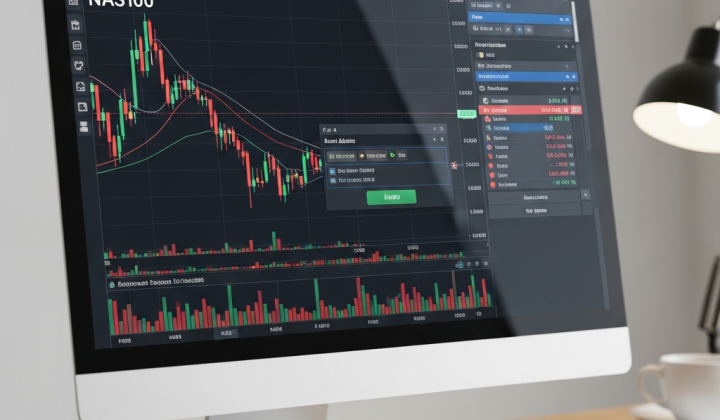

The Psychological Barrier to Consistent Profits
In the trading landscape of 2026, the gap between retail hobbyists and institutional-grade retail traders has never been wider. The primary differentiator isn’t a ‘secret’ entry signal or a proprietary indicator; it is the mechanized application of risk management. While MetaTrader 5 (MT5) offers a robust environment for execution, its native interface still requires manual calculations that lead to human error, hesitation, and emotional interference.
This is where a risk management expert advisor (EA) for MT5 becomes an essential component of the modern trading desk. It transforms the chaotic process of sizing trades into a cold, calculated mathematical operation. If you have ever oversized a trade during a period of ‘revenge trading’ or failed to set a stop loss because you were ‘sure’ the market would turn, you have experienced the exact problems these tools were built to solve.
The Evolution of Risk Management in 2026
Trading in 2026 involves navigating markets that move with unprecedented speed, driven by high-frequency algorithms and global sentiment shifts. Relying on manual position sizing—using a calculator on your phone or a spreadsheet—is no longer viable. A dedicated risk management EA acts as a ‘co-pilot,’ ensuring that no trade ever exceeds your predetermined threshold of pain.

Professional risk management has moved beyond simply placing a stop loss. It now encompasses dynamic equity protection, correlation monitoring, and spread-aware execution. For the disciplined trader, these EAs provide the infrastructure necessary to treat trading as a business rather than a gamble.
Why MT5 is the Preferred Architecture
While MT4 remains in legacy use, MT5 has firmly established itself as the superior engine for complex risk management. Its multi-threaded execution capabilities allow an EA to calculate risks across multiple currency pairs, indices, and commodities simultaneously without lagging. Furthermore, the object-oriented nature of MQL5 allows for more sophisticated user interfaces (GUIs), enabling traders to adjust their risk parameters directly on the chart with drag-and-drop simplicity.
Core Features of a High-End MT5 Risk Management EA
When selecting or developing a risk manager, several non-negotiable features define a professional-grade tool. These go far beyond the ‘one-click trade’ buttons found in the default terminal.
1. Dynamic Position Sizing
The hallmark of a great risk management EA is its ability to calculate lot sizes based on a percentage of your account balance or equity. For example, if you risk 1% per trade, the EA automatically adjusts the lot size based on the distance between your entry price and your stop loss. This ensures that whether your stop loss is 10 pips or 100 pips, your monetary risk remains identical.
2. Global Drawdown Protection
Individual trade stops are important, but account-level stops are vital. Modern EAs allow you to set a ‘Daily Max Loss.’ If your total account equity drops by a certain percentage in a single day, the EA can close all open positions and disable further trading for 24 hours. This feature alone is the ultimate cure for the ’tilt’ that often leads to account blown in a single afternoon.
3. Hidden (Stealth) Stop Losses
In the high-liquidity environment of 2026, stop-hunting is a frequent concern. Some advanced risk management EAs allow for ‘hidden’ stops. The stop loss is not sent to the broker’s server; instead, it is stored locally within the EA’s logic. Once the price hits the threshold, the EA executes a market order to close the position. This prevents your levels from being visible in the market’s depth of book.
4. Automated Breakeven and Partial Profits
Managing a winning trade is often harder than managing a losing one. A risk management EA can be programmed to automatically move your stop loss to the entry price (breakeven) once the trade reaches a 1:1 risk-to-reward ratio. It can also manage ‘partial closes,’ securing 50% of the profit at a certain level while letting the rest run with a trailing stop.

The Math of Ruin: Why Automation is Mandatory
To understand the necessity of a risk management EA, one must look at the ‘Math of Ruin.’ A 10% loss requires an 11.1% gain to recover. A 50% loss requires a 100% gain just to get back to zero. Human traders are biologically wired to hold onto losers in the hope of a reversal—a psychological trait known as loss aversion.
An MT5 risk manager removes the ‘hope’ factor. By the time you click the ‘Buy’ or ‘Sell’ button, the exit strategy is already locked in. In 2026, the most successful retail traders are those who spend their mental energy on market analysis, leaving the arithmetic of capital preservation to their software.
The Role of Spread and Slippage Monitoring
Many traders ignore the ‘hidden’ costs of trading. A sophisticated EA will monitor the spread in real-time. If the spread on a pair like EUR/USD spikes during a news event, the EA can prevent you from entering a trade where the cost of entry would negate the potential profit. This ‘spread filter’ is a silent saver of capital over hundreds of trades.
Implementing the EA into Your Workflow
Transitioning to an automated risk workflow requires a shift in mindset. Instead of thinking in ‘pips’ or ‘lots,’ you begin to think in ‘R’—the units of risk.
Setting Your Parameters
Before launching the EA, you must define your risk profile. A common institutional setup in 2026 involves:
- Risk per Trade: 0.5% to 1.5%
- Max Daily Drawdown: 3% to 5%
- Max Open Trades: 3 (to limit correlation risk)
- Trailing Stop Method: Based on ATR (Average True Range) to account for volatility
Once these parameters are saved into the EA’s inputs, your manual task is simply to identify the setup and the stop loss location. The EA handles the rest, calculating the exact volume to ensure you stay within your limits.
Common Pitfalls of Risk Management Tools
While a risk management expert advisor for MT5 is a powerful ally, it is not a ‘set and forget’ solution. Traders must be aware of certain technical realities:
- VPS Requirements: To ensure features like trailing stops or hidden orders function 24/7, running your MT5 terminal on a Virtual Private Server (VPS) is highly recommended. If your local computer loses internet, the EA cannot execute its logic.
- Order Execution Speed: Ensure the EA is optimized for MQL5. Poorly coded EAs can introduce latency, causing slippage on your entries.
- Over-Reliance: An EA manages risk, but it does not fix a bad strategy. If your strategy has a negative expectancy, the EA will only help you lose money more slowly and ‘correctly.’
The Future of Risk Control: AI and Volatility
As we move through 2026, we are seeing the integration of machine learning into risk EAs. The next generation of tools doesn’t just use fixed percentages; they analyze current market volatility. If the market is in a high-volatility regime, the EA might automatically suggest a lower risk percentage per trade to account for the increased ‘noise’ and potential for slippage. This adaptive risk management is the new frontier for MT5 users.
Conclusion: Professionalism Through Automation
The journey from a struggling trader to a consistently profitable one is rarely marked by the discovery of a new indicator. Instead, it is marked by the moment the trader stops gambling and starts managing. A risk management expert advisor for MT5 is the bridge across that gap.
By automating the most stressful parts of the trading process—lot calculation, stop placement, and drawdown control—you free your mind to focus on what actually matters: reading the market and executing your edge. In the competitive environment of 2026, capital preservation is the only way to stay in the game long enough to win. Protect your equity with the same precision that the institutions do, and the profits will inevitably follow.