The Evolution of Algorithmic Trading in 2026
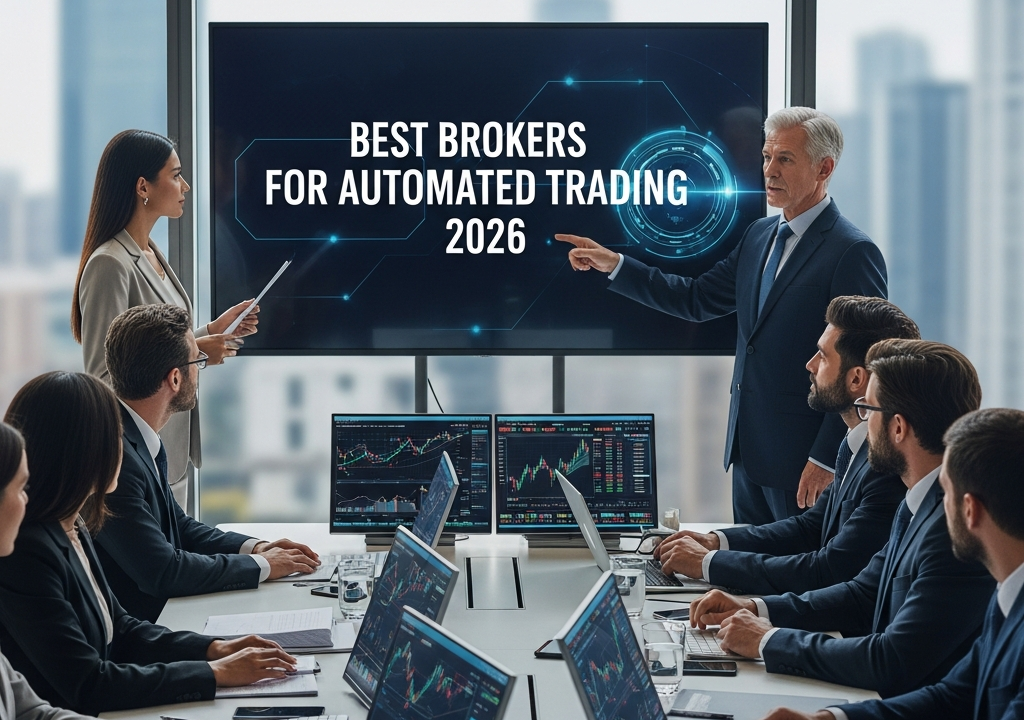
As we navigate through 2026, the landscape of retail and institutional finance has undergone a profound transformation. The rise of sophisticated Artificial Intelligence (AI) and Large Language Models (LLMs) has democratized algorithmic trading, making it no longer the exclusive domain of quant hedge funds. Today, retail traders are deploying complex Python-based bots, execution algorithms, and machine learning models with the same ease that one might have placed a manual trade a decade ago.
Finding the best brokers for automated trading 2026 requires a shift in perspective. It is no longer just about low spreads; it is about API stability, server proximity (low latency), VPS integration, and the ability to handle high-frequency data streams without bottlenecking. In this comprehensive guide, we analyze the top-tier brokers that have adapted to this high-tech era, providing the infrastructure necessary for modern automated strategies.
Why Automated Trading is Dominating 2026
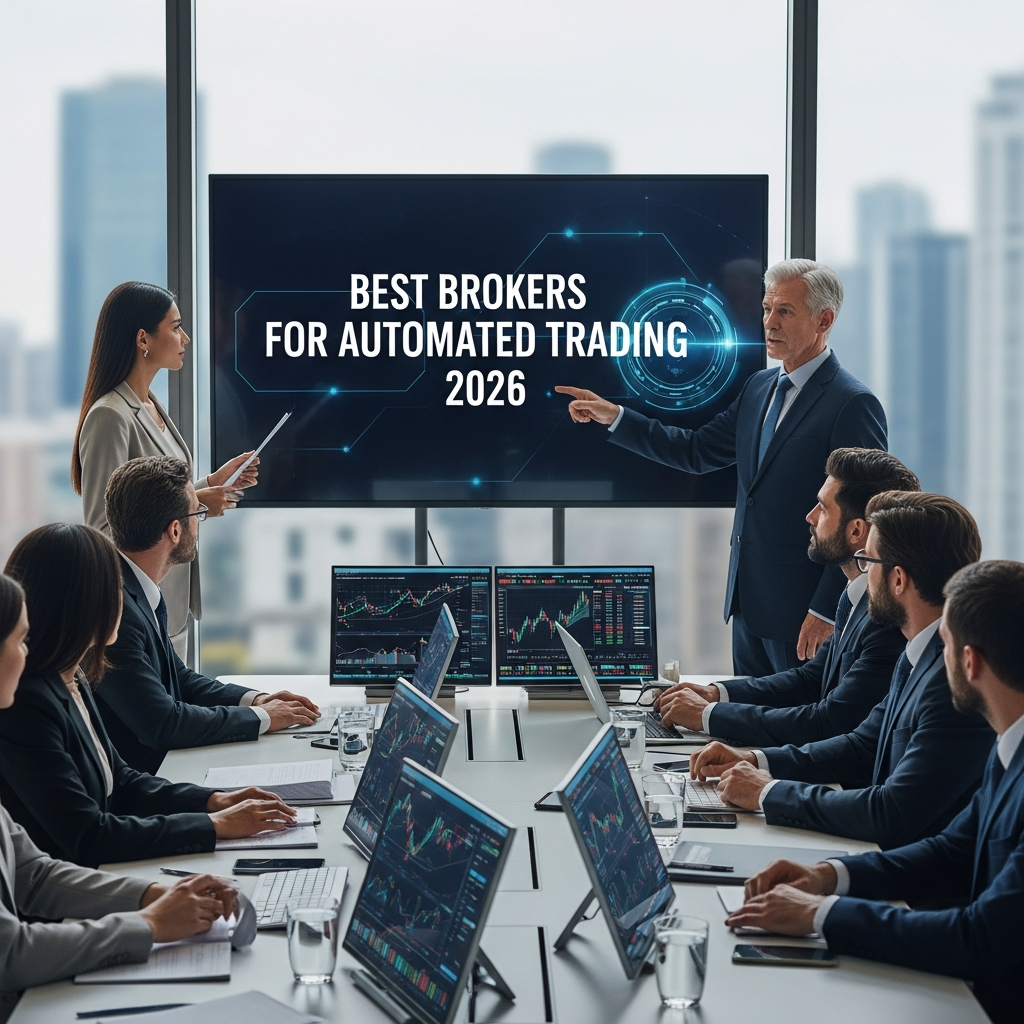
Automated trading now accounts for over 80% of the volume in major currency pairs and nearly 90% in equity markets. The reasons are clear: machines do not sleep, they do not have emotions, and they can calculate risk across a thousand instruments in milliseconds. In 2026, the integration of ‘Agentic AI’—trading bots that can interpret news sentiment and adjust their own parameters—has made the choice of broker even more critical. If your broker’s API lags by even 50 milliseconds, your alpha could vanish.
Top 5 Best Brokers for Automated Trading 2026
1. Interactive Brokers (IBKR): The API Gold Standard
Interactive Brokers remains the undisputed heavyweight for professional algorithmic traders. In 2026, their Client Portal API and TWS API have reached new heights of reliability. IBKR is preferred by those who build their own custom software using Python, C++, or Java.
- Key Advantage: Direct market access (DMA) to over 150 markets worldwide.
- Technology Stack: Native support for Python via the
ib_insynclibrary and a robust REST API for web-based applications. - Asset Classes: Stocks, Options, Futures, Forex, and Fixed Income.
For traders looking for the best brokers for automated trading 2026, IBKR offers the most competitive margin rates and institutional-grade execution. Their server infrastructure is optimized for high-volume automated throughput, ensuring that slippage is kept to an absolute minimum.
2. Pepperstone: The MetaTrader and cTrader Specialist
Pepperstone has successfully bridged the gap between retail accessibility and professional-grade execution. While many brokers struggle with MT4/MT5 server lag, Pepperstone has invested heavily in Equinix data centers (NY4 and LD5), providing ultra-low latency for Expert Advisors (EAs).
- Key Advantage: Razor-thin spreads and a ‘no-dealing-desk’ intervention policy.
- Automation Support: Full compatibility with MT4, MT5, cTrader, and TradingView (via webhooks).
- VPS Integration: Partnerships with New York City Servers and Beeks FX to provide 24/7 uptime for bots.
Pepperstone is ideal for those who prefer using pre-built automation tools or the cTrader Automate C# environment. In 2026, their API for TradingView has become a favorite for those using Pine Script to automate strategies directly from the cloud.
3. IG Group: High Liquidity and API Flexibility
IG is a powerhouse in the spread betting and CFD arena, but their specialized API offerings are what place them on this list for 2026. Their REST and streaming APIs provide developers with deep historical data and real-time pricing for thousands of markets.
- Key Advantage: Massive liquidity pools, ensuring that large automated orders are filled without significant price impact.
- L2 Dealer: For professional traders, IG’s L2 Dealer platform offers direct market access and the ability to interact with the order book.
- Security: Publicly traded and highly regulated across multiple jurisdictions.
4. IC Markets: The Choice for High-Frequency EAs
If you are running a high-frequency scalping bot, IC Markets is often the top recommendation. Their ‘Raw Spread’ accounts provide some of the lowest transaction costs in the industry, which is vital for strategies that trade hundreds of times per day.
- Key Advantage: Extremely low latency execution, typically under 1ms to major providers.
- Platform Support: MT4, MT5, and cTrader.
- Scalability: Optimized servers that handle the high-volume data bursts common in volatile 2026 markets.
5. Saxo Bank: Institutional Infrastructure for Retail Quants
Saxo Bank offers a premium experience for those with higher capital requirements. Their OpenAPI is legendary in the developer community for its documentation and depth. In 2026, Saxo has integrated advanced risk management tools directly into their API, allowing for automated ‘circuit breakers’ at the account level.
- Key Advantage: Access to a vast universe of bonds, ETFs, and sophisticated derivatives.
- Connectivity: Support for FIX protocol (Financial Information eXchange), the industry standard for institutional trading.
Key Criteria for Choosing an Automated Trading Broker
When selecting from the best brokers for automated trading 2026, you shouldn’t just look at the brand name. You must evaluate the technical specifications of their offering.
1. API Architecture and Documentation
A broker’s API is the bridge between your code and the market. In 2026, we look for RESTful APIs for account management and WebSocket APIs for real-time price streaming. Robust documentation with code samples in Python or Node.js is a non-negotiable requirement for the modern developer.
2. Execution Speed and Latency
Latency is the delay between your bot sending a ‘buy’ signal and the broker executing it. Even a 100ms delay can result in a different entry price. Top brokers now offer co-location services, where you can host your trading bot on a server in the same data center as the broker’s trade matching engine.
3. VPS (Virtual Private Server) Availability
For those using MetaTrader 4 or 5, a VPS is essential. It allows your EAs to run 24/7 without being dependent on your home internet connection. The best brokers in 2026 often provide a free VPS if you maintain a certain trading volume.
4. Slippage and Requotes
Automated strategies, especially those involving news trading or scalping, are sensitive to slippage. You want a broker with ‘Positive Slippage’ (where you are occasionally filled at a better price) and a zero-requote policy. Brokers that use ECN (Electronic Communication Network) or STP (Straight-Through Processing) models are generally superior for automation.
The Tech Stack of 2026: Python, AI, and Beyond
In 2026, the shift from MetaQuotes (MQL4/5) to Python has accelerated. Python is now the lingua franca of financial automation due to its extensive libraries like Pandas, NumPy, and TensorFlow. The best brokers for automated trading 2026 have responded by providing native Python wrappers for their APIs.
The Rise of ‘Agentic’ Trading
We are seeing the first wave of autonomous trading agents. These are not just simple ‘if-then’ scripts. They use LLMs to read the FOMC minutes in real-time, analyze the sentiment of a CEO’s tweet, and adjust their exposure based on a linguistic analysis of market uncertainty. Brokers like Interactive Brokers and Saxo are leading the way by providing the high-speed data feeds these AI models require.
Cloud-Native Trading Platforms
Many traders are moving away from desktop-based platforms. Cloud-native solutions allow you to write, backtest, and deploy code in a browser-based IDE (Integrated Development Environment). Brokers that integrate with platforms like TradingView or QuantConnect are seeing the highest growth in 2026.
Risk Management in the Age of Automation
While automation removes human emotion, it can introduce ‘mechanical’ risk. A bug in your code can execute thousands of unintended trades in seconds. Therefore, the best brokers for automated trading 2026 offer ‘Kill Switches’—a manual or API-based command that instantly closes all positions and cancels all pending orders.
Backtesting vs. Forward Testing
Modern brokers now provide high-quality ‘Tick Data’ for backtesting. In 2026, simply testing on ‘M1’ (one-minute) bars is insufficient. To ensure your bot survives the reality of the market, you need a broker that allows you to download historical tick-by-tick data to simulate real-market slippage and spread widening.
Conclusion: Selecting Your Partner for 2026
The search for the best brokers for automated trading 2026 ends with a choice based on your specific technical needs. If you are a Python developer, Interactive Brokers or Saxo Bank offer the depth you require. If you are an EA user looking for speed and simplicity, Pepperstone or IC Markets are the gold standard. For those looking for a mix of social trading and automated signals, IG provides the necessary liquidity and scale.
As AI continues to reshape the financial world, your choice of broker is no longer just about the cost of a trade—it is about the quality of the data, the speed of the connection, and the reliability of the API. Choose wisely, backtest rigorously, and ensure your infrastructure is as robust as your strategy.