The Importance of Mastering DBot Profit Limit Settings in 2026
In the rapidly evolving landscape of algorithmic trading, precision is no longer a luxury—it is a survival requirement. As we move through 2026, the Deriv DBot platform remains one of the most accessible yet powerful tools for retail traders looking to automate their strategies. However, the difference between a successful automated portfolio and a drained account often comes down to a single configuration: the DBot profit limit settings.
An automated bot is only as disciplined as its code. Without a strictly defined profit limit, a bot can easily fall victim to market reversals or the ‘one more trade’ fallacy that plagues human and machine alike. In this comprehensive guide, we will explore everything you need to know about setting, optimizing, and managing your profit targets within the DBot ecosystem to ensure long-term sustainability.
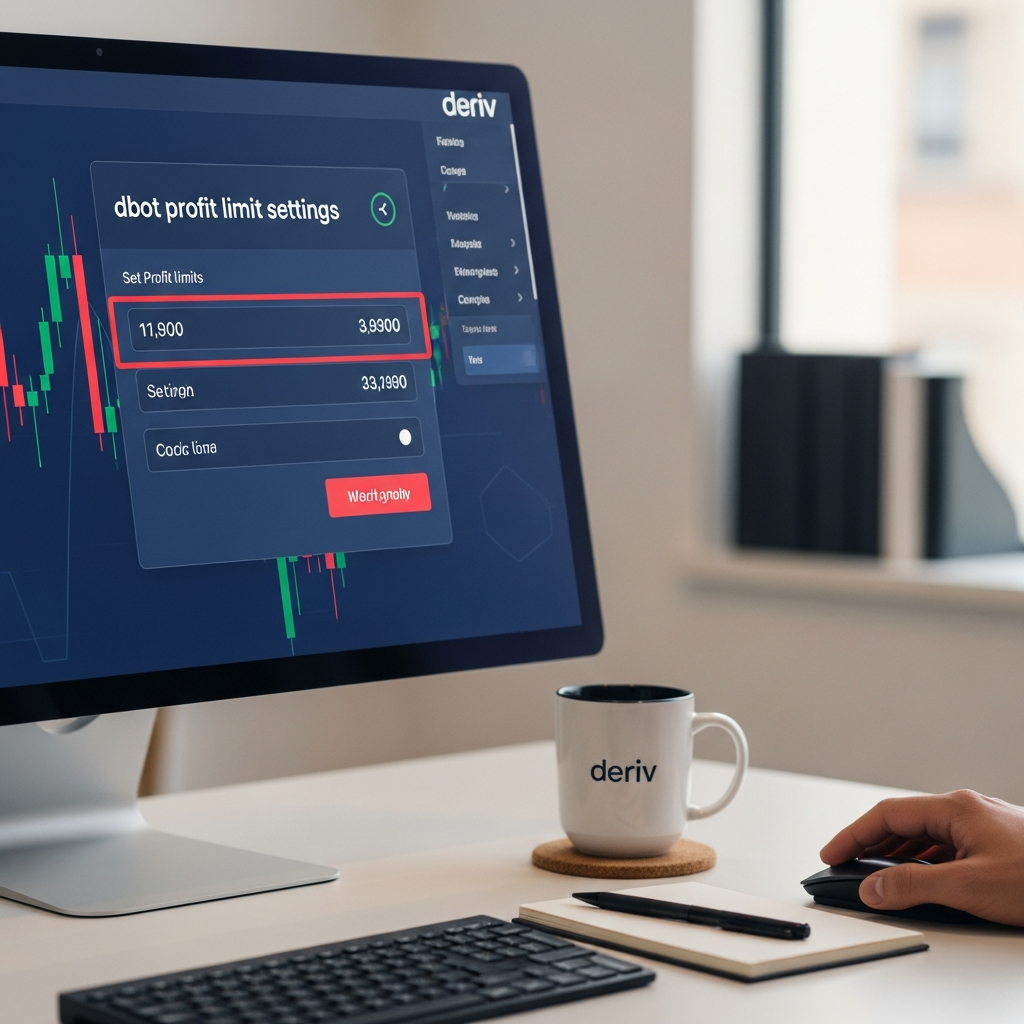
Understanding the Core Concept: What is a Profit Limit?
At its most basic level, a profit limit (often referred to as a ‘Take Profit’ or ‘Target Profit’) is a predetermined threshold that instructs your trading bot to cease operations once a specific financial goal has been met. In DBot, this setting is crucial because it transforms a potentially endless loop of trades into a structured trading session.
There are generally two types of profit limits you need to consider:
- Session Profit Limit: This is a global setting that monitors the cumulative net profit of your current running session. Once the sum of all wins and losses reaches this positive number, the bot stops entirely.
- Trade-Level Take Profit: This applies to individual contracts. It dictates when a specific trade should be closed to lock in earnings before the market shifts.
For the purpose of this guide, we will focus primarily on the DBot profit limit settings related to the session management, as this is where most traders fail to implement proper risk controls.
Why You Need a Profit Limit: The Psychology of Automation
It might seem counterintuitive to tell a machine to stop making money. If your strategy is winning, why not let it run? The answer lies in the statistical reality of market variance. No strategy, no matter how advanced the AI or logic behind it in 2026, maintains a 100% win rate indefinitely.
1. Protecting Against Market Reversals
Markets move in cycles. A strategy that excels in a trending market might fail miserably in a ranging one. By setting a profit limit, you ensure that you exit the market while your strategy is still in sync with current conditions.
2. Mitigating Technical Failures
While the infrastructure of trading platforms has improved significantly by 2026, technical glitches or internet latency can still occur. A bot running indefinitely is more exposed to these rare but catastrophic events.
3. Emotional Discipline for the User
Even though the bot is automated, the human behind the bot is not. Seeing a bot reach a healthy profit and then give it all back because of a lack of a limit often leads to ‘revenge trading,’ where the user manually interferes with the bot, usually leading to further losses.
How to Configure DBot Profit Limit Settings: Step-by-Step
Configuring these settings requires a basic understanding of the DBot interface, specifically the ‘Variables’ and ‘Logic’ blocks. Follow these steps to implement a robust profit limit.
Step 1: Define Your Variables
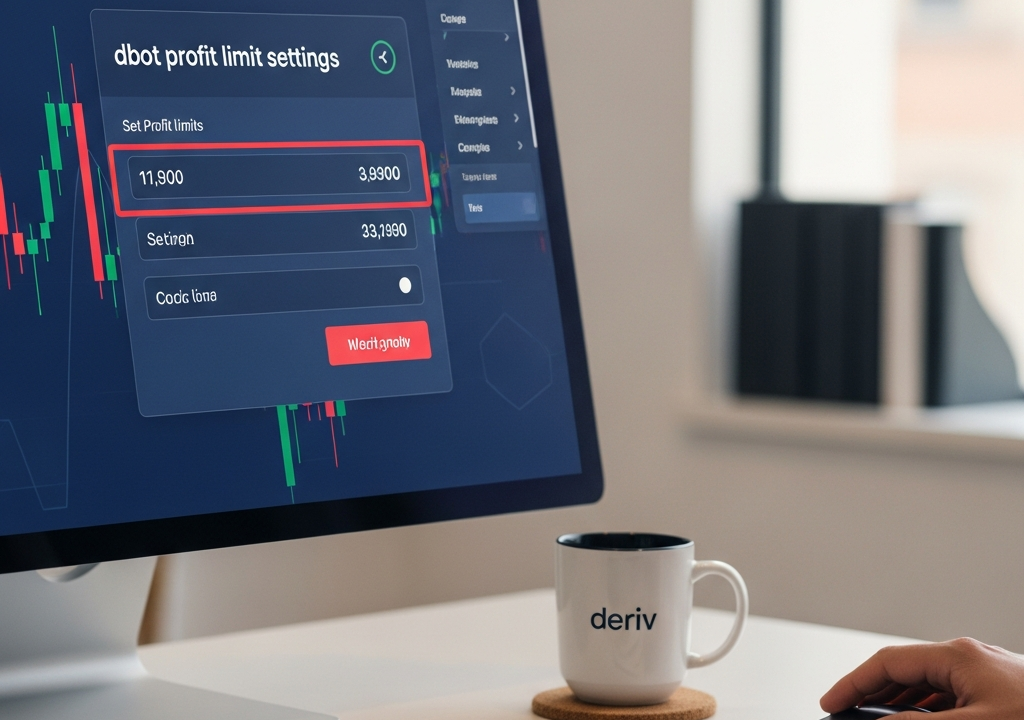
Before the bot starts trading, you must define what your profit target is. Navigate to the ‘Variables’ menu and create a new variable named Target Profit. Assign it a value based on your risk appetite (e.g., $10 or $50).
Step 2: Initialize the Session Tracker
In the ‘Run Once at Start’ block, ensure you have a variable to track your total profit. Most standard DBot templates use a built-in variable for this, but it is good practice to explicitly define your starting parameters.
Step 3: Implement the Logic Check
The most critical part of the DBot profit limit settings happens in the ‘Watch and Purchase’ or ‘Trade Results’ blocks. You need to insert a logic ‘If’ statement that asks: Is the Current Total Profit greater than or equal to the Target Profit?
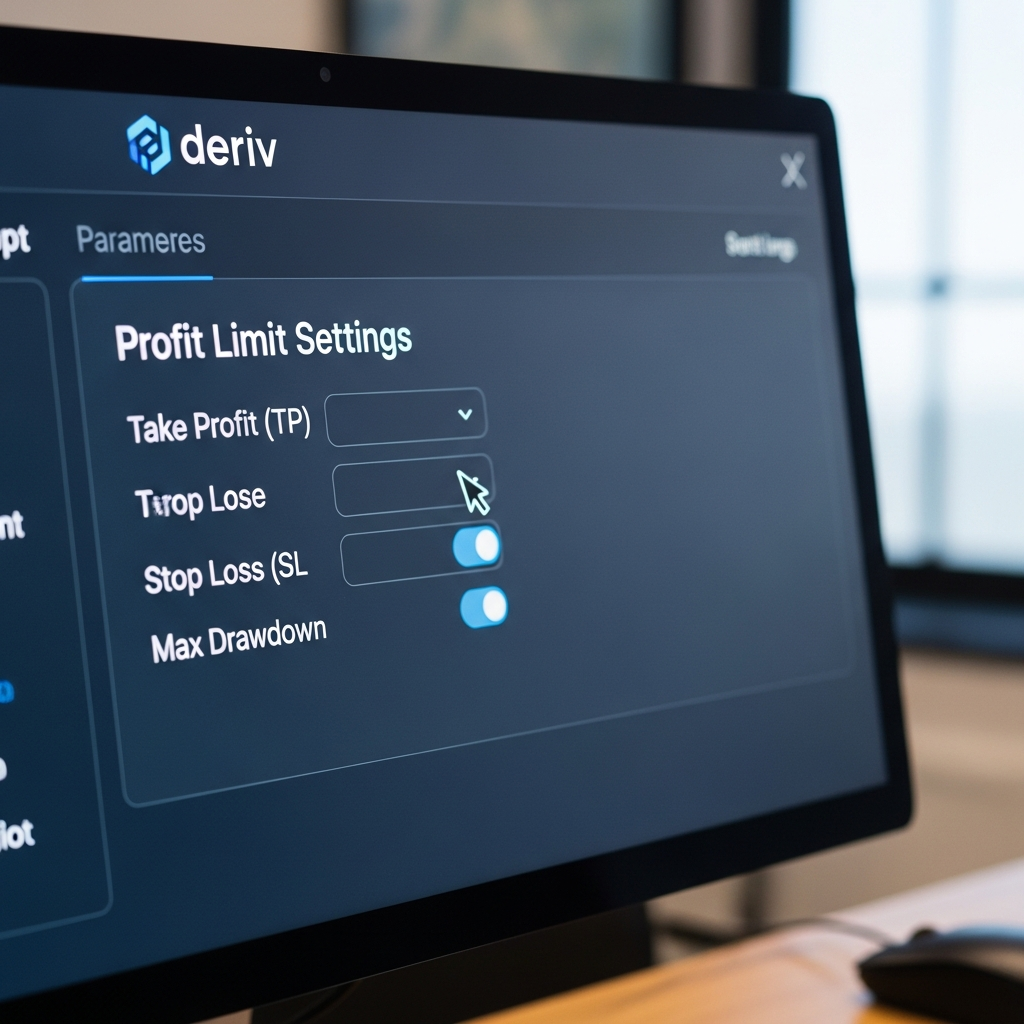
Step 4: The ‘Stop’ Command
Inside that ‘If’ statement, you must place the ‘Stop’ or ‘Finish’ block. This ensures that the moment the math checks out, the bot executes its final instruction and disconnects from the market.
Advanced Strategies for Profit Limits in 2026
As we navigate the complexities of the 2026 financial markets, simple fixed-dollar limits may no longer be sufficient. Advanced traders are now using more dynamic approaches.
Percentage-Based Limits
Instead of setting a flat $20 limit, traders are increasingly using percentage-based limits relative to their account balance. This allows the bot to scale as the account grows. For example, setting a profit limit of 2% of the total balance per session helps maintain consistent compounding without over-leveraging.
Trailing Profit Limits
While not a native single-block feature in DBot, sophisticated users script ‘Trailing Profit Limits.’ This logic allows the bot to continue trading as long as the profit is increasing but shuts it down if the profit drops by a certain percentage from its peak during that session. This ‘locks in’ a majority of the gains while still allowing for ‘runaway’ win streaks.
Time-Based Exit Conditions
In 2026, market volatility often clusters around specific geopolitical events or AI-driven news cycles. Integrating a time-based limit alongside your profit limit—such as “Stop if Profit reaches $X OR if 2 hours have passed”—adds another layer of protection against shifting market regimes.
The Interaction Between Profit Limits and Stop Loss
You cannot discuss DBot profit limit settings without mentioning the Stop Loss. They are two sides of the same coin. A common mistake is setting a very high profit limit with a very tight stop loss. This creates an imbalance that usually results in the stop loss being hit before the strategy has room to breathe.
In a balanced 2026 trading strategy, your profit limit should be realistic. If your average win rate is 55%, aiming for a profit limit that requires a 10-trade winning streak is statistically unlikely. Aim for a ‘Risk-to-Reward’ ratio of at least 1:1 or 1:2 for the session. If your stop loss for the session is $50, your profit limit should ideally be between $50 and $100.
Common Mistakes to Avoid
Even with the best tools, errors in configuration can lead to total loss. Watch out for these frequent pitfalls:
- Forgetting the ‘Equal To’ Operator: In the logic block, always use ‘Greater Than or Equal To’ (>=). If you only use ‘Equal To’, and your final trade pushes your profit from $9 to $11 when your limit was $10, the bot might keep running because it never hit exactly $10.
- Setting Limits Too High: Greed is the primary reason bots fail. A 10% daily account growth is unsustainable in the long run. Aim for modest, consistent gains.
- Ignoring Transaction Costs: Remember that in some contract types, the ‘profit’ shown might not account for the spread or commission until the trade is fully settled. Ensure your limit accounts for net profit.
- Not Testing in Demo: Never deploy new profit limit logic on a live account first. Use the Deriv demo environment to ensure the bot actually stops when the condition is met.
The Future of DBot: AI-Optimized Limits
Looking toward the latter half of 2026 and into 2027, we are seeing the rise of AI-integrated DBots that analyze historical performance to suggest the ‘Optimal Profit Limit.’ These systems look at your strategy’s ‘Maximum Favorable Excursion’ (how much a trade goes in your favor before turning) to tell you exactly where your limit should be to maximize returns.
While these tools are becoming more common, the fundamental DBot profit limit settings remain the cornerstone of safe trading. Manual oversight and a firm understanding of your bot’s logic will always be superior to blind reliance on automation.
Conclusion: Discipline Through Automation
Success in automated trading is not just about finding the ‘perfect’ entry signal; it is about knowing when to walk away. By mastering the DBot profit limit settings, you take control of your trading destiny. You transform the bot from a gambling machine into a disciplined financial tool.
As you refine your strategies in 2026, remember that the most successful traders are those who prioritize capital preservation. Set your limits, trust your logic, and let the automation work for you—not against you. Start by auditing your current bot configurations today and ensure that your ‘Target Profit’ variable is set to a value that reflects both your goals and the statistical reality of your strategy.
Final Checklist for Your DBot Profit Settings:
- Is the Target Profit variable clearly defined?
- Does the logic check occur after every trade?
- Is there a ‘Finish’ or ‘Stop’ block inside the logic?
- Have you tested the stop-condition in a demo account?
- Is the limit realistic compared to your total balance?
By following these guidelines, you are well on your way to more consistent and less stressful trading experiences on the Deriv platform.