Introduction to Automated Trading on Deriv
In the rapidly evolving landscape of online trading, automation has moved from a luxury for institutional investors to a standard tool for retail traders. As we navigate through 2026, the platforms provided by Deriv—formerly known as Binary.com—remain at the forefront of this revolution. For traders looking to automate their strategies without writing complex lines of code, two names dominate the conversation: DBot and Binary Bot.
While both platforms allow users to create automated trading scripts using a visual, block-based interface, they cater to slightly different preferences and technical requirements. Understanding the nuances between them is crucial for any trader aiming to optimize their performance in the financial markets. This comprehensive DBot vs Binary Bot comparison will dissect their features, usability, and strategic capabilities to help you decide which tool deserves a place in your trading arsenal.
What is Binary Bot? The Legacy Powerhouse
Binary Bot is the original automated trading platform developed by Binary.com. Even in 2026, it remains a favorite among veteran traders who appreciate its simplicity and the vast library of community-created scripts available online. It uses a “drag-and-drop” logic system based on Google’s Blockly, which allows users to build trading algorithms by snapping blocks together like Lego pieces.
The Architecture of Binary Bot
Binary Bot operates primarily through XML files. A trader can build a strategy, save it as an .xml file, and share it with others or reload it later. The interface is somewhat “retro” by modern standards, but its functional efficiency is undeniable. It provides a workspace where you define your market (e.g., Volatility Indices, Forex, Commodities), your trade type (Rise/Fall, Over/Under, etc.), and your execution logic.
Why Traders Still Use Binary Bot in 2026
Despite the push toward newer platforms, Binary Bot persists because of its stability. Many complex strategies developed years ago were optimized for the Binary Bot environment. For many, if a bot isn’t broken, there is no need to move it to a newer interface. Additionally, the platform’s lightweight nature ensures it runs smoothly on older hardware or in areas with lower internet bandwidth.
What is DBot? The Modern Evolution
DBot is Deriv’s answer to the modern trader’s need for a sleek, integrated, and intuitive automation experience. It represents the next generation of the Binary Bot concept, refined for the 2020s. While it retains the block-based logic that made its predecessor famous, DBot introduces a more streamlined workflow and better integration with the overall Deriv ecosystem.
Features Unique to DBot
DBot was designed to be more than just a script runner. It includes built-in strategies that allow beginners to start trading almost immediately. Instead of building a Martingale or D’Alembert system from scratch, users can select these pre-configured templates and simply adjust the parameters. Furthermore, DBot offers enhanced visualization of trade data and a more responsive design that works better across different screen sizes.
Integration with Deriv Services
Unlike the legacy Binary Bot, which can feel like a standalone tool, DBot is deeply integrated with Deriv’s account management, reporting, and asset feeds. In 2026, DBot users benefit from real-time analytics and more seamless transitions between manual trading on DTrader and automated trading on DBot.
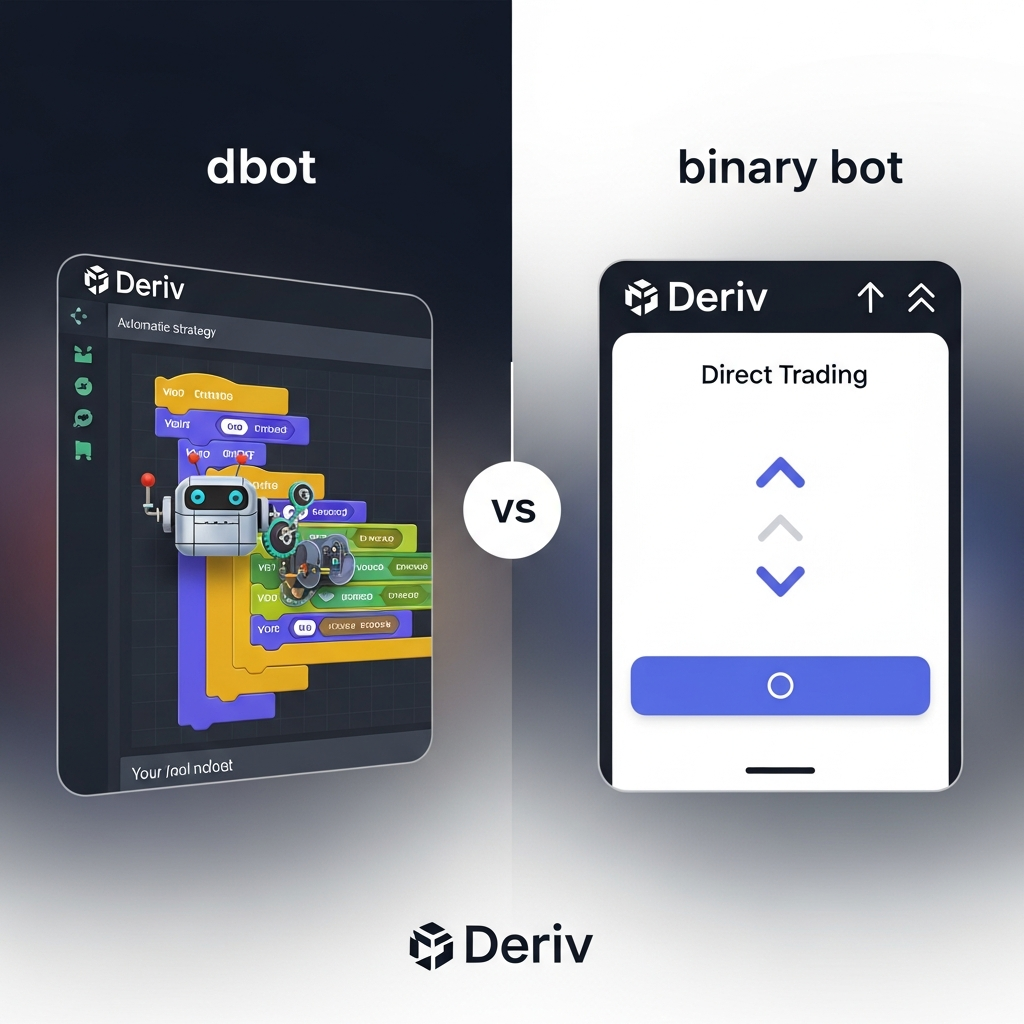
DBot vs Binary Bot Comparison: Key Differences
To truly understand which platform suits your needs, we must look at the specific differences across several critical categories.
1. User Interface and Experience (UI/UX)
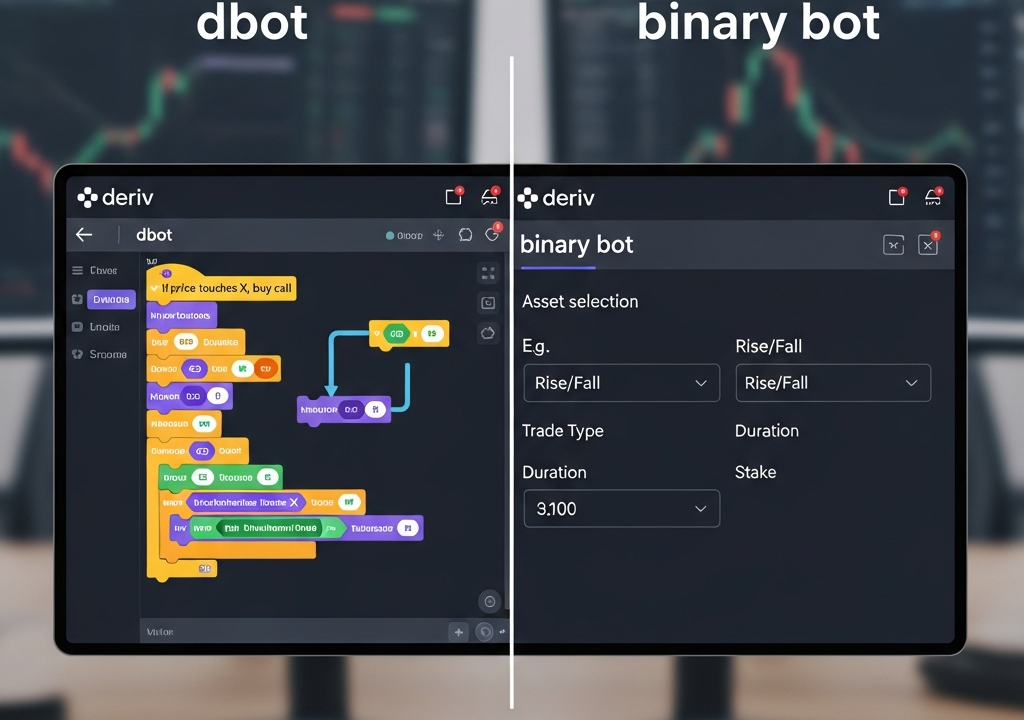
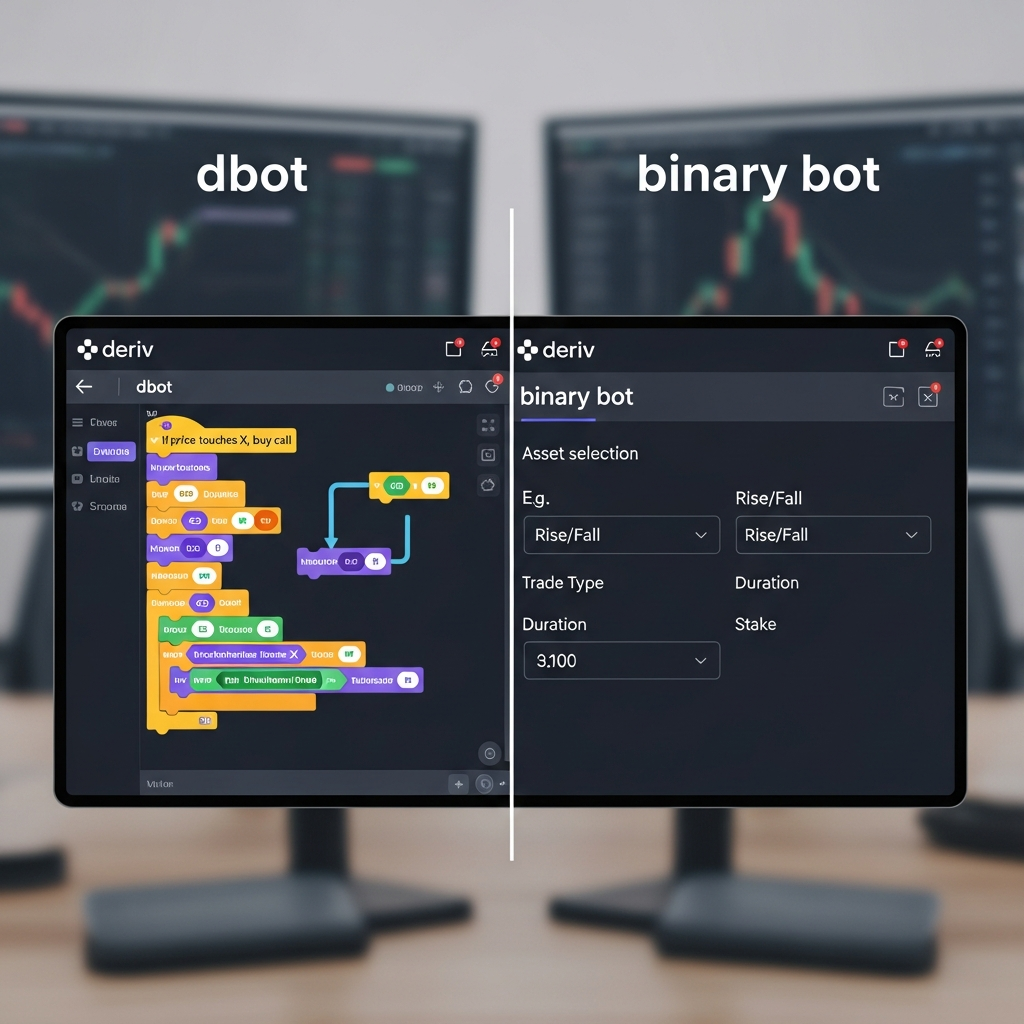
Binary Bot features a wide, open workspace that can sometimes feel cluttered if a strategy involves hundreds of blocks. In contrast, DBot provides a cleaner, more modular interface. The navigation in DBot is grouped into tabs: Dashboard, Bot Builder, and Charts. This logical separation makes it easier for newer traders to find what they need without being overwhelmed by the technical “blocks” immediately.
2. Strategy Sharing and File Formats
Binary Bot relies exclusively on XML files. DBot, while compatible with many Binary Bot logics, uses a different internal structure for its saved files. While you can often import Binary Bot XMLs into DBot, the reverse is not always true. This makes Binary Bot the more “sharable” platform for the legacy community, while DBot is the preferred choice for those who want their strategies synced directly to their Deriv cloud account.
3. Pre-built Strategies
This is where DBot clearly shines. For a new trader, Binary Bot is a blank canvas, which can be intimidating. DBot offers three ready-to-use strategies: Martingale, D’Alembert, and Oscar’s Grind. You can load these, change your stake amount, and be running in minutes. Binary Bot requires you to either build these manually or find a trusted XML file from a third party.
4. Analytical Tools and Backtesting
In 2026, data is king. DBot offers slightly better integrated charting tools within the platform itself. While both allow for testing on demo accounts, DBot’s reporting dashboard provides a clearer view of your profit/loss ratios, maximum drawdown, and win rates in a visual format that is easier to digest than Binary Bot’s standard journal logs.
Performance and Execution Speed
In the world of high-frequency trading and “Ticks” contracts, milliseconds matter. Historically, some traders argued that Binary Bot had a slight edge in execution speed because of its minimal overhead. However, by 2026, Deriv’s infrastructure has leveled the playing field. Both platforms communicate with the same API. The execution speed is more likely to be affected by your local internet connection and the complexity of the bot’s logic (e.g., too many nested loops) than by the platform itself.
The Learning Curve: Which is Easier?
If you are a complete novice, DBot is the clear winner. The onboarding process is guided, and the pre-built templates serve as an excellent educational resource. You can see how a Martingale strategy is constructed by looking at the blocks provided in the template, which teaches you the logic of automated trading.
Binary Bot, however, is better for those who want to learn the “raw” logic of the system. Because it doesn’t hold your hand as much, it forces you to understand exactly how the “Purchase” and “After Purchase” blocks interact. For a seasoned developer, Binary Bot’s interface might feel less restrictive.
Common Ground: What They Share
Despite their differences, it is important to remember that they share the same DNA. Both platforms:
- Allow trading on Volatility Indices, Forex, Commodities, and Derived Indices.
- Support “Tick” based trading for ultra-short-term contracts.
- Require a solid understanding of risk management to avoid account wipeouts.
- Use a “Run/Stop” mechanism that gives the trader ultimate control over the execution.
- Are free to use for anyone with a Deriv account.
Risk Management in Automated Trading
Whether you choose DBot or Binary Bot, the risks remains the same. Automated trading is not a “set and forget” path to wealth. In 2026, the markets are more volatile than ever, and a bot that works perfectly on Monday might fail on Tuesday due to a shift in market sentiment or a change in volatility patterns.
Always implement a Stop Loss and a Take Profit within your bot logic. One of the most common mistakes traders make in the DBot vs Binary Bot comparison is focusing on the UI while ignoring the underlying math. A bad strategy will lose money on the most beautiful interface just as quickly as it will on a basic one.
Which Should You Choose?
The choice between DBot and Binary Bot often comes down to your level of experience and your specific goals.
Choose DBot if:
- You are new to automated trading.
- You want to use pre-built strategies like Martingale or D’Alembert.
- You prefer a modern, organized user interface.
- You want your bots integrated with the Deriv cloud for easy access across devices.
Choose Binary Bot if:
- You are using legacy XML scripts found in the trading community.
- You prefer a minimalist, high-functionality workspace.
- You are already comfortable with the Binary.com ecosystem and don’t feel the need to switch.
- You want to build highly complex, custom logic from scratch without the “clutter” of modern UI elements.
The Future of Trading Bots on Deriv
As we look further into 2026 and beyond, we expect to see even more AI integration within DBot. Imagine a system where the bot can suggest changes to your logic based on historical performance or real-time market conditions. While Binary Bot will likely remain as a legacy tool for the purists, the majority of innovation is being funneled into DBot.
Deriv has made it clear that they want to empower the “citizen developer”—the average person who has a good trading idea but no coding skills. Both platforms successfully achieve this, but DBot is clearly the vehicle for the future.
Conclusion
In this DBot vs Binary Bot comparison, we have seen that there is no objectively “better” platform; rather, there is a better platform *for you*. Binary Bot is the reliable, flexible veteran that offers total control and a massive library of community resources. DBot is the polished, user-friendly successor that lowers the barrier to entry and provides a more cohesive experience within the Deriv ecosystem.
Whichever path you choose, remember that the bot is only as good as the strategy behind it. Spend time in the demo environment, test your logic rigorously, and always prioritize capital preservation. Automated trading on Deriv offers incredible opportunities, and with tools like DBot and Binary Bot, those opportunities are more accessible than ever before.
Final Verdict
For 90% of traders in 2026, DBot is the recommended choice due to its modern features and ease of use. However, for the 10% of power users who rely on specific legacy XML configurations, Binary Bot remains an essential and powerful tool.