Introduction: The Evolution of Algorithmic Trading on Deriv
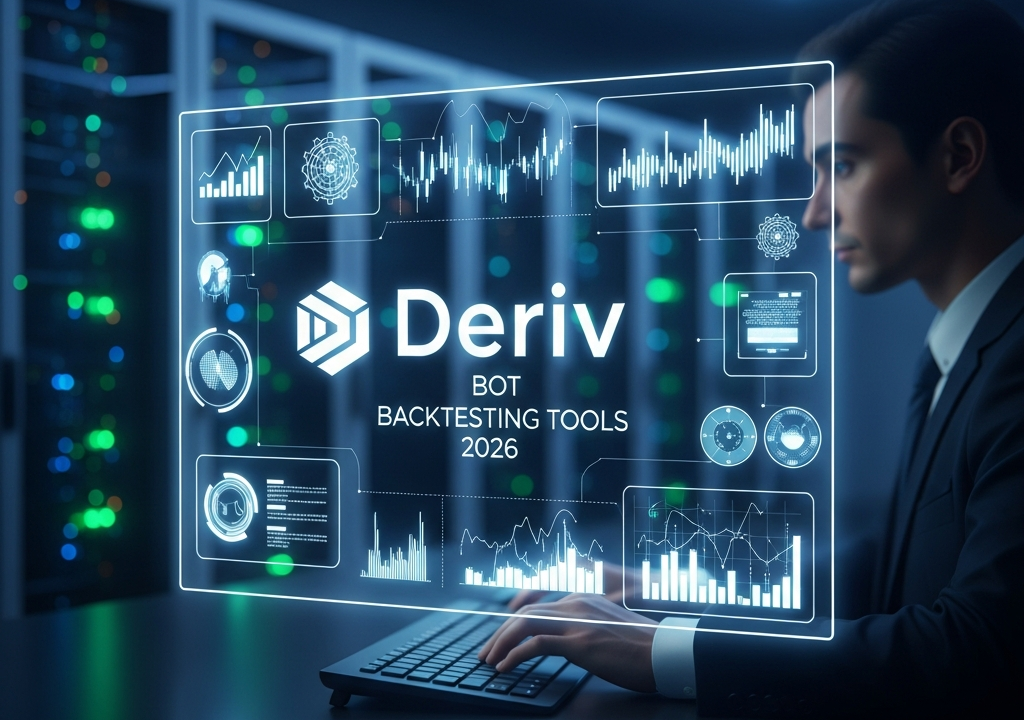
In the rapidly evolving landscape of 2026, the world of online trading has shifted significantly toward automation. For traders utilizing the Deriv platform, specifically those engaging with synthetic indices like Volatility 75 (1s) or Crash/Boom indices, the reliance on automated bots has reached an all-time high. However, with increased automation comes a critical requirement: the ability to verify performance before risking real capital. This is where Deriv bot backtesting tools 2026 come into play.
Backtesting is no longer just a luxury for institutional traders; it is a fundamental necessity for anyone looking to maintain a competitive edge. As we move through 2026, the sophistication of these tools has expanded, offering deeper insights into drawdowns, recovery factors, and the statistical probability of success. This guide explores the most effective tools and methodologies currently available for backtesting Deriv bots, ensuring your strategies are robust enough to handle the modern market’s fluctuations.
The Critical Importance of Backtesting in 2026
Why is backtesting more important now than ever before? In 2026, market dynamics have become more complex. While synthetic indices are mathematically generated, the algorithms governing them are designed to mimic real-market psychology, which includes periods of high volatility and sudden regime shifts. Without a rigorous backtesting phase, a trader is essentially gambling on a hypothesis.
Using Deriv bot backtesting tools 2026 allows you to achieve three main objectives: risk mitigation, parameter optimization, and psychological confidence. By simulating your bot’s performance over thousands of past candles, you can identify exactly when a strategy fails. Does it struggle during long trends? Does it lose equity during ranging markets? Answering these questions in a simulated environment saves you from discovering the answers during a live margin call.
Understanding the Deriv Ecosystem
Before diving into specific tools, it is essential to understand the different ways one can automate on Deriv. Currently, there are three primary paths: DBot (the visual, block-based builder), MetaTrader 5 (MT5) for Expert Advisors (EAs), and custom-coded bots using the Deriv API. Each path requires a specific set of backtesting tools and methodologies.
Top Deriv Bot Backtesting Tools 2026
1. MetaTrader 5 (MT5) Strategy Tester
Despite the rise of web-based platforms, the MT5 Strategy Tester remains the gold standard for many Deriv traders in 2026. Because Deriv provides specialized MT5 accounts for synthetic indices, traders can leverage the full power of MQL5. The 2026 version of MT5 features enhanced multi-threaded testing, allowing for hyper-fast optimization of bot parameters.
With MT5, you can perform “Every Tick” testing, which is crucial for high-frequency bots or scalpers targeting small pip movements. It also offers the most comprehensive visualization tools, including equity curves and trade-by-trade breakdowns that are essential for professional analysis.
2. Advanced DBot Simulators (Third-Party)
For those using the DBot (formerly Binary Bot) interface, direct backtesting within the official platform remains somewhat limited. However, in 2026, several third-party web simulators have emerged. These tools allow users to upload their XML or JSON bot files and run them against historical tick data provided by the Deriv API.
These simulators are popular because they require no coding knowledge. They provide a “sandbox” environment where you can adjust your stake, martingale multipliers, and take-profit levels, then see a projected result within seconds. Many of these tools now include Monte Carlo simulations, which stress-test your strategy by slightly altering historical data to see how the bot handles “what-if” scenarios.
3. Python-Based API Frameworks
For the elite quantitative trader, Python has become the language of choice for Deriv bot backtesting tools 2026. Using the Deriv API (WebSockets), traders can pull years of historical tick data into custom Python scripts. Libraries such as Pandas and Backtrader are then used to simulate trades with incredible precision.
The advantage of the Python approach is the ability to integrate machine learning. In 2026, many traders are using AI to optimize their bot’s entry and exit points. A Python backtester can run an optimization loop that tries millions of combinations to find the most stable configuration, a process that is much slower on traditional GUI-based platforms.
Key Metrics to Analyze During Backtesting
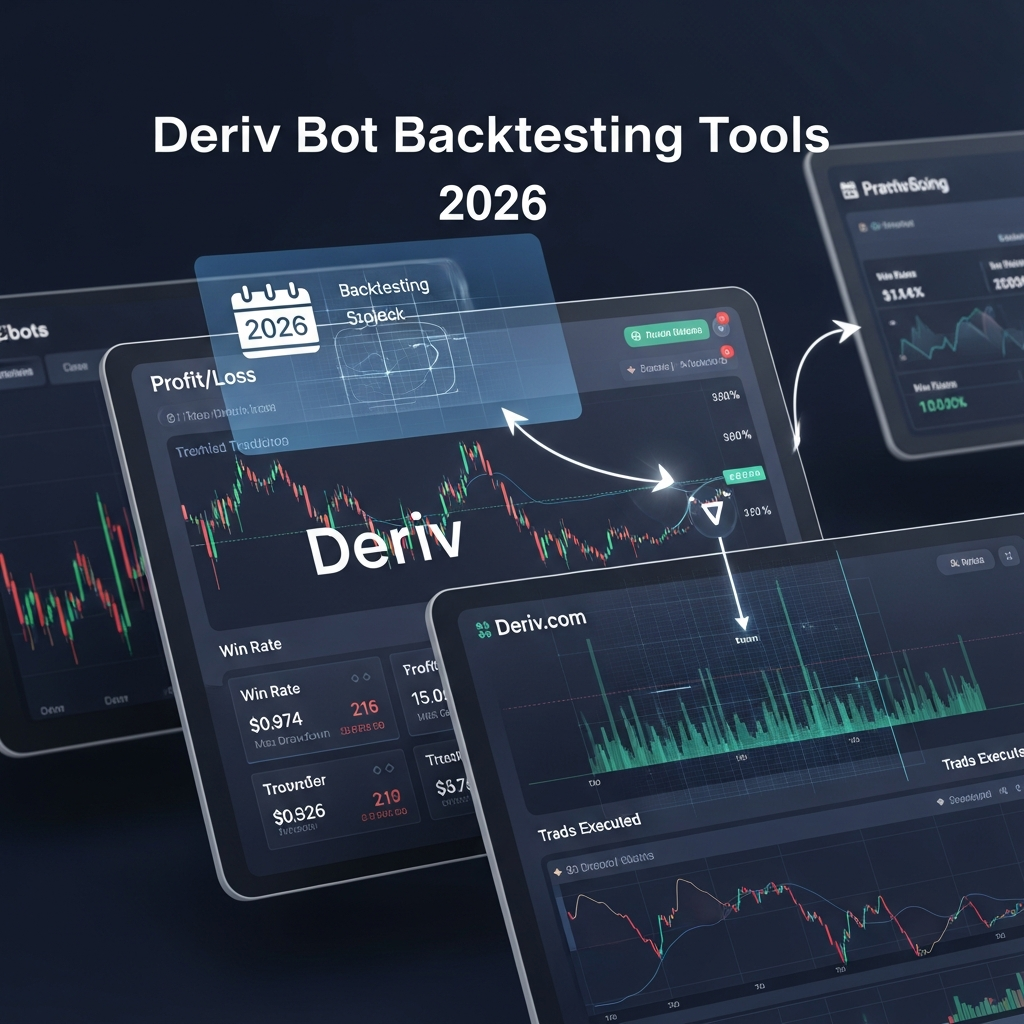
A common mistake among novice traders is looking only at the “Net Profit.” In 2026, sophisticated traders look far deeper. When using your Deriv bot backtesting tools 2026, you should pay close attention to the following metrics:
Max Drawdown (MDD)
This is the most critical metric. It tells you the maximum percentage loss your account suffered from a peak to a trough. If your bot has a 50% drawdown, you need a 100% gain just to get back to break-even. In the volatile world of synthetic indices, keeping MDD below 15-20% is often the goal for sustainable growth.
Profit Factor
The profit factor is the ratio of gross profits to gross losses. A profit factor of 1.5 means for every $1 you lose, you make $1.50. In 2026, a bot with a profit factor between 1.3 and 2.0 is considered very healthy. Anything higher might suggest “overfitting”—where the bot is too perfectly tuned to past data and will likely fail in the future.
Recovery Factor
This measures how quickly a bot can recover from its maximum drawdown. A high recovery factor indicates that the strategy is resilient and doesn’t get stuck in long periods of stagnation. This is particularly important for bots trading indices like Volatility 100, where price action can move very fast.
A Step-by-Step Guide to Backtesting Your Deriv Bot
To get the most out of your Deriv bot backtesting tools 2026, follow this structured workflow:
Step 1: Data Acquisition
Ensure you are using high-quality historical data. If you are using MT5, download the latest history from the Deriv servers. If using a web-based tool, ensure it uses the official Deriv API for data. In 2026, “Tick-level” data is the requirement; candle-based (OHLC) data is often too imprecise for bots that trigger on specific price movements.
Step 2: Define Your Constraints
Set realistic parameters. This includes your starting balance, commissions (if any), and slippage. Slippage is often overlooked in backtesting but is a reality in live trading. Modern 2026 tools allow you to simulate 1-2 pips of slippage to see how it impacts your profitability.
Step 3: The Initial Run
Run your bot over a significant period—at least 6 to 12 months of historical data. Look at the general direction of the equity curve. Is it a smooth upward slope, or is it jagged with massive spikes and dips?
Step 4: Optimization (Walk-Forward Analysis)
Once you have a working strategy, use your tool’s optimization feature. However, avoid the trap of “curve fitting.” A great technique in 2026 is Walk-Forward Analysis: optimize your bot on data from January to June, then test that optimized version on data from July to September. if it still performs well on the “unseen” data, you have a robust strategy.
The Risks of Overfitting in 2026
One of the biggest dangers when using Deriv bot backtesting tools 2026 is overfitting. This occurs when a trader tweaks the bot’s settings so much that it performs perfectly on past data but fails immediately upon going live. This is because the bot has “memorized” the noise of the past rather than learning the signal.
To combat this, professional traders in 2026 use “Out-of-Sample” testing. They set aside 30% of their historical data and never use it during the optimization phase. Only when the bot is finished do they run it on this hidden data. If the results match the backtest, the bot is ready for a small live account or a demo run.
Future Trends: AI and Cloud Backtesting
As we look deeper into 2026, the trend is moving toward cloud-based backtesting. Instead of using your computer’s CPU, you can rent thousands of virtual cores to run backtests in seconds. Furthermore, AI-driven tools are now capable of suggesting strategy improvements. For example, an AI backtester might notice that your bot always loses money on Tuesday mornings and suggest a “time filter” to improve your results automatically.
Conclusion: Turning Data into Dollars
The availability of high-quality Deriv bot backtesting tools 2026 has democratized algorithmic trading. Whether you are a beginner using a visual DBot simulator or a professional coder utilizing the Deriv API with Python, the goal remains the same: proving your strategy works before the market can prove you wrong.
Remember that no backtest is a 100% guarantee of future results. It is, however, the best insurance policy a trader can have. By focusing on drawdown, profit factors, and avoiding the trap of overfitting, you can utilize these tools to build a sustainable trading business on the Deriv platform. In 2026, the difference between the 5% of successful traders and the 95% who fail is often found in the hours spent in the backtesting lab.
Start small, test rigorously, and always let the data guide your trading decisions. With the right tools and a disciplined approach, the potential of Deriv bots is virtually limitless.