The Modern Trader’s Dilemma: Automation vs. Emulation
By 2026, the retail trading landscape has undergone a seismic shift. The days of staring at charts for twelve hours a day are increasingly seen as a relic of the past. Today’s market participants—ranging from Gen Z retail investors to seasoned wealth managers—are looking for efficiency. This pursuit of efficiency has led to a perennial debate: should you put your capital in the hands of another human being through copy trading, or should you trust the mathematical precision of Expert Advisors (EAs)?
As we navigate this complex financial ecosystem, the distinction between these two methods has blurred, yet the underlying philosophies remain worlds apart. One relies on the adaptability and intuition of the human mind, while the other thrives on the unyielding execution of logic. This guide breaks down the nuances of both, providing an authoritative look at which path fits your risk profile and financial goals in the current market environment.

Understanding Copy Trading: The Social Approach to Wealth
Copy trading, often categorized under the broader umbrella of social trading, is essentially a form of portfolio management where an individual’s trades are mirrored by others. When the lead trader buys 1.0 lot of Gold, your account automatically executes a proportional trade based on your allocated equity. It is the democratization of the hedge fund model.
The Human Element
The primary draw of copy trading in 2026 remains the ‘human touch.’ Despite the proliferation of AI, human traders possess a unique ability to interpret ‘Black Swan’ events, geopolitical shifts, and market sentiment that data-driven models might misread. When a central bank governor makes an off-script remark, a human trader can pivot their strategy in seconds. An EA, unless specifically programmed for such volatility, might blindly follow its technical indicators into a drawdown.
Transparency and Community
Modern copy trading platforms have evolved into sophisticated social networks. You aren’t just following a set of numbers; you are following a person with a track record, a strategy description, and often, a feed where they explain their rationale. This transparency builds a level of trust that is hard to replicate with a ‘black box’ algorithm. You can see how a trader handled the market turbulence of 2026 and decide if their risk appetite aligns with yours.
The Rise of Expert Advisors: The Reign of Logic
Expert Advisors, or EAs, are automated trading systems built typically for platforms like MetaTrader 5 or proprietary C# environments. These are pieces of software that scan the markets for specific technical criteria and execute trades without human intervention. In 2026, EAs have become incredibly sophisticated, often incorporating machine learning modules that allow them to optimize their parameters in real-time.
Eliminating Emotional Bias
The greatest enemy of any trader is their own psychology. Fear, greed, and revenge trading account for the vast majority of retail losses. An EA is immune to these. It doesn’t get ‘scared’ when a trade goes against it, nor does it get ‘overconfident’ after a winning streak. It follows the rules of the code with 100% fidelity. For traders who struggle with discipline, an EA offers a level of consistency that is physically impossible for a human to maintain over long periods.
Backtesting and Optimization
One of the most significant advantages of an EA is the ability to backtest. Before risking a single dollar, you can run an algorithm through ten years of historical data to see how it would have performed. While past performance is never a guarantee of future results, this quantitative approach provides a level of statistical confidence that copy trading cannot match. You know exactly what the maximum drawdown was, the recovery factor, and the profit factor over thousands of trades.
Key Differences: A Side-by-Side Analysis
To truly understand which method is superior for your needs, we must look at the specific operational differences that impact your bottom line.
1. Execution and Latency
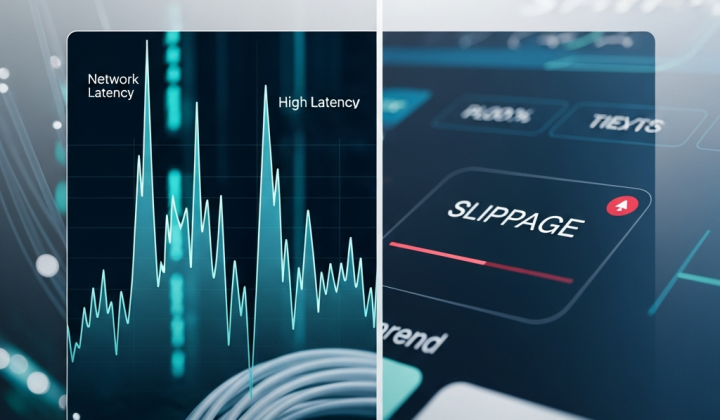
In copy trading, there is an inherent delay known as slippage. When the lead trader opens a position, that signal must travel to the platform’s server and then be distributed to all followers. Even a few milliseconds of delay can result in a different entry price, which, over hundreds of trades, can significantly eat into profits. EAs, especially when hosted on a high-speed VPS (Virtual Private Server) near the broker’s data center, offer near-instantaneous execution. If you are scalping small price movements, EAs are the clear winner.
2. Customization and Control
With an EA, you are the pilot. You can adjust the lot size, set maximum daily loss limits, and choose which hours of the day the bot should operate. If you have coding knowledge, you can even modify the source code to suit changing market conditions. Copy trading offers much less control. While you can usually set a stop-loss for the entire ‘copy’ relationship, you cannot interfere with individual trades without potentially breaking the synchronization of the strategy.
3. Cost Structures
Copy trading typically operates on a ‘performance fee’ or ‘management fee’ basis. You might pay 20% of your profits to the lead trader. This aligns the trader’s interests with yours—they only get paid if you make money. EAs, on the other hand, often require an upfront purchase price or a monthly subscription fee regardless of performance. However, once you own a high-quality EA, the scaling potential is higher because you aren’t sharing a percentage of your growth with anyone else.
The Role of AI in 2026: Blurring the Lines
It is impossible to discuss trading in 2026 without mentioning Artificial Intelligence. The line between copy trading and EAs is becoming thinner because of AI. Many top-performing ‘human’ traders on copy platforms are actually using their own proprietary AI tools to assist their decision-making. Conversely, the newest generation of EAs uses Natural Language Processing (NLP) to read news feeds, making them behave more like ‘hybrid’ human-like systems.
We are also seeing the emergence of ‘AI Copy Portfolios.’ These are systems that use machine learning to automatically rotate your capital between different human traders based on their current ‘hot streaks’ or market conditions. In this scenario, you are using an algorithm to copy humans—a meta-approach that combines the strengths of both worlds.
Risk Management: Where Most Traders Fail
Regardless of whether you choose a human or a bot, risk management is the final arbiter of success. In copy trading, the biggest risk is trader ego. A trader who has been successful for months might suddenly double their risk to ‘prove’ something to their followers, leading to a catastrophic account blow-up. This is a common phenomenon on social trading platforms.
With EAs, the biggest risk is curve-fitting. This occurs when an EA is optimized so perfectly for historical data that it becomes brittle and fails when faced with a slightly different live market. An EA that looks like a ‘money printer’ in a backtest can often turn into a ‘money burner’ in the real world if it hasn’t been built with robust logic.
Diversity is the Only Free Lunch
By 2026, the most successful retail participants have moved away from an ‘either/or’ mindset. A balanced portfolio might include:
- 40% Expert Advisors: Running low-drawdown, mean-reversion strategies on major currency pairs.
- 40% Copy Trading: Following a few seasoned traders who specialize in volatile sectors like crypto or indices.
- 20% Manual Trading: Keeping a ‘hands-on’ approach to stay sharp and understand the underlying market mechanics.
Technical Requirements: Setting Up for Success
If you choose the EA route, you must invest in infrastructure. You cannot run a high-performance EA on a home laptop with a spotty Wi-Fi connection. A VPS is mandatory to ensure 99.9% uptime and low latency. Many brokers now offer sponsored VPS services for active traders.
Copy trading is much more accessible for the average user. Most platforms are web-based or mobile-optimized. You can start copying a trader from your smartphone while sitting in a coffee shop. This low barrier to entry is why copy trading has seen such explosive growth among the ‘side-hustle’ generation of the mid-2020s.
Conclusion: Making Your Choice
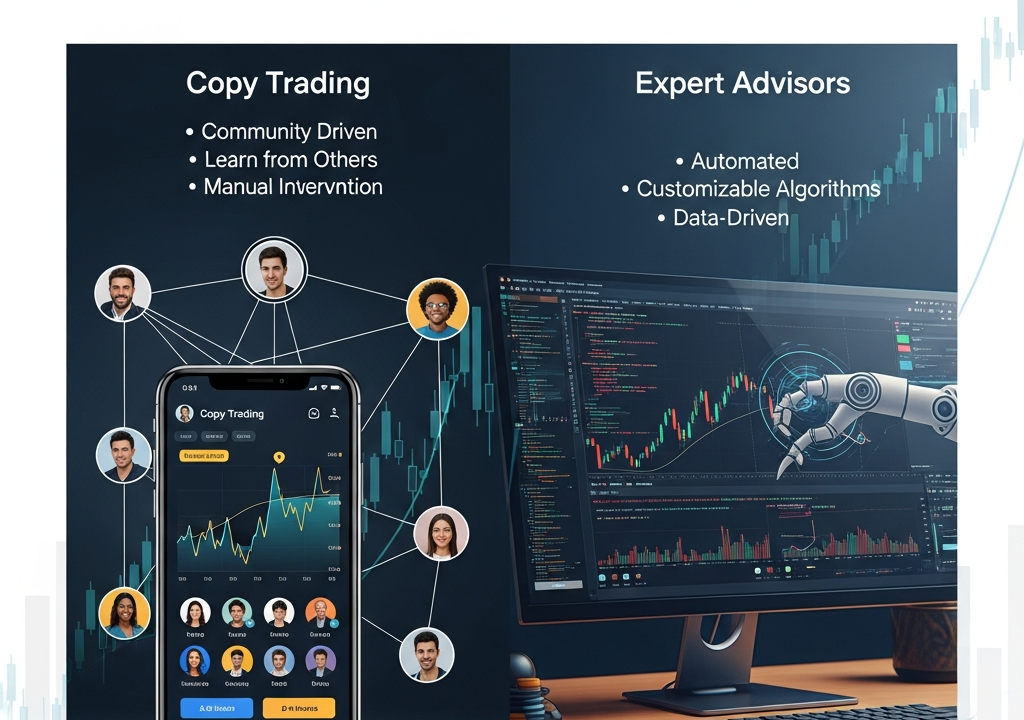
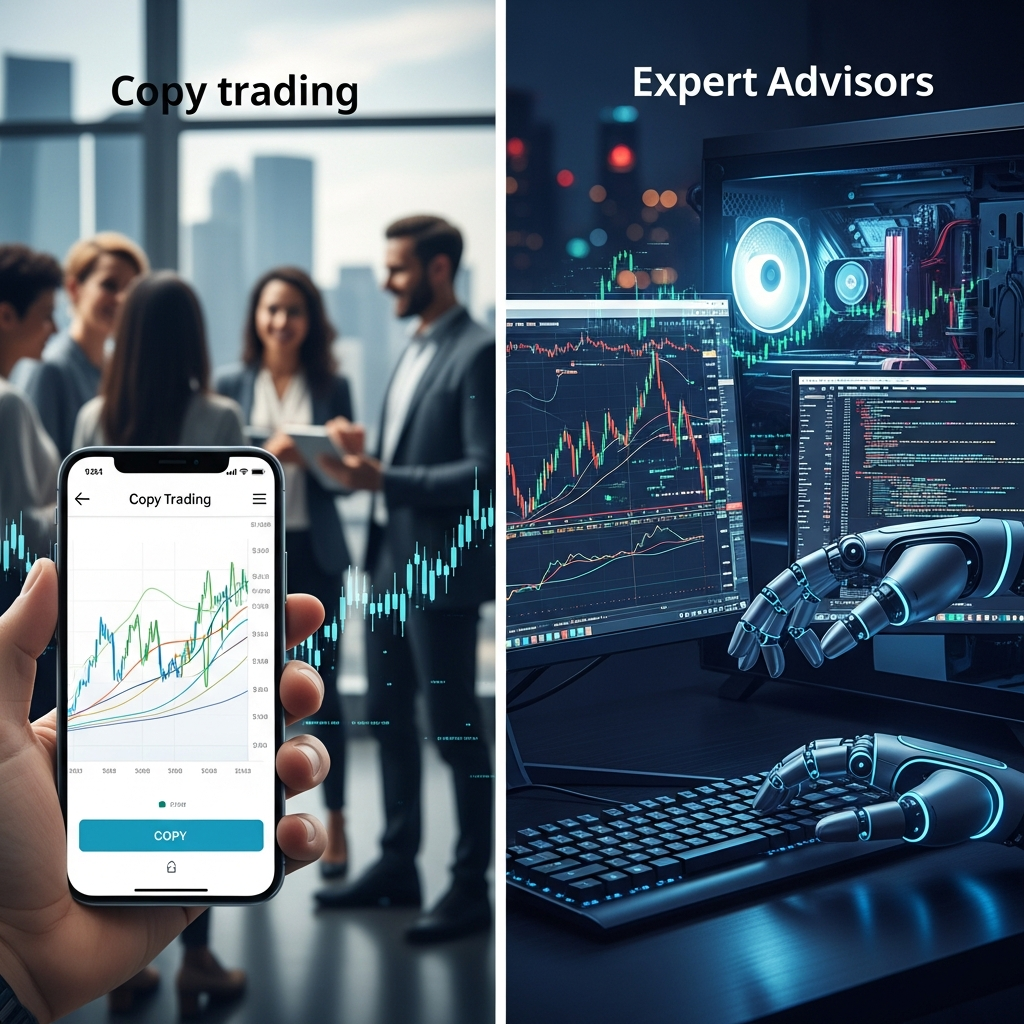
The choice between copy trading and Expert Advisors ultimately comes down to your personality and your available time. If you enjoy the social aspect of trading, want to learn from others, and prefer the adaptability of the human mind, copy trading is your best bet. It allows you to leverage the expertise of others while maintaining a connection to the ‘why’ behind the moves.
If you are a quantitative thinker who values backtested evidence, emotional detachment, and technical precision, then Expert Advisors are the superior tool. They provide a scalable, systematic way to extract value from the markets without the unpredictability of human behavior.
In 2026, the most important thing is not which tool you use, but how you manage the risks associated with it. The markets remain a zero-sum game; for every winner, there is a loser. Whether you follow a person or a program, ensure that you never risk more than you can afford to lose, and always maintain a healthy skepticism of ‘guaranteed’ returns in the digital age.