The New Era of Institutional Forex Automation
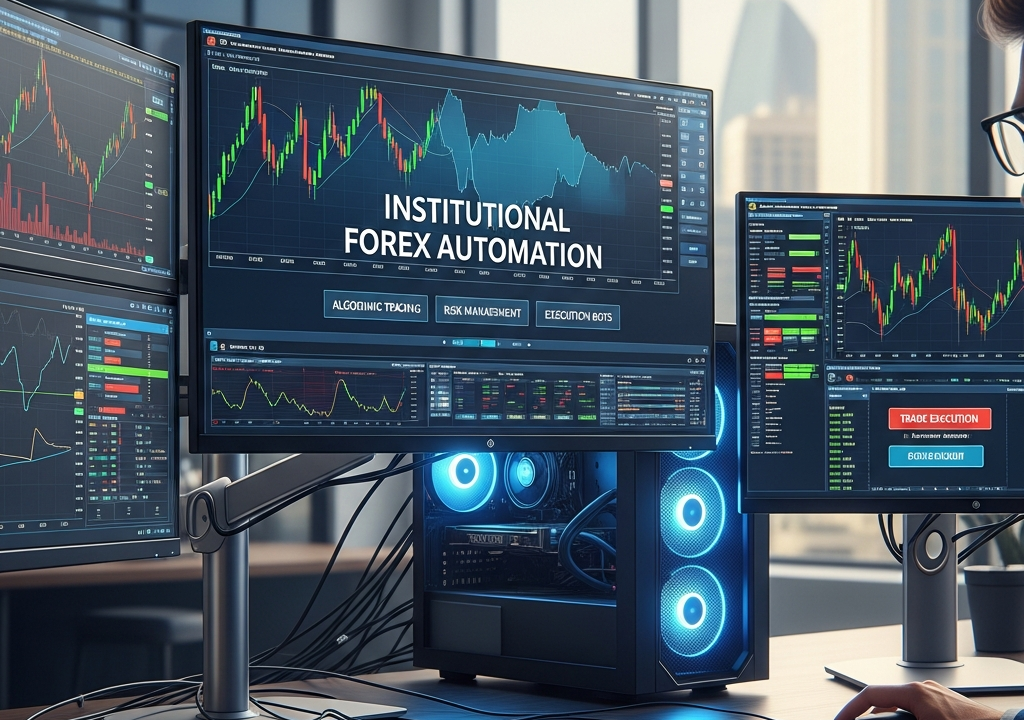
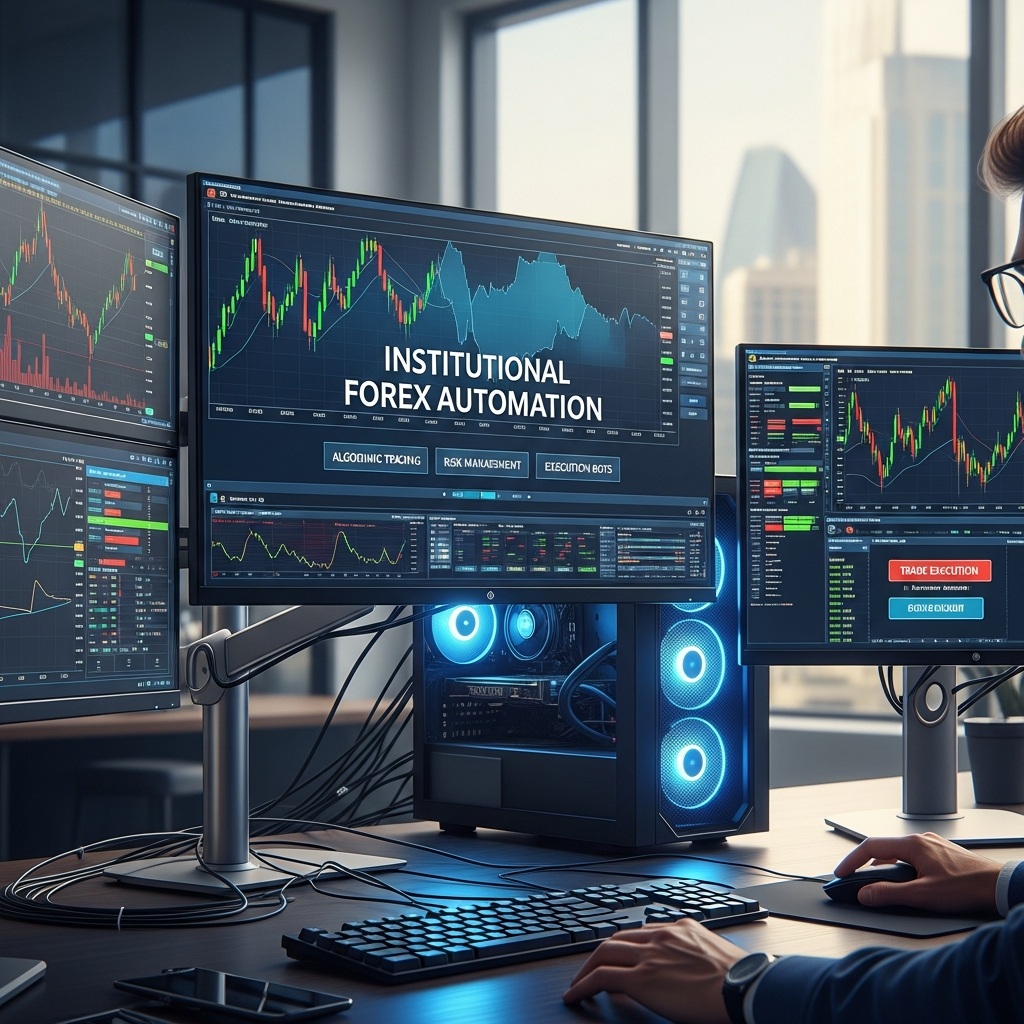
As we navigate the financial landscape of 2026, the distinction between retail and institutional forex trading has never been more pronounced, largely due to the sophistication of institutional forex automation tools. For hedge funds, asset managers, and Tier-1 banks, automation is no longer a luxury or a competitive edge—it is the baseline for survival. The sheer volume of data, coupled with the millisecond-level shifts in global liquidity, requires a tech stack that can process, analyze, and execute with precision far beyond human capability.
Institutional forex automation tools have evolved from simple script-based execution to hyper-intelligent systems integrated with generative AI, predictive modeling, and quantum-resistant security protocols. In this guide, we explore the essential components of the modern institutional infrastructure and how these tools are reshaping the global currency markets.
The Evolution of Execution: Beyond Simple Algos
In previous years, algorithmic trading was often synonymous with basic execution strategies like VWAP (Volume Weighted Average Price) or TWAP (Time Weighted Average Price). While these remain foundational, the 2026 institutional environment demands ‘Adaptive Algos.’ These are tools that don’t just follow a pre-set path but modify their behavior based on real-time market microstructure analysis.
Smart Order Routing (SOR)
Smart Order Routing has become the heartbeat of institutional desks. With liquidity fragmented across dozens of ECNs (Electronic Communication Networks), dark pools, and bank portals, an SOR tool’s job is to find the best possible price while minimizing market impact. Modern SORs use machine learning to predict which liquidity provider (LP) is likely to provide the best fill at a specific micro-moment, accounting for ‘last look’ latencies and historical rejection rates.
Low-Latency Connectivity and Co-location
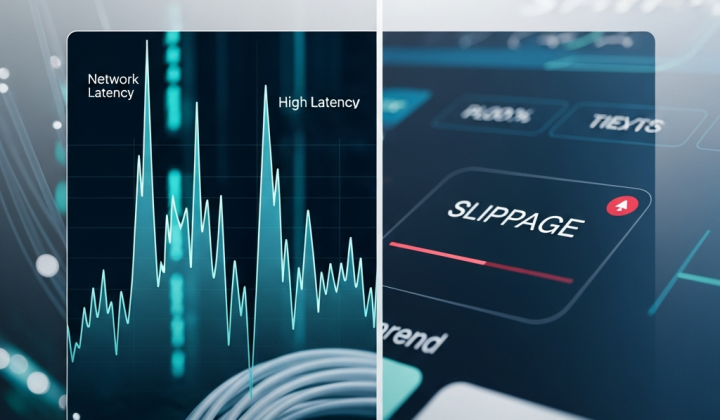
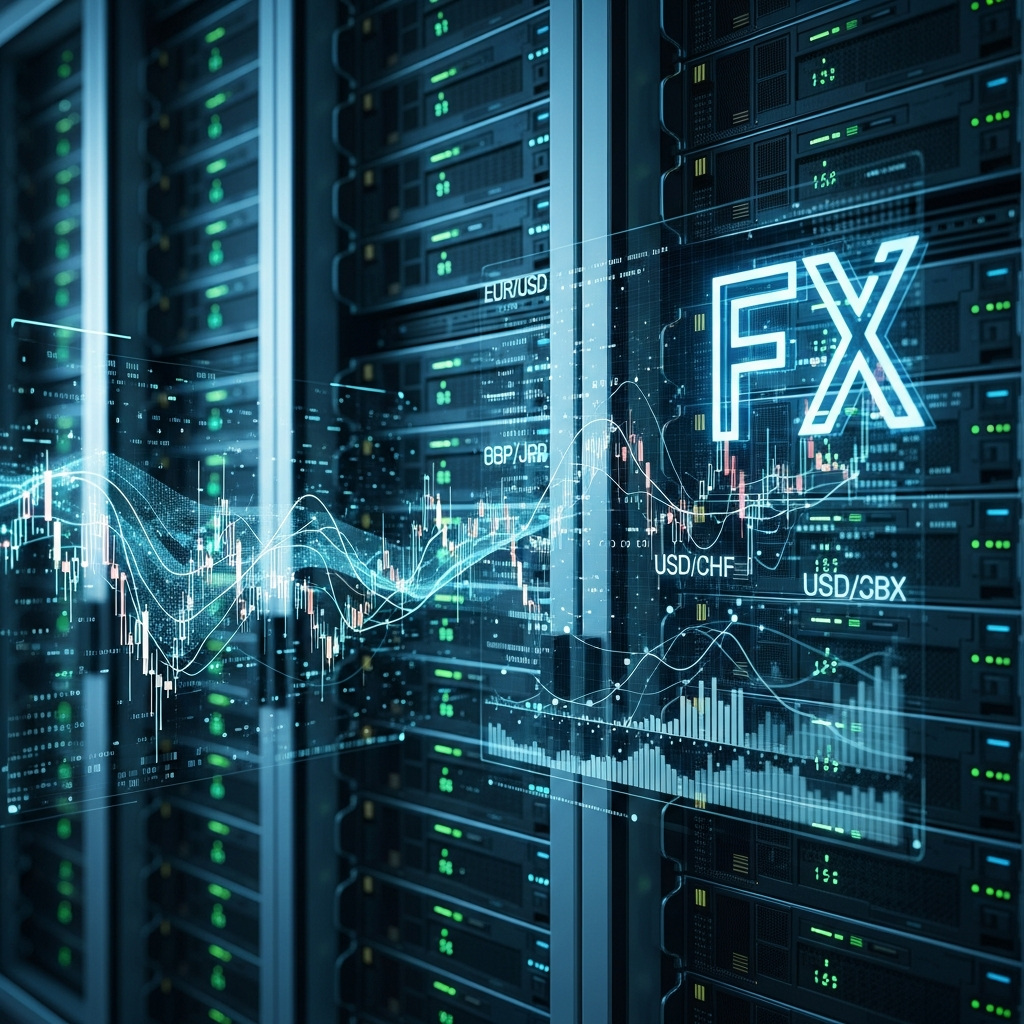
Speed still kills in 2026. Institutional automation tools are useless if the data packets are traveling across standard internet infrastructure. Professional setups utilize cross-connects within major data centers like Equinix LD4 (London), NY4 (New York), or TY3 (Tokyo). By co-locating automation servers inches away from the liquidity providers’ engines, institutions reduce ‘slippage’—the difference between the expected price of a trade and the price at which the trade is executed.
Artificial Intelligence and Predictive Analytics
The biggest shift in the 2026 toolset is the deep integration of Artificial Intelligence. Unlike the ‘black box’ systems of the past, today’s AI-driven institutional tools offer ‘Explainable AI’ (XAI), allowing compliance officers and risk managers to understand why a specific trade was initiated.
Sentiment Analysis Engines
Institutional forex automation tools now ingest more than just price action. They process multi-modal data: central bank speeches, real-time news feeds, social media shifts, and even satellite data monitoring economic activity. Natural Language Processing (NLP) models can detect a ‘hawkish’ or ‘dovish’ shift in a Federal Reserve statement in milliseconds, triggering automated position adjustments before a human trader can even finish reading the headline.
Predictive Volatility Modeling
Volatility is both a risk and an opportunity. Advanced tools now use recurrent neural networks (RNNs) to predict periods of ‘cluster volatility.’ By identifying these patterns, institutional tools can automatically widen spreads on their internal market-making desks or reduce exposure in high-risk currency pairs like emerging market exotics before the market becomes disorderly.
Liquidity Aggregation and Management
For an institution, managing liquidity is a balancing act. You need enough depth to move large blocks without ‘gapping’ the market, but you also need to manage the costs associated with various LPs. Liquidity aggregation tools serve as the bridge between the institution and the broader market.
Multi-Asset Integration
In 2026, forex is rarely traded in a vacuum. Institutional tools now offer seamless cross-asset automation. If a large move occurs in the 10-year Treasury yield, automated systems can instantly hedge the corresponding risk in the USD/JPY or EUR/USD pairs. This ‘inter-market analysis’ is automated through unified APIs that handle multiple asset classes simultaneously.
Customizable Liquidity Streams
Modern aggregators allow institutions to ‘tier’ their liquidity. An institutional tool might route a standard 5-million-unit trade to a top-tier bank, while a much larger ‘parent’ order is broken into ‘child’ orders and distributed across multiple ECNs to mask the firm’s intentions. This level of customization is handled by the automation layer, ensuring that the institution’s footprint remains as small as possible.
Risk Management and Regulatory Compliance
The regulatory environment in 2026 is more stringent than ever. Automation tools are now the primary line of defense for compliance. Tools must adhere to real-time reporting standards and ‘Best Execution’ mandates that require detailed proof that the firm sought the most favorable terms for their clients.
Automated Circuit Breakers
Institutional platforms are equipped with sophisticated circuit breakers. If an algorithm begins to behave erratically—perhaps due to a ‘fat finger’ error or an unforeseen market anomaly—the system automatically halts trading and alerts the risk desk. These systems also monitor ‘Value at Risk’ (VaR) in real-time, automatically trimming positions if the fund’s total exposure exceeds predefined limits.
Transaction Cost Analysis (TCA)
Post-trade analysis is a critical component of the institutional cycle. Automation tools generate exhaustive TCA reports, comparing every trade against benchmarks like the mid-price at arrival or the closing price of the day. This data is fed back into the machine learning models to further refine execution strategies, creating a virtuous cycle of constant improvement.
The Infrastructure: FIX Protocol and Beyond
The technical backbone of these tools remains the Financial Information eXchange (FIX) protocol, though we are now seeing the adoption of binary protocols for even faster communication. Institutional automation tools provide ‘wrapper’ APIs that allow developers to build complex strategies in Python or C++ while the engine handles the heavy lifting of connectivity, order management, and heartbeat monitoring.
Cloud-Native Institutional Stacks
While co-location is essential for HFT (High-Frequency Trading), many mid-tier institutions have moved their automation stacks to the cloud. Providers like AWS and Azure now offer ‘Finance-Grade’ cloud instances with dedicated hardware and ultra-low latency lanes, allowing smaller hedge funds to access institutional-grade automation without the massive capital expenditure of physical server maintenance.
The Human Element: The Role of the Quant in 2026
Despite the prevalence of automation, the ‘human in the loop’ has not disappeared; the role has simply changed. The modern institutional trader is more of a ‘system pilot.’ Their job is to monitor the automation tools, adjust the parameters based on high-level macroeconomic shifts, and step in during ‘black swan’ events where historical data may not apply.
Institutional forex automation tools in 2026 are focused on augmenting human decision-making. They handle the ‘drudge work’ of monitoring hundreds of pairs and executing thousands of orders, allowing the human talent to focus on strategy, relationship management, and long-term capital allocation.
Conclusion: Choosing the Right Automation Suite
Selecting an institutional forex automation toolset requires a deep dive into the specific needs of the firm. A high-frequency proprietary trading shop will prioritize execution speed and hardware-level optimizations, while a corporate treasury will prioritize ease of integration, robust risk management, and multi-bank connectivity.
As we move further into 2026, the gap between the ‘automated’ and the ‘manual’ continues to widen. For institutions looking to maintain their edge in the $7 trillion-a-day forex market, investing in a robust, AI-integrated, and low-latency automation stack is no longer optional—it is the very foundation of their operational integrity. By leveraging these advanced tools, institutions can navigate the complexities of global finance with unprecedented speed, accuracy, and security.