The Evolution of Grid Trading in 2026
Grid trading has long been a staple in the world of retail and institutional algorithmic trading. However, as we navigate through 2026, the markets have become increasingly sophisticated. The volatility profiles of major currency pairs like EUR/USD and GBP/USD have shifted, driven by high-frequency institutional algorithms and shifting global economic policies. To remain successful, finding profitable grid trading ea settings is no longer about just ‘setting and forgetting.’ It requires a deep understanding of market mechanics, statistical variance, and disciplined risk management.
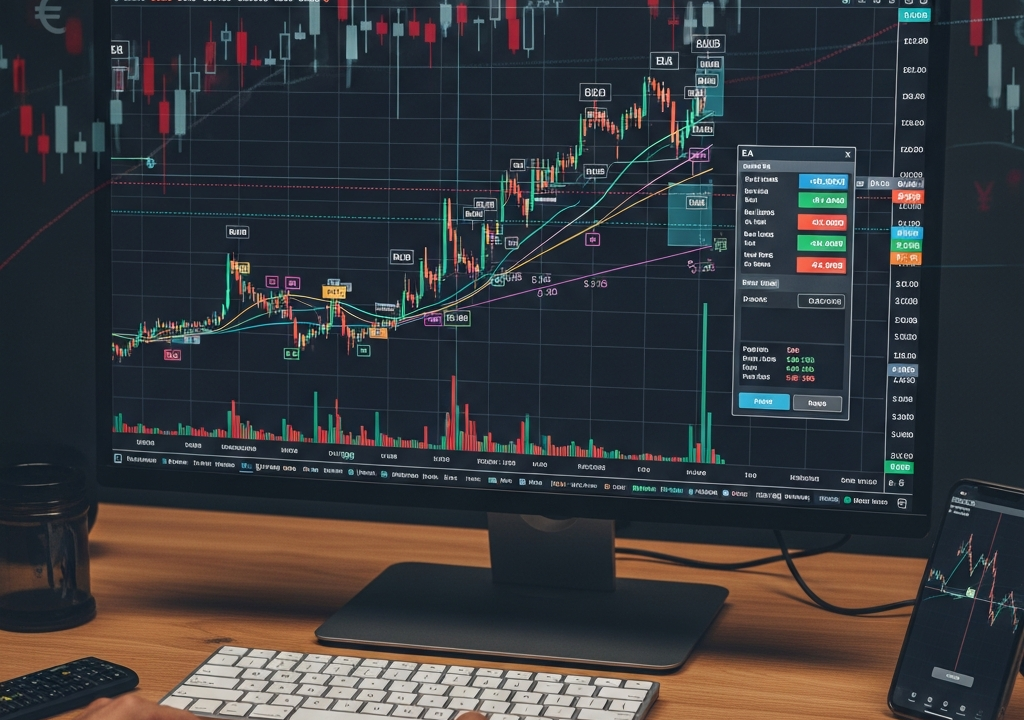
A grid Expert Advisor (EA) functions by placing buy and sell orders at regular intervals above and below a set price. This creates a ‘grid’ of orders that aims to capitalize on market volatility and mean reversion. While the concept is simple, the execution is where most traders fail. In 2026, the difference between a blown account and a 15% monthly return lies entirely in the nuances of your configuration.
Why Most Grid EAs Fail (And How to Fix It)
The primary reason traders struggle with grid strategies is the ‘Martingale’ trap. Many default settings use a heavy lot multiplier that doubles the trade size after every losing position. While this can recover losses quickly in a ranging market, a single strong trend can lead to a margin call. To find truly profitable grid trading ea settings, we must move away from aggressive multipliers and toward dynamic, volatility-adjusted parameters.
Core Parameters for Success
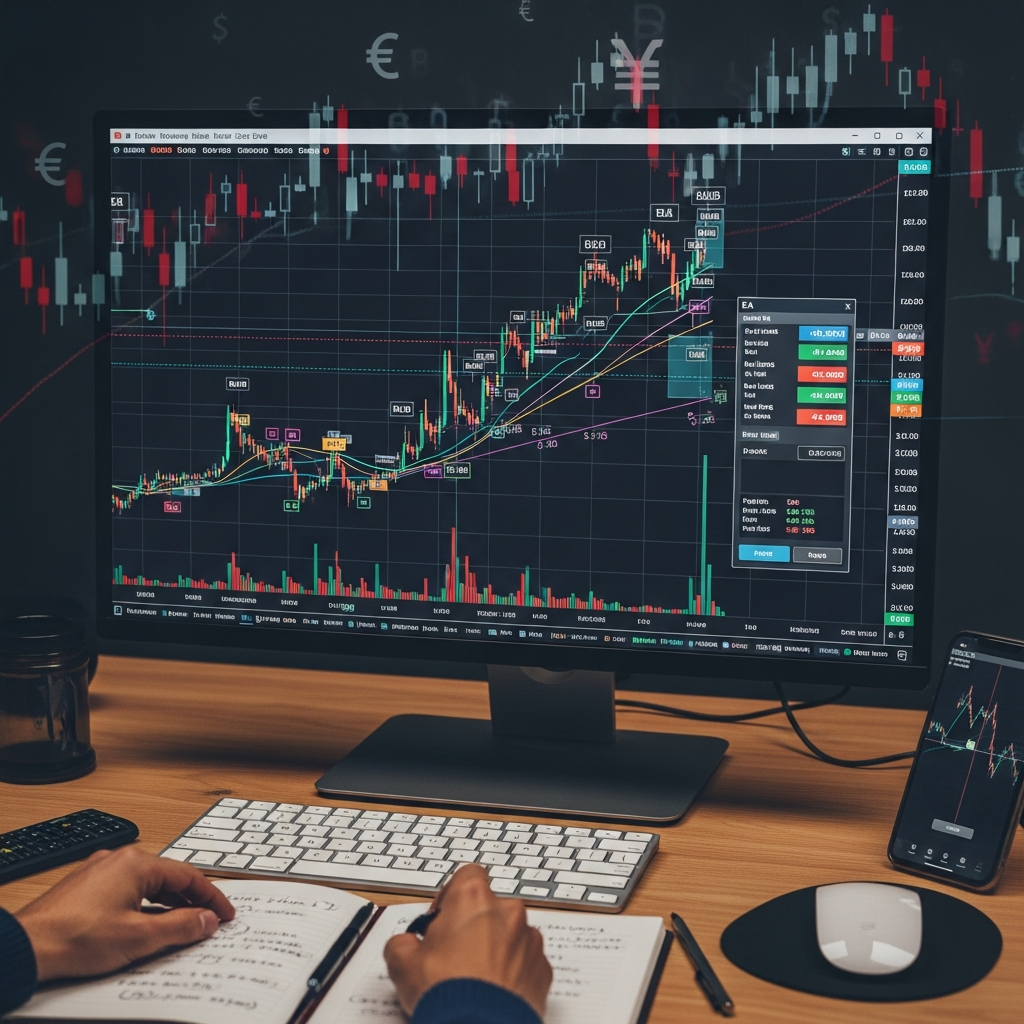
To build a robust grid strategy, you must master five core settings. Let’s break down each one through the lens of modern 2026 market conditions.
1. Grid Distance (Step)
The grid distance, or ‘step,’ defines the number of pips between each order. In previous years, traders often used a fixed step (e.g., 10 pips). In 2026, fixed steps are often inefficient due to expanding and contracting market volatility. The most profitable settings now utilize an ATR-based (Average True Range) distance. By setting your grid step to 0.5x or 1.0x of the H1 ATR, your EA automatically widens the grid during high volatility and tightens it during quiet periods, reducing the risk of over-leveraging during news events.
2. Lot Sizing and Multipliers
This is the engine of your EA. A ‘Flat Grid’ (multiplier of 1.0) is the safest but requires a larger move to hit the take-profit level for the entire basket. An ‘Aggressive Grid’ (multiplier of 1.5 to 2.0) is dangerous. For 2026, the ‘Sweet Spot’ is typically a 1.15x to 1.3x multiplier. This allows the break-even point to move closer to the current price without exponentially increasing the drawdown risk.
3. Take Profit (TP) Strategy
Instead of setting a TP for individual trades, profitable grid trading ea settings usually focus on a Basket Take Profit. This is a dollar amount or a percentage of equity. In 2026, many advanced EAs also use a ‘Trailing Basket TP,’ which locks in profits if the market continues to move in your favor after the grid has started to close, maximizing the yield from volatile swings.
4. Maximum Number of Orders
You must have a hard ceiling. Even the most resilient grid can be broken by a ‘black swan’ event. Setting a maximum of 10 to 15 orders per side prevents the EA from chasing a trend into oblivion. If the market hasn’t reversed by the 15th trade, it is likely a fundamental shift, and it is better to take a controlled loss than to lose the entire account.
5. Equity Protection (Global Stop Loss)
Never run a grid EA without an equity-based stop loss. For instance, if you are targeting 5% profit per month, you might set a hard stop at 20% drawdown. This ensures that even in the worst-case scenario, you live to trade another day.
Optimizing for 2026: The Role of AI and Sentiment
As we move through 2026, the integration of AI filters into grid EAs has become a game-changer. Standard grid EAs are ‘market blind’—they don’t know if a move is a random spike or a major trend change. Profitable grid trading ea settings now often include a Trend Filter (using AI-driven sentiment analysis or multi-timeframe moving averages).
By disabling the ‘counter-trend’ side of the grid during a strong directional move, you significantly reduce the ‘drawdown-to-profit’ ratio. For example, if the Daily and H4 charts show a strong bullish trend, the EA should only open ‘Buy’ grids on retracements, rather than trying to sell into the rally.

The Best Pairs for Grid Trading in 2026
Not all pairs are created equal. Grid trading thrives on ‘mean-reverting’ pairs—those that tend to stay within a range rather than trending indefinitely. Traditionally, AUD/NZD and NZD/CAD were the kings of the grid. However, in 2026, we have seen excellent results with:
- EUR/CHF: This pair has returned to a more stable range-bound behavior, making it ideal for tight grid settings.
- AUD/USD: While more volatile, its frequent ‘ping-pong’ movements provide numerous entry and exit opportunities.
- CAD/JPY: A great choice for those looking to capture carry trade interest alongside the grid profits, though it requires wider grid steps due to its volatility.
Backtesting: The ‘Stress Test’ Methodology
When searching for profitable grid trading ea settings, backtesting is your laboratory. In 2026, we no longer rely on simple ‘Every Tick’ tests. To truly vet a grid strategy, you should perform Monte Carlo Simulations. This involves running your settings through randomized versions of historical data to see how the strategy handles ‘unseen’ volatility.
Look for a ‘Recovery Factor’ of at least 3.0 and a ‘Sharpe Ratio’ above 1.5. If your backtest shows a 40% drawdown to achieve a 60% annual return, it might look good on paper, but the psychological stress of a 40% dip is often too much for the average trader. Aim for settings that offer a smoother equity curve with smaller, more frequent wins.
Step-by-Step Configuration Guide
If you are setting up your EA today, here is a balanced configuration template to start your optimization process:
- Base Lot: 0.01 per $2,000 of balance (Conservative).
- Lot Multiplier: 1.25x.
- Grid Step: 15 pips (or 0.8x ATR H1).
- Basket Take Profit: $10 – $15 (per 0.01 base lot).
- Max Trades: 12.
- News Filter: Enabled (Stop trading 60 mins before/after high-impact news).
- Time Filter: Avoid the Friday New York close and Sunday market open.
Psychology and Expectations
The final component of profitable grid trading ea settings isn’t a number in a software box; it’s the trader’s mindset. Grid trading is a ‘slow and steady’ game. There will be weeks where the drawdown sits at 5-10% for days. The temptation to manually intervene and close trades is high. However, if you have done your backtesting and set your safety parameters, the best course of action is usually to let the mathematics play out.
Successful traders in 2026 treat their grid EAs like a business. They withdraw profits regularly to reduce their ‘at-risk’ capital and they never trade money they cannot afford to lose. Grid trading is a tool for capital compounding, not a lottery ticket.
Conclusion
Achieving profitable grid trading ea settings in 2026 requires a blend of traditional logic and modern technology. By moving away from aggressive Martingale structures and embracing ATR-based distancing, AI trend filters, and strict equity protection, you can build a system that thrives in the current market environment. Remember that the best settings are those that allow you to sleep at night. Start conservative, optimize based on real-world data, and let the power of the grid work for you.