
Introduction to HFT Forex Robots for Retail Traders
In the fast-paced world of financial markets, High-Frequency Trading (HFT) was once the exclusive playground of Tier-1 banks, hedge funds, and institutional powerhouses. However, as we move through 2026, the landscape has shifted dramatically. The democratization of technology has brought HFT forex robots to the fingertips of the retail trader. What was once a mystery shrouded in proprietary code and multi-million dollar server rooms is now accessible via cloud-based virtual private servers (VPS) and advanced API integrations.
But what exactly does ‘High-Frequency Trading’ mean for a retail trader? Unlike traditional scalping bots that might hold a trade for a few minutes, HFT robots operate on the millisecond or even microsecond scale. They capitalize on minute price inefficiencies, arbitrage opportunities, and order flow imbalances that exist only for a heartbeat. In this comprehensive guide, we will explore the mechanics, the risks, and the infrastructure required to run HFT systems successfully in the current retail environment.

The Evolution of Speed: Why 2026 is Different
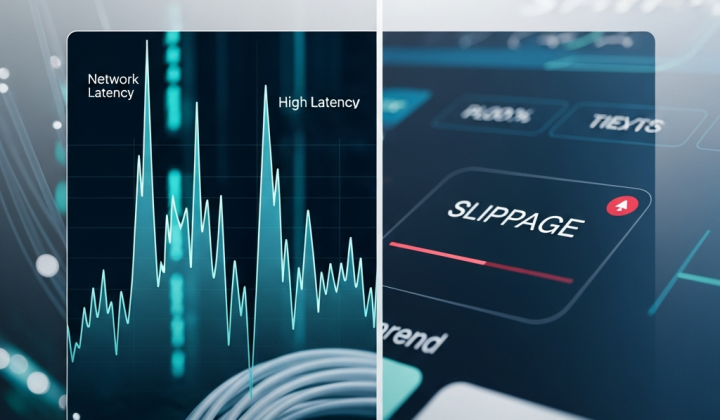
Just a few years ago, the idea of a retail trader running a true HFT bot was laughable. The latency (the delay between sending an order and its execution) on standard MetaTrader 4 (MT4) platforms was simply too high. In 2026, the industry has evolved. We now see the widespread adoption of FIX API trading, low-latency bridge connectors, and the proliferation of retail brokers offering ‘raw spread’ accounts with direct market access (DMA).
Furthermore, the infrastructure supporting retail trading has improved. Edge computing and localized data centers in London (LD4), New York (NY4), and Tokyo (TY3) have allowed retail traders to achieve sub-millisecond execution speeds that were previously unattainable without a direct fiber connection to the exchange or liquidity provider.
How HFT Forex Robots Work
At its core, an HFT forex robot is an algorithm designed to execute a high volume of orders at extremely high speeds. These bots do not look at daily trends or fundamental economic shifts. Instead, they focus on mathematical probabilities and the mechanics of the market itself.
1. Latency Arbitrage
This is perhaps the most common form of HFT used by retail traders. The robot compares a ‘fast’ price feed (usually from a primary exchange or a high-tier liquidity provider) with a ‘slow’ price feed from a retail broker. If the robot detects that the fast feed has moved up but the retail broker’s price hasn’t updated yet, it places a buy order, anticipating the inevitable price correction. In 2026, this requires incredibly sophisticated software to bypass broker ‘anti-arbitrage’ plugins.
2. Momentum Ignition and Scalping
HFT bots often look for ‘clusters’ of orders. By detecting a sudden influx of buying pressure, the bot can enter a position and exit it within a fraction of a second, capturing a fraction of a pip. When repeated thousands of times a day, these tiny gains compound into significant profit, provided the commission structure is favorable.
3. Prop Firm Challenges
A massive trend in 2026 is the use of HFT robots to pass ‘Prop Firm’ evaluations. Many modern prop firms allow the use of HFT bots during their evaluation phases because these bots can reach profit targets in a matter of minutes by exploiting demo environment latencies. This has become a gateway for many retail traders to access large amounts of trading capital.
The Essential Infrastructure for Retail HFT
You cannot run an HFT forex robot on a standard home laptop or a basic $10-a-month VPS. To compete in the high-frequency space, the infrastructure is just as important as the code itself.
Low-Latency VPS and Co-location
To minimize the distance data has to travel, your HFT robot must be hosted on a server physically located in the same data center as your broker’s trade server. For example, if your broker uses Equinix NY4, your VPS must also be in NY4. In 2026, specialized ‘HFT VPS’ providers offer optimized hardware with high-clock-speed CPUs to ensure that the algorithm processes ticks faster than the competition.
FIX API Integration
While MT4 and MT5 have improved, they still involve ‘wrapper’ lag. Serious retail HFT traders use FIX (Financial Information eXchange) API. This allows the robot to communicate directly with the broker’s liquidity pool, bypassing the graphical user interface and standard platform overhead. This can shave 5-10 milliseconds off your execution time—a lifetime in the world of HFT.

Broker Selection: The Make-or-Break Factor
Not all brokers are HFT-friendly. In fact, many retail brokers actively discourage or ban HFT strategies because they can disrupt the broker’s risk management or exploit their price feed. When looking for a broker for HFT in 2026, consider the following:
- Execution Model: You need an ECN (Electronic Communication Network) or STP (Straight-Through Processing) broker. Avoid ‘Market Makers’ who take the other side of your trade, as they are more likely to implement ‘slippage’ or ‘requotes’ to protect themselves from HFT bots.
- Slippage and Fill Rate: An HFT bot might aim for a 0.5 pip profit. If you experience 0.3 pips of slippage, your strategy becomes unviable. Look for brokers with high ‘fill rates’ and deep liquidity.
- Commission Structure: Since HFT involves high volume, commissions can eat all your profits. Negotiating a volume-based commission discount is a standard practice for HFT traders in 2026.
Risks and Challenges for the Retail HFT Trader
While the prospect of automated, high-speed profits is alluring, HFT is not a ‘set and forget’ money machine. It carries unique risks that can lead to catastrophic account depletion if not managed correctly.
Technological Failure
In 2026, the complexity of these bots means there are more points of failure. A minor API update, a VPS reboot, or a brief internet flicker at the data center can leave an HFT bot stuck in a position without a stop loss, or worse, entering a loop of erroneous trades.
Flash Crashes and Volatility
HFT bots thrive on ‘clean’ micro-movements. During high-impact news events (like a central bank rate decision), the bid-ask spread can widen significantly, and liquidity can vanish. An HFT bot that isn’t programmed to pause during these times can be ‘caught in the spread,’ losing weeks of profit in a few seconds.
The ‘Arms Race’
HFT is an ongoing competition. If a specific arbitrage opportunity exists, you aren’t the only one trying to capture it. As more retail traders deploy HFT robots, the ‘easy’ inefficiencies are traded away, requiring even faster code and better infrastructure to stay profitable. It is a constant game of cat and mouse between the trader, the market, and the broker.
The Future of HFT: AI and Machine Learning in 2026
As we look deeper into 2026, the integration of Artificial Intelligence (AI) into retail HFT robots has become the new standard. Traditional HFT bots were rule-based (e.g., “if A happens, do B”). Modern AI-driven HFT bots use machine learning to adapt to changing market micro-structures in real-time.
These AI bots can analyze thousands of order book changes per second to predict the next move with a high degree of accuracy. They can also ‘learn’ the behavior of certain liquidity providers, identifying who is likely to offer the best fill at any given millisecond. This level of sophistication further narrows the gap between the retail trader and the institutional desk.
Conclusion: Is an HFT Forex Robot Right for You?
The rise of HFT forex robots for retail traders represents a significant technological milestone. In 2026, the tools required to compete at high speeds are more accessible than ever. However, the barrier to entry is no longer just capital—it is knowledge and infrastructure.
To succeed with HFT, a retail trader must be part programmer, part systems administrator, and part risk manager. You must understand the nuances of latency, the mechanics of the FIX API, and the realities of market liquidity. For those willing to invest in the right setup and continually optimize their algorithms, HFT offers a way to extract consistent profits from the noise of the forex market. For others, it remains a high-risk endeavor that requires caution and significant due diligence.
In the end, the ‘best’ HFT robot is not just the fastest one, but the one backed by a trader who understands the underlying market conditions and maintains a rigorous technological edge.