The Evolution of Forex Trading in 2026
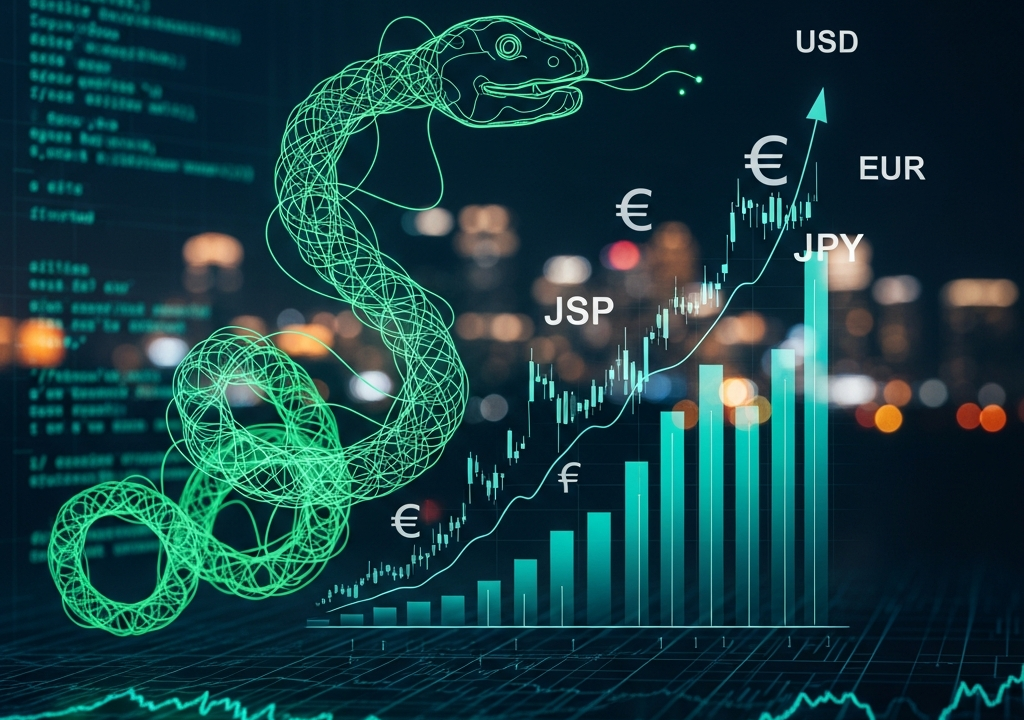
The landscape of foreign exchange (Forex) trading has undergone a radical transformation over the last decade. As we navigate 2026, the reliance on manual chart analysis has largely been replaced by sophisticated, automated systems. At the heart of this revolution are python-based forex trading algorithms. Once the exclusive domain of high-frequency trading firms and institutional hedge funds, these tools are now accessible to retail traders who possess the technical know-how to harness Python’s power.
Python has solidified its position as the undisputed language of choice for financial engineering. Its balance of readability, high-performance libraries, and a massive community makes it the ideal environment for developing, testing, and deploying trading strategies that can react to market shifts in milliseconds. In this guide, we will explore the architecture of modern forex bots, the libraries that make them possible, and the strategic shifts occurring in the 2026 market.
Why Python Dominates the Forex Market in 2026
In 2026, the speed of information is faster than ever. Market volatility is driven not just by economic reports, but by AI-generated news cycles and decentralized finance (DeFi) liquidity shifts. Python remains the king of this ecosystem for several reasons.
The Ecosystem of Financial Libraries
Python’s strength lies in its modularity. Developers don’t need to build financial models from scratch. Instead, they leverage advanced libraries that have been refined over years:
- Pandas & NumPy: The bedrock of data manipulation. In 2026, Pandas 3.x offers even faster vectorized operations, allowing traders to process decades of tick data in seconds.
- Pandas-TA: A modern library for technical analysis that includes hundreds of indicators, from simple moving averages to complex volatility squeeze metrics.
- Scikit-learn & TensorFlow: These are no longer “experimental” in trading. They are core components used to build predictive models that identify patterns invisible to the human eye.
- Numba: For those requiring near-C++ speeds, Numba allows Python code to be JIT-compiled (Just-In-Time), ensuring that execution latency is minimized during high-volatility events.
Beyond the libraries, the integration capabilities of Python are unmatched. Whether you are connecting to a legacy MetaTrader 5 terminal via a bridge or using a modern REST API from a broker like OANDA or Interactive Brokers, Python acts as the perfect glue.
Core Components of a Python-Based Trading Bot
Building a robust trading algorithm requires more than just a “buy” signal. It requires a modular architecture that can handle data, logic, and errors simultaneously. A professional-grade system typically consists of four main modules.
1. Data Acquisition and Cleaning
In 2026, data is more than just price. It includes order book depth, sentiment scores from social media, and macroeconomic indicators. A Python bot must first establish a websocket connection to receive real-time price feeds. This module is responsible for “cleaning” the data—handling missing ticks, correcting outliers, and normalizing the data into a format (like OHLCV) that the strategy can understand.
2. Strategy Logic and Signal Generation
This is the “brain” of the bot. This module takes the cleaned data and applies a set of rules. For example, a strategy might look for a specific confluence of the Relative Strength Index (RSI) and a Fibonacci retracement level. In more advanced setups, this module might involve a pre-trained neural network that outputs a probability score for a bullish or bearish move.
3. Execution and Order Management
Once a signal is generated, the execution module determines how to enter the market. It doesn’t just send a “market buy” order. It calculates the optimal entry price, sets the stop-loss and take-profit levels, and manages position sizing based on the current account equity. In 2026, smart order routing is often used to split large orders across multiple liquidity providers to minimize slippage.
4. Risk Management and Logging
No algorithm is perfect. The risk management module acts as a fail-safe. It monitors the total portfolio drawdown and can shut down the bot if a specific loss threshold is reached. Simultaneously, a logging system records every decision the bot makes, providing a trail of data for post-trade analysis and debugging.
Backtesting: The Critical Validation Phase
Before a single dollar is put at risk, an algorithm must be backtested. Backtesting involves running your Python strategy against historical data to see how it would have performed in the past. However, in 2026, simple backtesting is no longer enough.
Event-Driven vs. Vectorized Backtesting
There are two primary ways to backtest in Python. Vectorized backtesting (using Pandas) is incredibly fast and useful for initial strategy prototyping. It applies the strategy rules to an entire dataset at once. However, it often ignores real-world constraints like spreads, slippage, and the timing of order execution.
Event-driven backtesting is the gold standard for professional traders. Libraries like Backtrader or newer 2026 frameworks simulate the market tick-by-tick. They replicate the actual flow of a live trading environment, ensuring that the results are realistic. If your bot performs well in an event-driven backtest that includes realistic latency and commission costs, it has a much higher chance of success in live markets.
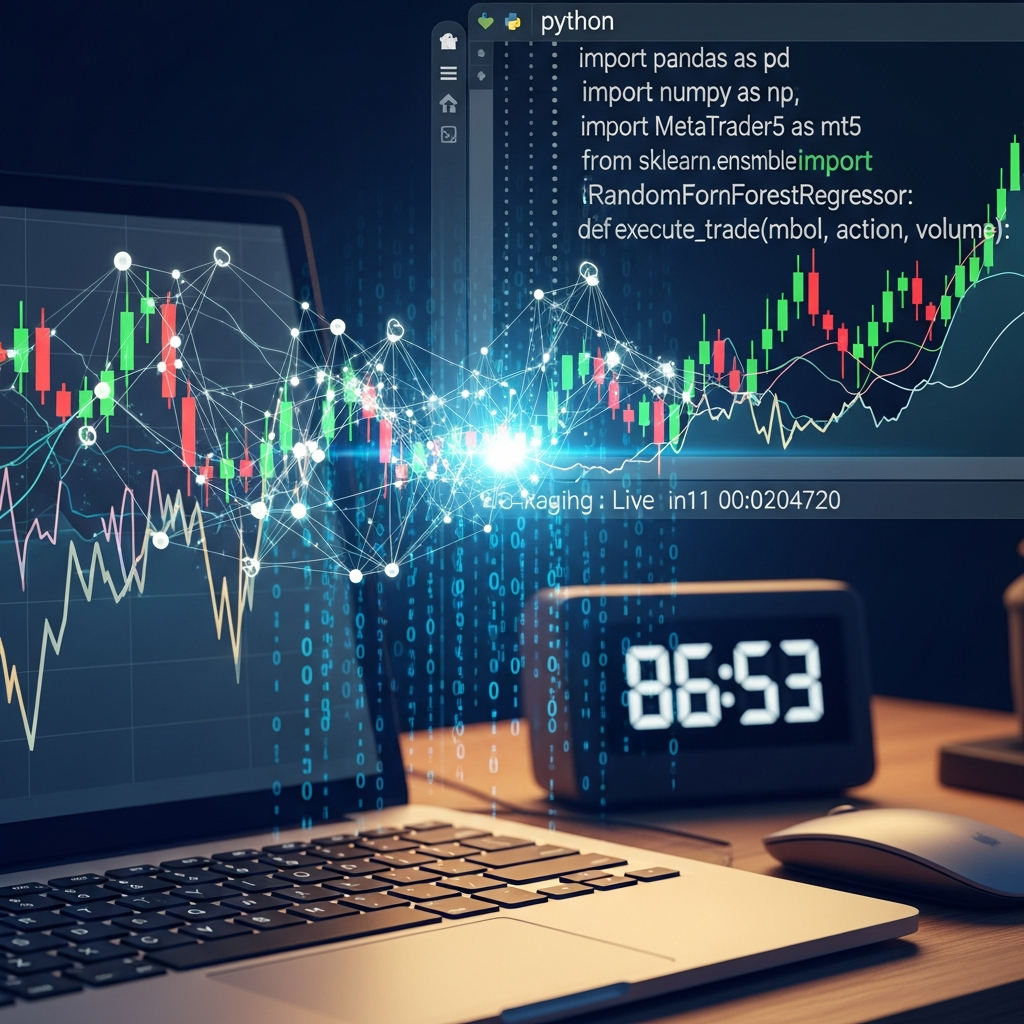
Advanced Strategies: Machine Learning and Sentiment Analysis
As we move deeper into 2026, traditional technical indicators like the MACD or Bollinger Bands are becoming less effective on their own because so many bots are programmed to react to them. This has led to the rise of more complex, Python-driven strategies.
Incorporating NLP for Macro News
Natural Language Processing (NLP) has become a staple in forex trading. Python’s `transformers` library (by Hugging Face) allows traders to build bots that “read” central bank statements or X (formerly Twitter) feeds in real-time. By analyzing the sentiment of a Federal Reserve chair’s speech, an algorithm can adjust its bias on the USD within milliseconds, often before the general public has even finished reading the first sentence.
Reinforcement Learning (RL)
Reinforcement Learning is another frontier. Instead of a trader telling the bot the rules, the bot “learns” the rules by trading in a simulated environment. Using libraries like Stable Baselines3, a Python-based forex algorithm can run millions of simulations, receiving “rewards” for profitable trades and “penalties” for losses. Over time, the bot develops a nuanced understanding of market dynamics that a human could never manually program.
Deployment and Infrastructure in 2026
A trading algorithm is only as good as the environment it runs in. In 2026, the days of running a trading bot on a home laptop are over. Professional traders use cloud-based infrastructure to ensure 100% uptime and low latency.
Cloud Execution and Containerization
Modern Python bots are typically deployed using Docker. By containerizing the application, traders ensure that the code runs exactly the same on an AWS (Amazon Web Services) or Google Cloud server as it did on their local machine. Cloud deployment allows for:
- Low Latency: Deploying the server in a region close to the broker’s data center (e.g., London or New York) to minimize execution delay.
- Redundancy: Using managed services that automatically restart the bot if it crashes.
- Scalability: Running multiple instances of the same bot across different currency pairs simultaneously.
Risk Management and Ethics in Algorithmic Trading
With great power comes great responsibility. Python-based forex trading algorithms can execute hundreds of trades a day, which means errors can compound rapidly. In 2026, ethical AI and risk safeguards are not optional.
Traders must implement “Circuit Breakers” within their code. These are hard-coded limits that prevent the bot from trading if the market becomes too volatile or if the bot’s logic begins to produce unexpected results. Furthermore, over-optimization (also known as curve-fitting) is a constant trap. A bot that is too perfectly tuned to historical data will likely fail when it encounters the “random walk” of the future market.
Conclusion: The Path Forward
The world of python-based forex trading algorithms in 2026 is both exciting and challenging. Python has democratized high-level finance, giving individuals the tools to compete with giants. However, success in this field requires a commitment to continuous learning. The market is an evolving organism; a strategy that works today may be obsolete tomorrow.
By mastering Python’s financial ecosystem, prioritizing rigorous backtesting, and maintaining a strict approach to risk management, you can build systems that operate with a level of discipline and speed that no human trader could ever match. Whether you are building a simple trend-following bot or a complex deep-learning model, the future of Forex is written in Python.