The Evolution of Price Action: The Rise of the Automated Supply and Demand Zone EA
In the rapidly evolving landscape of financial markets, the year 2026 has marked a significant turning point for retail traders. We are no longer in an era where manual chart drawing is the gold standard. Instead, the focus has shifted toward precision, speed, and the removal of human error. At the heart of this transition is the automated supply and demand zone ea, a tool that has become indispensable for those looking to mirror the tactics of institutional players. Supply and demand trading, a methodology rooted in the basic laws of economics, has stood the test of time, but its manual application is often fraught with subjectivity. An automated solution bridges the gap between raw market data and actionable, objective trading decisions.
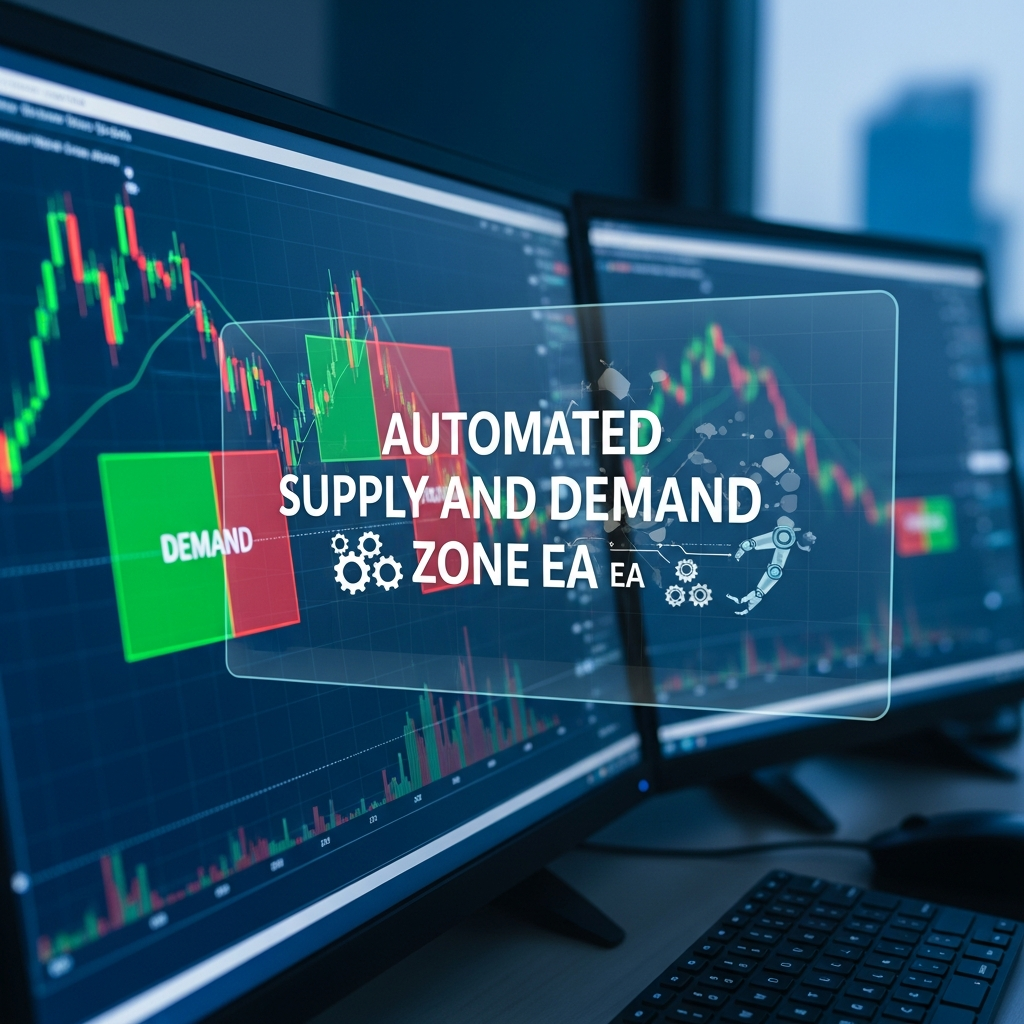
Understanding why supply and demand remains the cornerstone of successful trading requires a look at how markets function. Prices move because of an imbalance between buyers and sellers. When there is an excess of buy orders (demand) that cannot be filled at the current price, the price must rise to find more sellers. Conversely, when sell orders (supply) overwhelm the available buyers, the price drops. These imbalances leave behind specific footprints on a price chart—zones where the move originated. An automated supply and demand zone ea is designed to scan thousands of data points across multiple timeframes to identify these footprints with a level of accuracy that the human eye simply cannot achieve consistently.
Understanding the Mechanics: What Makes an EA Effective?
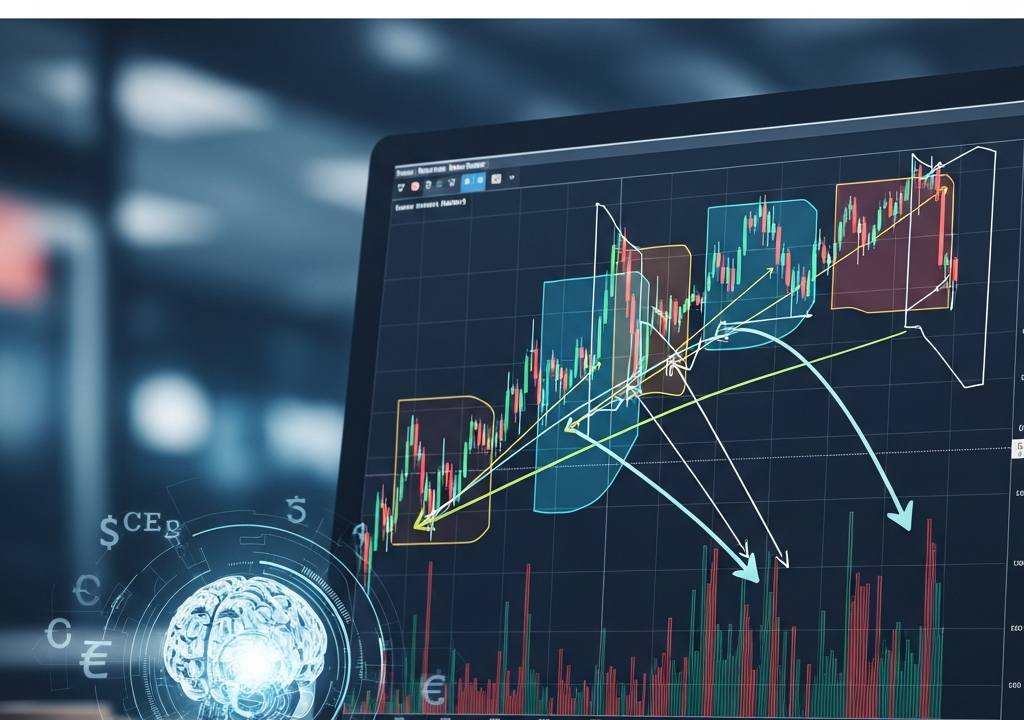
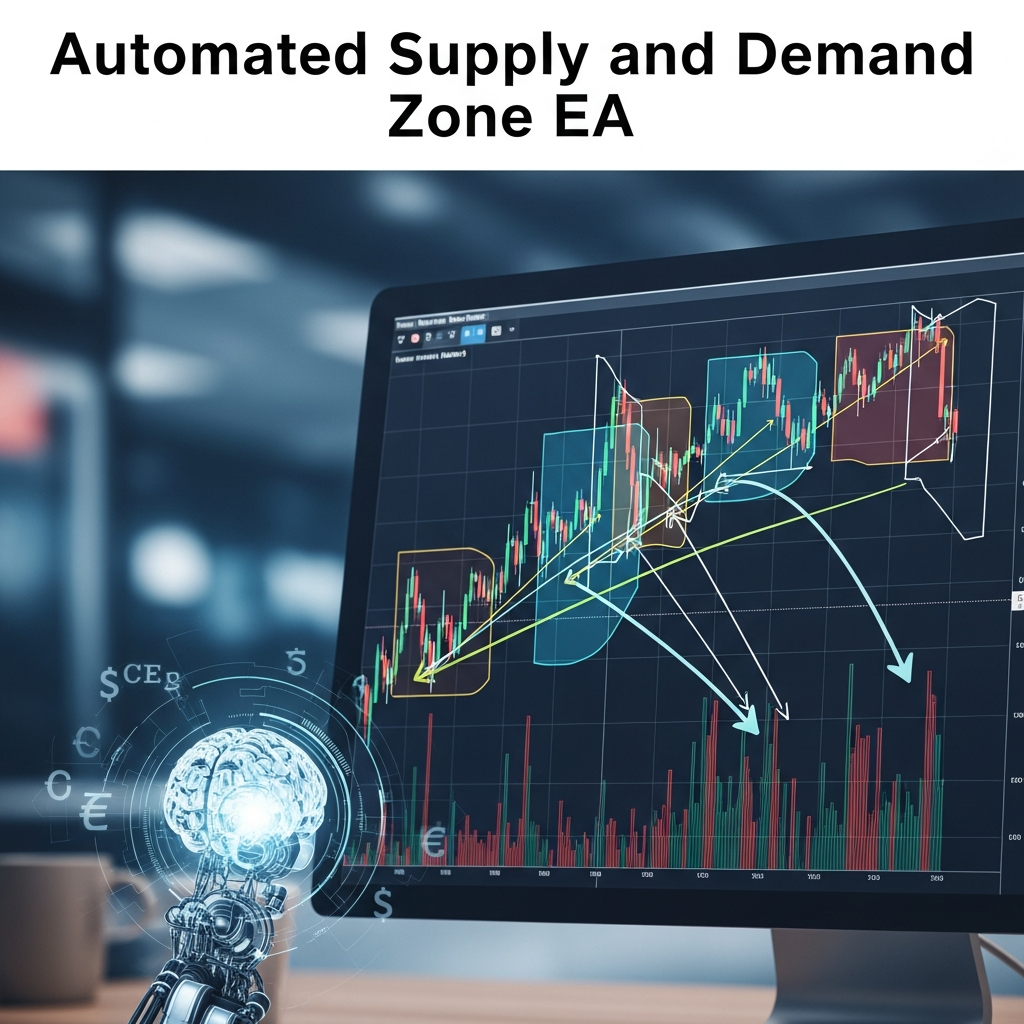
Not all Expert Advisors (EAs) are created equal. In 2026, the market is flooded with various tools, but the most successful automated supply and demand zone ea versions are built on rigorous logic rather than simple support and resistance lines. The logic usually follows a three-step process: identification of the ‘leg-in’ move, the ‘base’ formation, and the ‘leg-out’ explosive move. It is this leg-out move that confirms the presence of institutional interest.
The Logic of ‘Fresh’ Zones
A primary advantage of using an automated tool is its ability to track the ‘freshness’ of a zone. In the world of supply and demand, a zone is most potent the first time it is revisited by the price. Every time the price enters a zone, some of the pending orders left behind by big banks are filled. As these orders are consumed, the zone becomes weaker. A high-quality automated supply and demand zone ea will automatically track these touches, often color-coding the zones or removing them entirely once they are no longer considered high-probability. This ensures the trader is always focused on the most ‘fresh’ and powerful levels in the market.
Identifying Base Candles with Precision
The ‘base’ is where the magic happens. It represents a brief moment of equilibrium before one side wins the battle and price explodes. Manually identifying which candles constitute a valid base can be confusing, especially during periods of high volatility. An EA uses mathematical parameters—such as the ratio of the candle body to its wicks—to objectively define a base. This eliminates the ‘choice fatigue’ that many traders face, allowing for a systematic approach to entries.
Why Automation is Essential in 2026
The trading environment in 2026 is dominated by high-frequency algorithms and AI-driven market makers. For a human trader, competing at this level requires tools that can process information in milliseconds. An automated supply and demand zone ea provides several distinct advantages that are no longer ‘nice to have’ but are requirements for survival.
Removing Psychological Bias
Psychology is the biggest hurdle for any trader. When a trader sees price rapidly approaching a demand zone, the natural human instinct is fear—fear that the price will crash right through. This often leads to hesitation or skipping perfectly valid trades. Conversely, greed might lead a trader to enter too early. An automated system executes based on pre-defined rules. It doesn’t feel fear, it doesn’t get tired, and it doesn’t try to ‘revenge trade’ after a loss. It simply executes the math.
Multi-Timeframe Analysis and Confluence
A common mistake in manual trading is ‘tunnel vision,’ where a trader focuses only on one timeframe, like the 15-minute chart, and fails to see a major daily supply zone sitting right above them. An automated supply and demand zone ea can monitor M1, M5, H1, H4, and Daily charts simultaneously. It can be programmed to only take trades on lower timeframes that are in alignment with higher timeframe zones, a concept known as confluence. This multi-layered filtering significantly increases the win rate by ensuring the trader is always on the right side of the ‘big’ money.
Key Features to Look For in a Supply and Demand EA
If you are in the market for an automated supply and demand zone ea, there are specific features that distinguish professional-grade software from basic scripts. As we look at the standard of technology in 2026, here are the non-negotiables:
- Strength Filtering: The EA should be able to measure the strength of the ‘leg-out’ move. A zone created by a 100-pip jump in one candle is significantly more important than one created by a slow, grinding move.
- Automated Risk Management: It should calculate lot sizes automatically based on a percentage of your account balance. In 2026, sophisticated EAs also include features like ‘hidden’ stop losses to prevent stop-hunting by brokers.
- Zone Type Differentiation: The ability to distinguish between ‘Rally-Base-Rally’ (RBR), ‘Drop-Base-Drop’ (DBD), ‘Rally-Base-Drop’ (RBD), and ‘Drop-Base-Rally’ (DBR) patterns.
- Alert Systems: Even if you aren’t using the EA to take the trades (using it instead as a semi-automated tool), it should provide instant notifications via mobile or desktop when a high-probability zone is formed or touched.
Strategies for Success: How to Use the EA
Owning an automated supply and demand zone ea is only half the battle; knowing how to deploy it is what determines profitability. There are two main ways traders utilize these tools in the current market.
The Fully Automated ‘Set and Forget’ Method
This approach involves setting the EA to scan specific pairs and execute trades without human intervention. This is ideal for traders with busy schedules. To succeed here, rigorous backtesting is required. In 2026, we use ‘Walk-Forward Analysis’ to ensure the EA isn’t just curve-fitted to past data but is robust enough to handle future market shifts. The focus here is on the long-term equity curve rather than individual trade outcomes.
The Hybrid Approach: Human Intelligence + Machine Precision
Many professional traders prefer a hybrid model. They use the automated supply and demand zone ea to do the heavy lifting of scanning 30+ currency pairs or indices. Once the EA identifies a high-quality zone, the trader steps in to check the fundamental context—such as upcoming central bank announcements or geopolitical events. This combination of qualitative human analysis and quantitative machine precision is often the most profitable path in the modern era.
Integrating with Other Indicators
While supply and demand is powerful on its own, adding a layer of confluence can sharpen the entries. Many modern EAs allow for the integration of oscillators like the RSI or Stochastic. For instance, an EA might only trigger a buy order if the price is in a ‘Demand Zone’ AND the RSI is showing oversold conditions. This further filters out noise and focuses on high-conviction setups.
Risk Management in the Age of Algorithms
No matter how advanced an automated supply and demand zone ea is, it cannot predict the future with 100% certainty. Risk management remains the only ‘holy grail’ in trading. When using an EA, it is vital to define the ‘Distal’ and ‘Proximal’ lines of your zones. The proximal line is the entry, and the distal line is where the stop loss usually resides. A professional EA will allow for a ‘buffer’ beyond the distal line to account for market spreads and brief volatility spikes.
Furthermore, the year 2026 has seen a rise in ‘Black Swan’ events. Traders must ensure their EAs have a news filter. A news filter prevents the EA from opening new trades during high-impact news events like the NFP (Non-Farm Payroll) or interest rate decisions, where price can blow through even the strongest zones due to extreme slippage.
The Future of Supply and Demand Trading
As we look forward, the role of the automated supply and demand zone ea will only grow. We are already seeing the integration of machine learning, where the EA ‘learns’ which types of zones have the highest success rate in specific market regimes (trending vs. ranging). The democratization of these tools means that retail traders now have access to the same technology that was once reserved for institutional hedge funds.
However, the core principle remains the same: trading is about probability. An automated tool doesn’t guarantee riches, but it does guarantee a disciplined, repeatable process. By identifying where the big players are placing their orders, and doing so without the cloud of human emotion, traders can navigate the complex markets of 2026 with confidence and clarity.
Final Thoughts
The journey toward becoming a consistently profitable trader is often long and difficult. By adopting an automated supply and demand zone ea, you are essentially hiring a tireless assistant that works 24/7 to find the best opportunities. Whether you are a seasoned veteran or a newcomer to the forex or stock markets, leveraging automation is the most logical step toward achieving your financial goals in this digital age. Embrace the technology, respect the risk, and let the zones guide your path to success.