Beyond the Glitter: A Comprehensive Guide to Mastering Automated Gold Trading Systems
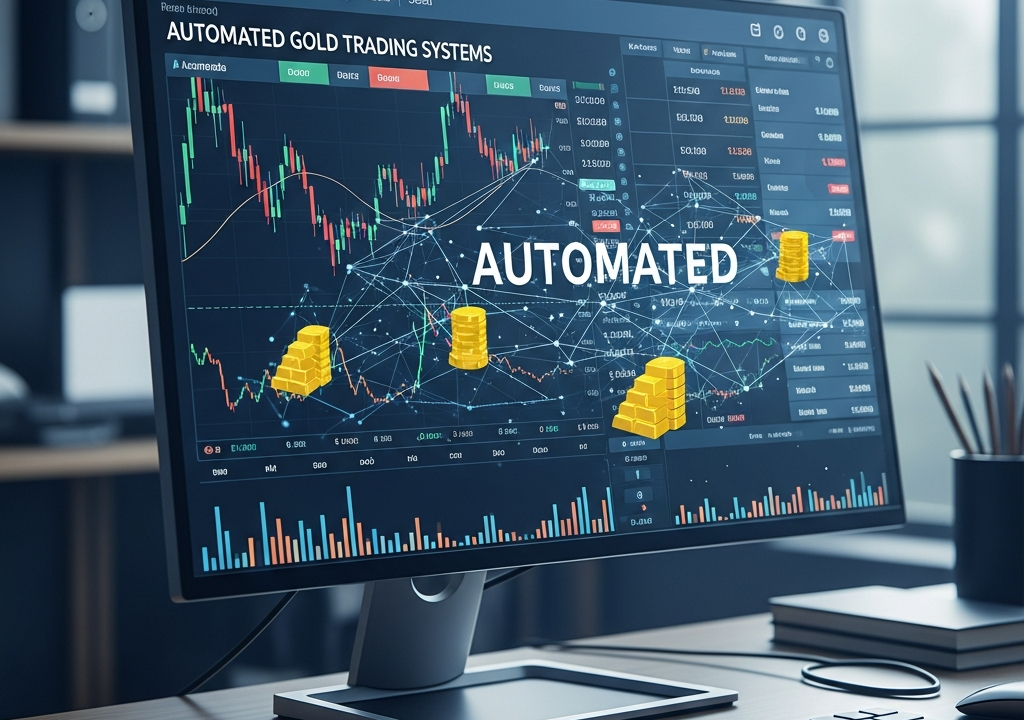
For centuries, gold has stood as the ultimate sanctuary for wealth preservation. In the modern era, the allure of the yellow metal remains unchanged, but the methodology of trading it has undergone a radical transformation. We have moved far beyond the shouting matches on exchange floors. Today, the XAU/USD market is dominated by silent, relentless, and lightning-fast competitors: automated gold trading systems.
As we navigate the financial landscape of 2026, the integration of artificial intelligence and high-frequency algorithms has made automated trading not just an advantage, but a necessity for those looking to compete at a professional level. Whether you are a retail trader looking to remove emotion from your decisions or an institutional investor seeking deep-liquidity execution, understanding the mechanics of gold automation is essential.
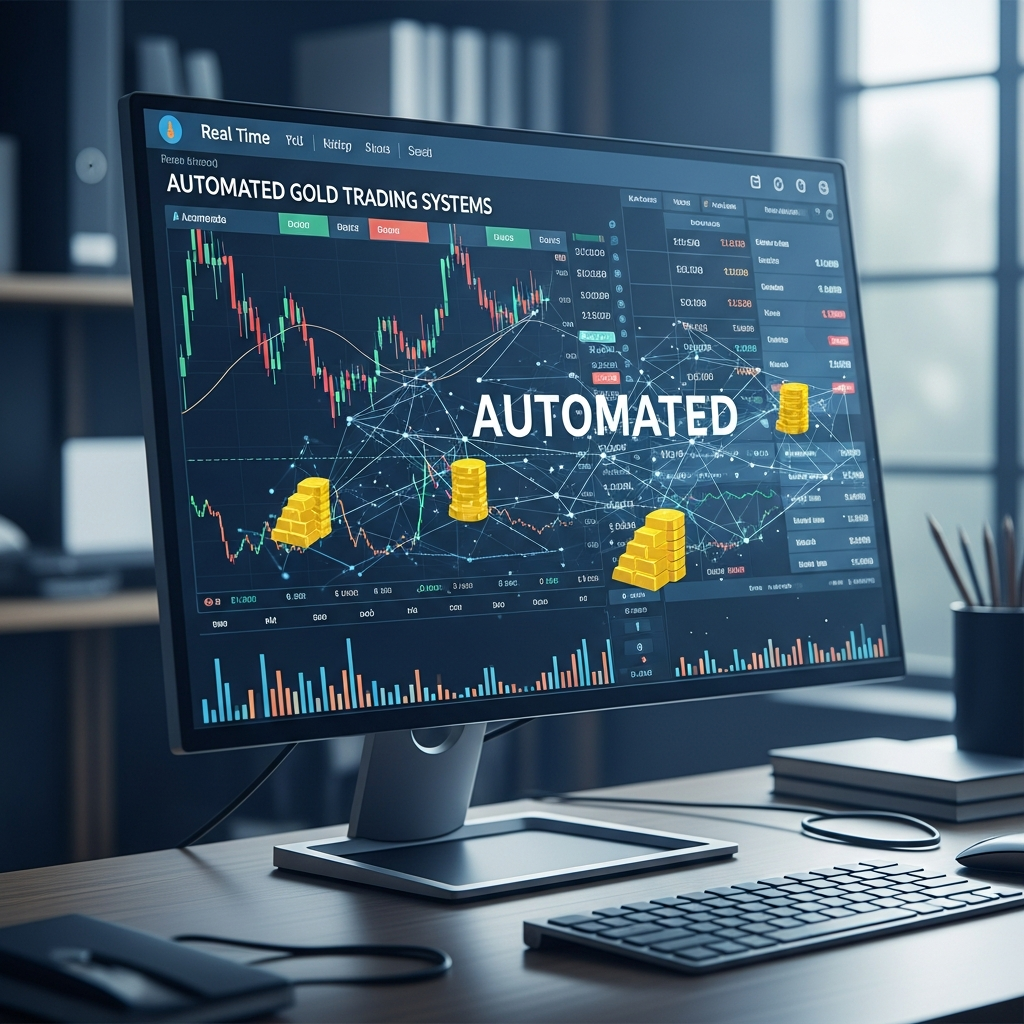
The Rise of Algorithmic Gold Trading
Gold is a unique beast in the trading world. Unlike currency pairs that are tied to the economic health of specific nations, gold acts as a global barometer for geopolitical tension, inflation, and currency debasement. This makes its price action uniquely volatile and often prone to sudden, violent spikes.
Automated gold trading systems, often referred to as “Gold Bots” or “Expert Advisors” (EAs), are programs designed to monitor these price movements 24 hours a day. They execute trades based on a pre-defined set of rules, removing the psychological hesitation that often plagues human traders. In 2026, these systems have evolved from simple moving average crossovers into complex neural networks capable of processing sentiment from news feeds and central bank speeches in real-time.
Why Automate Your Gold Strategy?
The primary argument for automation is consistency. A human trader might have a brilliant strategy, but fatigue, fear, or overconfidence can lead to deviations from that plan. An automated system follows the script without question. Furthermore, the gold market never truly sleeps. While the major moves often happen during the London and New York overlaps, gold reacts to news globally. A bot can catch a breakout at 3:00 AM while you are asleep, ensuring you never miss a liquidity event.
How Modern Gold Bots Function
To understand how to deploy an automated system, one must first understand its internal logic. Most systems built for the 2026 market operate on a multi-layered approach:
1. Technical Analysis Engines
At their core, most gold bots use technical indicators. However, the sophisticated models of today use more than just a basic RSI or MACD. They utilize multi-timeframe analysis to ensure that a short-term scalp isn’t going against a major daily trend. They look for confluence between Fibonacci levels, pivot points, and volume clusters to identify high-probability entry zones.
2. Sentiment and Macro Integration
In 2026, the most successful automated gold trading systems are no longer closed loops. They are connected to live data streams. If the Federal Reserve unexpectedly raises rates, or if a geopolitical conflict escalates in a key mining region, the bot can instantly adjust its risk parameters or exit positions before a human could even open their laptop.
3. Execution Speed and Latency
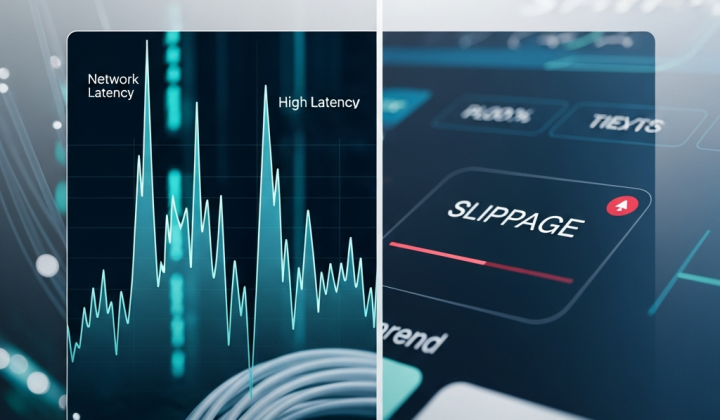
In the world of XAU/USD, pips are won and lost in milliseconds. Automated systems are typically hosted on Virtual Private Servers (VPS) located in close proximity to the broker’s servers (usually in London or New York). This reduces “slippage”—the difference between the price you want and the price you get—which is crucial for high-frequency gold strategies.

Key Strategies for Gold Automation in 2026
Not all bots are created equal. Depending on your risk appetite, you might choose one of several prevailing algorithmic styles:
Mean Reversion
Gold often trades in ranges. Mean reversion bots identify when the price has extended too far from its average (often using Bollinger Bands or Keltner Channels) and bet on a return to the center. These systems thrive in low-volatility environments but require strict stop-losses to avoid being caught in a major breakout.
Trend Following
When gold starts to move, it can trend for weeks or months. Trend-following algorithms use “breakout” logic, entering the market when price clears a significant resistance or support level. These systems often have lower win rates but very high “risk-to-reward” ratios, as they aim to catch the massive moves that gold is famous for.
Grid and Martingale (Proceed with Caution)
Some commercial gold bots use grid strategies, placing buy and sell orders at regular intervals. While these can produce a very smooth equity curve in sideways markets, they are notoriously risky during “black swan” events. In the volatile climate of 2026, most professional traders avoid pure Martingale systems in favor of more robust, risk-managed approaches.
The Importance of Backtesting and Forward Testing
One of the biggest mistakes traders make is buying a “plug-and-play” gold bot and letting it run on a live account immediately. Professional automation requires rigorous validation.
Backtesting involves running the algorithm against historical data. However, in 2026, we have learned that simple backtesting isn’t enough because market conditions change. We now use Walk-Forward Analysis, which tests the bot on one period of time, optimizes it, and then tests that optimization on a completely different, unseen period of data.
Forward Testing (or paper trading) is the final step. Running the bot on a demo account with live market feeds allows you to see how the system handles real-world spreads and execution speeds without risking capital.
Risk Management: The Heart of the Machine
If you take away nothing else, remember this: an automated gold trading system is a tool for execution, not a magic money printer. The difference between a successful algorithmic trader and a failed one is risk management.
- Position Sizing: The bot should never risk more than a small percentage (e.g., 0.5% to 1%) of the total account on a single trade.
- Volatility Filters: During 2026, gold volatility can fluctuate wildly. Advanced systems use an ATR (Average True Range) filter to widen stop-losses and reduce position sizes when the market gets too choppy.
- The Kill Switch: Every automated system needs a hard stop. If the account drawdown reaches a certain threshold (say 10% or 15%), the system should automatically close all trades and shut down to prevent a total blow-up.
Choosing a Broker for Gold Automation
Your bot is only as good as the environment it trades in. When selecting a broker for automated gold trading in 2026, look for the following:
ECN Execution
You want a broker that passes your trades directly to liquidity providers. This ensures the tightest possible spreads on XAU/USD, which is vital for any system that trades frequently.
Low Commission on Metals
Some brokers offer low spreads but hide their costs in high commissions. Calculate the “round-turn” cost of a trade to ensure your bot’s edge isn’t being eaten away by fees.
Platform Compatibility
While MetaTrader 4 (MT4) remains a legacy standard, many 2026 traders have migrated to MetaTrader 5 (MT5) or cTrader due to their superior backtesting engines and faster execution speeds for algorithmic trading.
The Ethical and Regulatory Landscape of 2026
As automated systems become more accessible, regulators have stepped up their oversight. It is crucial to ensure that the software you are using complies with the regulations in your jurisdiction (such as FIFO rules in the US or leverage restrictions in the EU). Furthermore, be wary of “black box” systems sold by anonymous developers promising 1000% returns. Transparency is the hallmark of a professional trading system.
Common Pitfalls to Avoid
Even with the best technology, traders often fall into these traps:
Over-Optimization (Curve Fitting)
This happens when you tweak a bot’s settings so perfectly that it looks amazing on historical data but fails miserably in the future. The bot has essentially “memorized” the past rather than learning to trade the market.
Interfering with the Bot
The hardest part of automated trading is watching the bot take a loss. Many traders panic and manually close a trade, only to see the market reverse and hit the bot’s original target. Once you have tested your system, you must trust the math.
Ignoring Economic Calendars
Even the best technical bot can be blindsided by a high-impact news event. Many pros program their bots to stop trading 30 minutes before and after major announcements like the Non-Farm Payrolls (NFP) or FOMC meetings.
The Future: AI and Deep Learning in Gold Trading
Looking toward the end of the decade, the line between “human” and “machine” strategies will continue to blur. We are seeing the rise of Large Language Model (LLM) integration where bots can “read” the sentiment of the entire internet to gauge gold demand. We are also seeing Reinforcement Learning, where the bot effectively teaches itself to trade by running millions of simulations every day.
Gold will always be a cornerstone of the financial system. It represents stability in an unstable world. By leveraging automated gold trading systems, you are simply using 21st-century tools to master an age-old market. The goal isn’t just to trade faster; it’s to trade smarter, more consistently, and with a level of discipline that no human could ever maintain alone.
Conclusion
Automated gold trading systems represent the pinnacle of modern retail and institutional finance. They offer the ability to scale strategies, eliminate emotional bias, and participate in the global gold market with precision. However, they are not a substitute for market knowledge. The most successful traders in 2026 are those who act as the “pilot” to their automated “autopilot”—understanding the mechanics, monitoring the environment, and knowing when to take the controls. By combining the timeless value of gold with the cutting-edge power of automation, you position yourself at the forefront of the modern financial frontier.