The Reality of Scalping in the 2026 Market Environment
As we navigate through 2026, the financial markets have reached a level of efficiency that was previously only theorized in academic papers. For the retail and institutional trader alike, the goal has shifted from simply ‘finding a trend’ to capturing the microscopic inefficiencies that exist for seconds, or even milliseconds. This is the domain of high win rate scalping bots. Unlike traditional swing trading bots that may hold positions for days, a scalper operates in the noise, extracting small profits repeatedly to build a substantial daily return.
The competition has never been fiercer. With the widespread integration of advanced artificial intelligence and the maturity of decentralized finance (DeFi) liquidity pools, the definition of a ‘high win rate’ has evolved. It is no longer just about a high percentage of successful trades; it is about the mathematical expectancy—the net result of win rate multiplied by the average win, offset by the cost of execution and slippage.
Why High Win Rates are the North Star of Scalpers
In scalping, the margin for error is razor-thin. When your target profit per trade is 0.1% to 0.3%, a single large loss can wipe out a hundred successful trades. This is why high win rate scalping bots are so coveted. They prioritize capital preservation and high-probability setups over the ‘home run’ trades. In 2026, the industry standard for a top-tier bot typically sits between 70% and 85% accuracy, depending on the volatility of the asset class. However, achieving this requires more than just a basic Relative Strength Index (RSI) crossover; it requires a deep understanding of market microstructure.
Anatomy of a High-Performance Scalping Bot
To understand why some bots succeed while others fail, we have to look under the hood. A modern scalping bot is a complex orchestration of several specialized modules, each working in perfect synchronicity.
Low-Latency Infrastructure: The Millisecond War
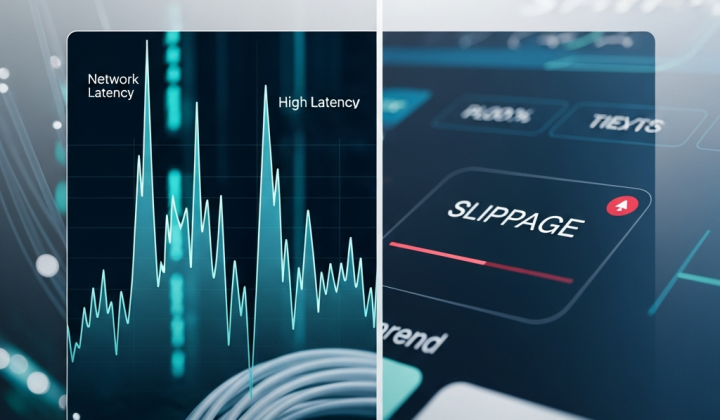
In the world of automated scalping, speed isn’t a luxury—it’s a prerequisite. By 2026, the gap between a home-office setup and a professional data center has narrowed, but the laws of physics remain. High win rate bots are almost always hosted on Virtual Private Servers (VPS) located in the same data centers as the exchange servers (co-location). Whether you are trading on a centralized exchange like Binance or a decentralized aggregator, reducing your round-trip time (RTT) to under 5 milliseconds is often the difference between getting filled at your price or being ‘front-run’ by a faster competitor.
Advanced Order Flow Analysis and Liquidity Clusters
Indicator-based trading is largely seen as a legacy approach in 2026. The most successful bots today focus on Order Flow. This involves analyzing the Limit Order Book (LOB) to see where the ‘whales’ are placing their bets. High win rate bots look for liquidity clusters—large concentrations of buy or sell orders that act as temporary magnets or barriers for price. By identifying ‘spoofing’ patterns or ‘iceberg’ orders, these bots can anticipate short-term price movements before they reflect on a standard candlestick chart.
Predictive AI and Machine Learning Integration
The biggest leap in 2026 is the democratization of Large Action Models (LAMs) and specialized neural networks in trading. High win rate scalping bots now utilize predictive modeling to forecast the next 10 to 60 seconds of price action. These models are trained on petabytes of historical tick data, allowing them to recognize ‘signatures’ in the tape that human eyes would never catch. These bots don’t just react to what happened; they calculate the probability of what is about to happen based on the current volume profile and volatility index.
Top Scalping Strategies Yielding Results This Year
While every bot developer keeps their ‘secret sauce’ under lock and key, several core strategies have proven to be the most resilient in the current 2026 market cycle.
Mean Reversion with Volatility Expansion
This strategy relies on the principle that price, when stretched too far from its average in a short period, will eventually snap back. However, the 2026 version of mean reversion is smarter. It uses ‘volatility filters’ to ensure the bot doesn’t try to catch a ‘falling knife’ during a genuine breakout. The bot calculates the Standard Deviation of price movement and only enters a trade when the price hits a 3-sigma or 4-sigma level while simultaneously detecting a decrease in aggressive market orders.
The Gamma Squeeze Bot: High-Octane Opportunities
With the continued growth of short-term options (0DTE), ‘gamma scalping’ has become a powerhouse strategy. Specialized bots monitor the options Greeks in real-time, anticipating when market makers will be forced to hedge their positions by buying or selling the underlying asset. This creates a predictable flow of liquidity that high win rate bots can exploit with extreme precision. These moves are often violent and short-lived, making them perfect for the scalper’s toolkit.

Sentiment Integration and Macro-Economic Scanners
The markets in 2026 are heavily influenced by instant information. High win rate scalping bots are now frequently connected to ‘sentiment engines’ that scrape social media, news wires, and even on-chain governance proposals. If a major influencer mentions a specific token, or if a central bank official makes an unscheduled remark, the bot can react in milliseconds—often before the news has even reached the front page of major financial sites. This ‘news-frontrunning’ is a high-risk, high-reward subset of scalping that requires sophisticated Natural Language Processing (NLP).
Navigating the Technical Hurdles
Despite the promise of high win rates, there are significant hurdles that traders must overcome to remain profitable over the long term.
Managing Slippage and ‘Ghost’ Liquidity
Slippage is the silent killer of scalping. In 2026, many exchanges utilize ‘dark pools’ and hidden liquidity, which can make the order book look deeper than it actually is. A high-quality bot must use ‘Smart Order Routing’ (SOR) to split orders across multiple venues or use ‘limit-only’ executions to avoid being ‘chopped’ by the spread. If your bot is experiencing more than 0.02% slippage on average, your high win rate might still result in a net loss.
Fee Structures and Net Profitability
Many novice traders overlook the impact of trading fees. Even with a 90% win rate, if the exchange takes 0.05% per trade and your average profit is 0.06%, the business model is unsustainable. Successful bot operators in 2026 often utilize ‘Maker’ strategies, where they provide liquidity to the book and receive a rebate, rather than ‘Taker’ strategies that pay a fee. This shift in the mathematical model is often what separates the hobbyist from the professional.
Risk Management: Beyond the Static Stop-Loss
The hallmark of a high win rate scalping bot isn’t just how it enters a trade, but how it exits. In 2026, static stop-losses are often ‘hunted’ by liquidity-seeking algorithms. Instead, modern bots use ‘Time-Based Stops’ and ‘Volatility-Adjusted Stops’. If a trade hasn’t moved into profit within a specific number of seconds, the bot exits regardless of the price. This prevents the bot from being trapped in a ‘sideways’ market where the risk of a sudden breakout against the position increases every second.
Furthermore, ‘Dynamic Position Sizing’ is critical. The bot should reduce its trade size during periods of extreme volatility (like a major economic release) and increase it when the market exhibits high-probability ‘regime’ characteristics. This ensures that the rare, inevitable losses are kept small relative to the steady stream of wins.
Conclusion: Choosing the Right Path for Automated Profits
As we look toward the remainder of 2026, the path to success with high win rate scalping bots lies in the intersection of high-speed technology and sophisticated data analysis. The ‘set and forget’ bots of the past have been replaced by adaptive systems that require regular maintenance and parameter tuning. For the dedicated trader, these tools represent the ultimate manifestation of the ‘edge’—the ability to process information and execute decisions at a scale and speed that the human brain cannot match.
Whether you are building your own bot using Python and advanced ML libraries or licensing a top-tier institutional platform, the fundamentals remain the same: prioritize speed, respect the fees, and never stop refining your logic. The 2026 market doesn’t reward participation; it rewards precision.