
The Evolution of Trading: Why Institutional Flow Matters in 2026
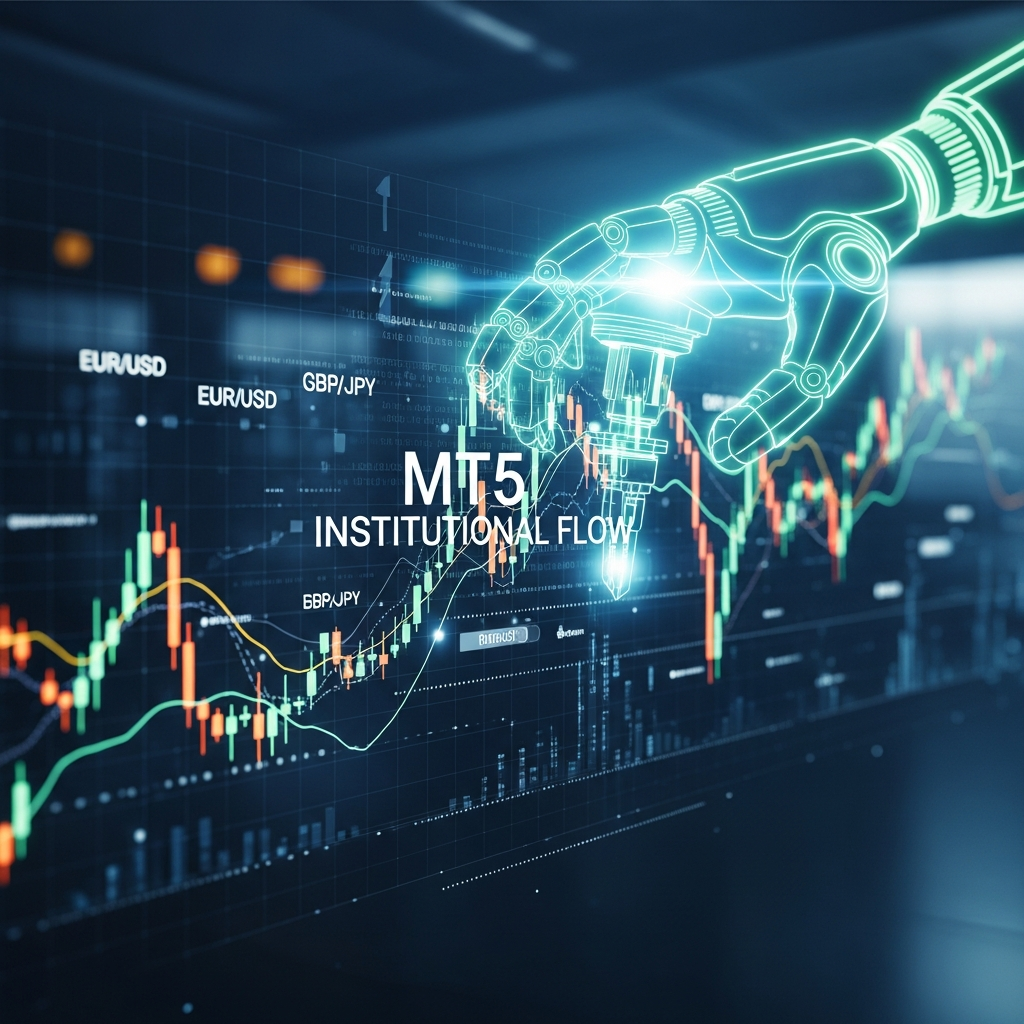
For decades, retail traders were left in the dark, relying on lagging indicators like the Relative Strength Index (RSI) or Moving Averages while institutional giants—the big banks, hedge funds, and sovereign wealth funds—operated on a completely different plane. However, as we move through 2026, the gap between retail and institutional capabilities has narrowed significantly. The catalyst for this change? The institutional flow trading robot mt5.
Institutional flow refers to the massive volume of buy and sell orders executed by large financial entities. These players don’t trade based on simple chart patterns; they trade based on liquidity, fundamental shifts, and massive capital allocations that move markets. Tracking this “smart money” is the holy grail of trading. An automated solution on MetaTrader 5 (MT5) that can decode these flows offers a professional edge that was once restricted to high-frequency trading (HFT) floors in London and New York.

Understanding the Mechanics of Institutional Flow
Before diving into how a robot handles these tasks, it is essential to understand what institutional flow actually looks like. Unlike retail orders, which are usually filled instantly, institutional orders are so large they cannot be executed at once without causing massive price slippage. To mitigate this, institutions use various tactics:
- Iceberg Orders: Large orders broken into small, visible pieces to hide the true size of the position.
- Liquidity Hunts: Moving the price toward areas where retail stop-losses are clustered to trigger the liquidity needed to fill a massive counter-position.
- Dark Pools: Private exchanges where institutions trade away from the public eye, though their footprints eventually appear in the volume and price action.
An institutional flow trading robot mt5 is designed to scan the Depth of Market (DOM) and Time and Sales data to identify these anomalies. It looks for “aggressive” market orders that overwhelm the limit orders, signaling that a major player is entering the fray.
Why MetaTrader 5 (MT5) is the Platform of Choice in 2026
While MT4 remains a nostalgic favorite for some, by 2026, MT5 has become the undisputed standard for professional-grade retail algorithmic trading. There are several technical reasons why an institutional flow robot requires MT5’s architecture:
Multi-Threading and 64-Bit Architecture
Analyzing order flow requires processing thousands of data points per second. MT5’s 64-bit multi-threaded environment allows the robot to perform complex calculations across multiple cores, ensuring that by the time a flow imbalance is detected, the execution happens in milliseconds. In the world of institutional flow, latency is the enemy.
Advanced Depth of Market (DOM)
MT5 provides a more robust DOM than its predecessor. It allows the robot to see the bid/ask volume at various price levels. By analyzing the “pulling and stacking” of limit orders, the robot can determine if a support level is genuine or if it is being manipulated by a “spoofing” algorithm to lure retail traders into a trap.
MQL5 Object-Oriented Programming
The MQL5 language is significantly faster and more flexible than MQL4. This allows developers to build sophisticated neural network modules within the institutional flow trading robot mt5. These modules can learn from historical flow patterns, adapting to changing market regimes without requiring manual recalibration every week.
Key Features of a High-Performance Institutional Flow Robot
If you are looking to deploy an automated system in 2026, it must go beyond simple price action. Here are the core features that define a true institutional-grade Expert Advisor (EA):
1. Footprint Chart Analysis
The robot should utilize footprint charting logic, which visualizes the traded volume at every price level within a single candle. This allows the bot to see “bid-ask imbalances.” When the volume on the buy side significantly outweighs the sell side at a specific price point, the robot identifies this as an institutional entry point.
2. VWAP and Standard Deviation Bands
The Volume Weighted Average Price (VWAP) is the “fair value” benchmark for institutions. Large players often aim to buy below the daily VWAP and sell above it. An effective institutional flow trading robot mt5 uses VWAP as a filter, ensuring it never enters a long position when the price is overextended, regardless of how strong the flow looks.
3. Sentiment and Macro Integration
In 2026, the best robots don’t just look at charts; they look at data. Advanced EAs now integrate real-time sentiment feeds and central bank interest rate swap data. If the institutional flow is bullish but the underlying macro sentiment is bearish, the robot may pass on the trade, recognizing it as a potential “bull trap.”
The Strategy: How the Robot Executes Trades
The logic of an institutional flow robot typically follows a specific sequence of “Confirmation Gates.” Here is a look at a standard execution flow for a long position:
Step 1: Liquidity Identification
The robot scans for “sell-side liquidity”—usually found below previous daily lows or significant swing lows. It waits for the price to dip into this zone, where retail stop-loss orders (which are sell orders) provide the liquidity for an institution to buy.
Step 2: Delta Divergence
The robot checks the cumulative delta—the difference between buying and selling volume. If the price is making a new low but the delta is increasing (showing more buying than selling), it signals that institutions are absorbing the retail sell orders. This is a classic “accumulation” phase.
Step 3: The Shift in Market Structure
Before entering, the robot waits for a minor shift in market structure on a lower timeframe (like the 1-minute or 5-minute chart). Once a previous peak is broken with high volume, the robot executes the trade with a stop loss placed just below the liquidity hunt zone.
The Importance of Low Latency and Infrastructure
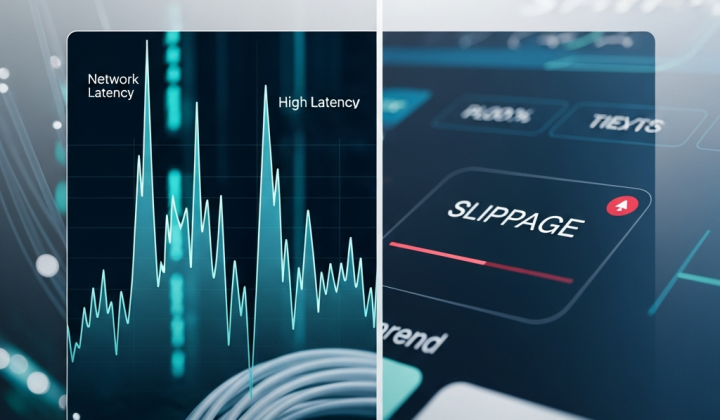
Running an institutional flow trading robot mt5 on a standard home laptop is a recipe for disaster. Because institutional flow strategies rely on capturing imbalances that may only exist for a few seconds, the infrastructure behind the robot is as important as the code itself.
In 2026, the standard setup involves a Virtual Private Server (VPS) located in the same data center as the broker’s trade server (typically in London or New York). This ensures “cross-connect” speeds of under 1 millisecond. Furthermore, choosing a broker with “Raw Spread” accounts and high-tier liquidity providers is vital. If your broker is taking the other side of your trade (B-Booking), they may manipulate the feed to prevent the robot from accurately detecting the real institutional flow.
Risk Management: The Institutional Way
Institutional traders are more concerned with risk than with profit. A professional institutional flow trading robot mt5 reflects this philosophy. It doesn’t use dangerous strategies like Martingale or Grid trading. Instead, it employs:
- Dynamic Position Sizing: Calculating the lot size based on a fixed percentage of account equity (e.g., 0.5% or 1% per trade).
- Time-Based Exits: If a trade based on institutional flow doesn’t move in the expected direction within a certain timeframe, the institutional “conviction” may have vanished, and the robot closes the position at breakeven.
- Slippage Protection: The robot monitors the spread and slippage. If the market becomes too thin or volatile (such as during a black-swan event), the robot halts trading to protect capital.
Future Trends: AI and Quantum Integration
As we look deeper into 2026, the integration of Large Language Models (LLMs) and early-stage quantum computing algorithms into MT5 EAs is becoming a reality. These “Quantum-Ready” flow robots can analyze the entire global correlation matrix—spotting how a move in the Japanese Yen and Gold is actually a precursor to an institutional flow shift in the S&P 500.
We are also seeing the rise of “Decentralized Order Flow” analysis. With more institutions moving toward blockchain-based settlement, robots are now beginning to scan on-chain data in real-time to supplement the traditional MT5 feed, providing a 360-degree view of global capital movement.
Conclusion: Is an Institutional Flow Robot Right for You?
The institutional flow trading robot mt5 represents the pinnacle of retail trading technology in 2026. It moves away from the “crystal ball” approach of traditional technical analysis and focuses on the cold, hard reality of supply and demand. However, it is not a “set and forget” money machine. It requires a trader who understands the underlying concepts of market liquidity and who can oversee the bot’s performance with a critical eye.
For those willing to invest in high-quality infrastructure and commit to learning the mechanics of smart money, these automated systems offer a path to consistency that was previously unimaginable. In a market dominated by algorithms, the only way to survive is to trade alongside the giants, not against them. By tracking the flow, you aren’t just guessing where the price will go—you are following the very entities that decide where it goes.