Introduction to Advanced Risk Management in 2026
As we navigate the trading landscape of 2026, the evolution of algorithmic trading has made it clear that a strategy is only as strong as its safety nets. For those utilizing the Deriv platform, specifically through DBot and Binary Bot, the term Deriv Bot Risk Management Blocks has become the cornerstone of sustainable profitability. In an era where market volatility can spike in milliseconds due to AI-driven institutional shifts, relying on a basic ‘buy’ and ‘sell’ logic is no longer sufficient.
Risk management isn’t just about stopping a bot when it loses; it is about the surgical application of logic to protect capital while maximizing the potential of every trade. This article serves as a comprehensive guide to understanding, building, and optimizing the specific blocks within the Deriv ecosystem that govern your financial exposure.
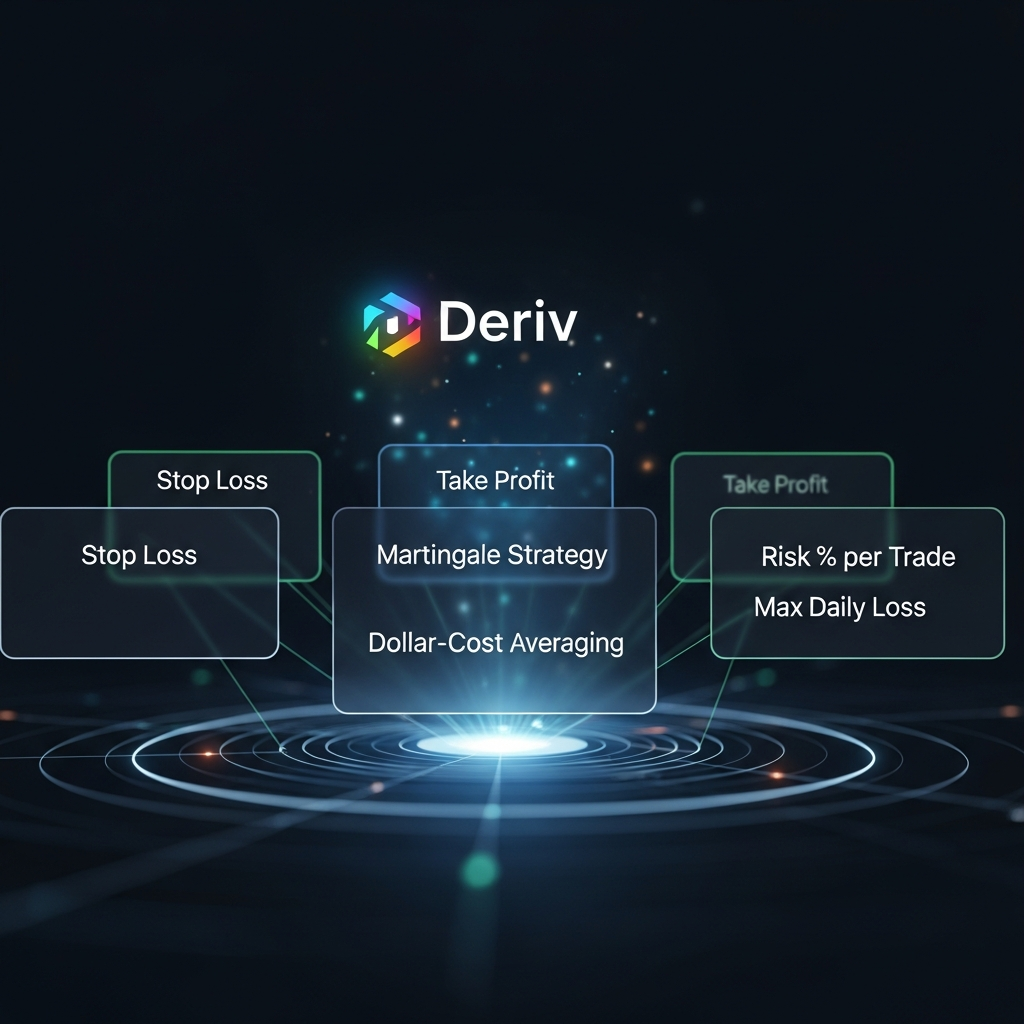
The Architecture of Deriv Bot Risk Management Blocks
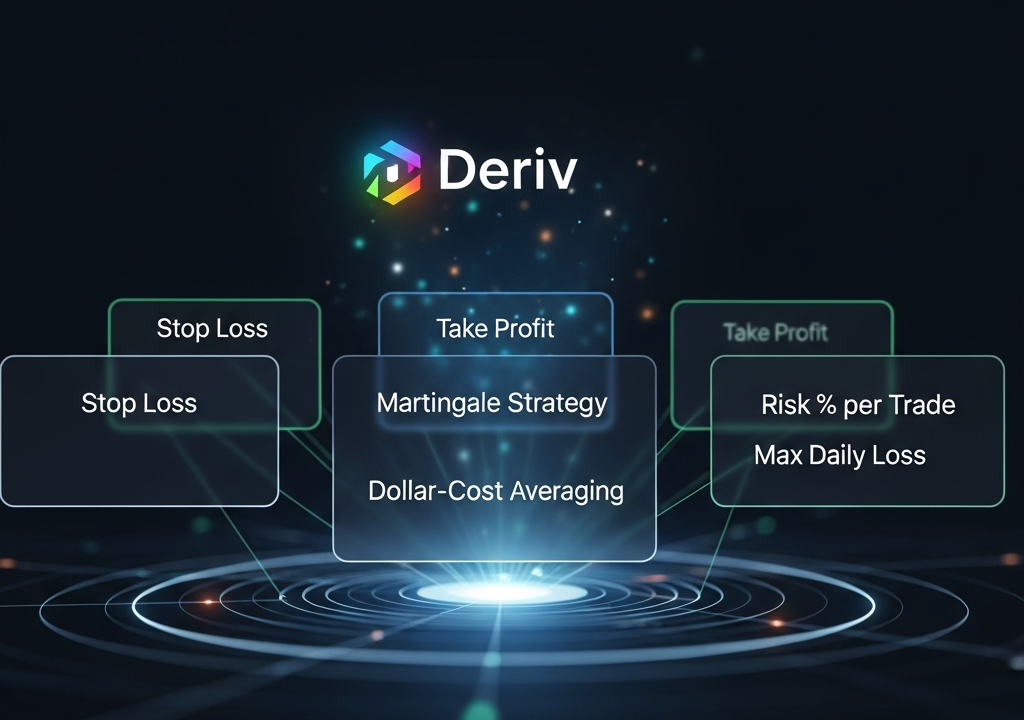
To master risk, one must first understand that Deriv’s visual programming interface does not have a single ‘Risk Management’ tab. Instead, risk management is an architectural framework built using a combination of Logic, Math, Variables, and After Purchase blocks. These elements work in tandem to create a feedback loop that monitors the health of your trading account in real-time.
Defining Your Variables
Every resilient bot starts with well-defined variables. In the context of 2026 trading standards, you should never hard-code values directly into your trade blocks. Instead, use variables for:
- Target Profit: The amount at which the bot should cease all operations.
- Stop Loss: The maximum drawdown the bot is allowed to sustain in a single session.
- Initial Stake: Your starting contract size.
- Win Stake: The amount used after a successful trade (often used in compounding).
- Max Consecutive Losses: A circuit breaker to stop the bot if the market trend is against your logic.
Building the Stop-Loss Logic Block
The most critical of all Deriv Bot Risk Management Blocks is the automated stop-loss. This is typically located within the ‘After Purchase’ (Block 4) area of your bot configuration. This block checks the total profit/loss after every contract is closed.
To implement this, you use a Logic Comparison Block. You compare the ‘Total Profit/Loss’ variable against your ‘Stop Loss’ variable (which should be a negative number). If the total loss is less than or equal to your stop-loss threshold, the bot is instructed to ‘Stop’ or ‘Notify’. In 2026, advanced traders also include a ‘Notification’ block that sends a webhook to their mobile device or Telegram, ensuring they are aware of the bot’s status even when away from the screen.
The Take-Profit Safeguard
Greed is the enemy of the automated trader. A Take-Profit block operates on the same logic as the Stop-Loss but monitors the upper threshold. By setting a hard limit on daily gains, you prevent the bot from running into the inevitable market reversal that follows a winning streak. This ‘Block’ ensures that your gains are realized and the bot rests until the next trading window.

Advanced Stake Management: Beyond Simple Martingale
While the Martingale strategy remains popular among beginners for its simplicity, professional users of Deriv Bot Risk Management Blocks in 2026 have moved toward more sophisticated stake adjustments. These include the D’Alembert system, Fibonacci sequences, or Custom Multipliers.
The Martingale Limiter Block
If you choose to use a Martingale (doubling stake after a loss), you must implement a Max Stake Block. This is a logic gate that checks if the next planned stake exceeds a certain percentage of your total balance. If it does, the bot should either reset to the initial stake or stop entirely. This prevents a single ‘bad run’ from wiping out an entire account balance—a common pitfall for unoptimized bots.
Dynamic Stake Sizing
In 2026, the most successful bots use dynamic stake sizing blocks. These blocks calculate the stake as a percentage of the current account balance (e.g., 0.5% or 1%). As your account grows, your stake grows; if your account shrinks, the stake automatically adjusts downward. This ensures that you are never over-leveraged during a drawdown period.
Logic Blocks for Market Filtering
Risk management isn’t just about managing money; it’s about managing *when* to trade. Modern Deriv bots utilize ‘Filter Blocks’ to assess market conditions before a trade is even placed. Using technical indicator blocks such as the Relative Strength Index (RSI) or Bollinger Bands allows the bot to determine if the market is too volatile or too stagnant.
The Volatility Filter
By using a ‘Math’ block to calculate the difference between the upper and lower Bollinger Bands, you can create a ‘Volatility Index’. If the gap is too narrow (low volatility) or too wide (extreme volatility), you can program the bot to ‘wait’ for a specific number of ticks. This prevents the bot from entering high-risk trades that don’t fit the strategy’s optimal environment.
The Importance of the ‘After Purchase’ Loop
The ‘After Purchase’ section is the brain of your risk management. This is where the Deriv Bot Risk Management Blocks perform their post-trade analysis. In this section, you should always include a ‘Wait’ block (usually 1-2 seconds) to prevent the bot from executing trades too rapidly, which can lead to execution errors or getting caught in ‘micro-trends’ that don’t align with your indicators.
Resetting Variables
A crucial part of the loop is the reset logic. If a trade is successful, many traders use a ‘Set Variable’ block to return the stake to the initial value. This ‘Reset Block’ is what separates a controlled bot from one that spirals out of control. Ensure your logic clearly defines the conditions for a reset versus the conditions for a continued progression.
Testing Risk Blocks with Virtual Accounts
Before deploying any new Deriv Bot Risk Management Blocks in a live environment in 2026, it is mandatory to utilize the Deriv Virtual Account. The platform’s backtesting capabilities allow you to see how your stop-loss and take-profit logic holds up under historical data. Look for ‘Maximum Drawdown’ during your tests—this will tell you if your risk blocks are set too tight or too loose.
Common Mistakes in Risk Block Configuration
- Over-nesting Logic: Creating too many ‘If’ statements inside each other can lead to lag in the bot’s execution.
- Ignoring Latency: In 2026, internet speeds are fast, but server-side latency still exists. Always build a small buffer into your stop-loss blocks.
- Static Stop-Losses: Markets change. A stop-loss that worked in January might be too narrow for the volatility of June. Update your variable blocks monthly.
The Future of Risk Management: AI Integration
As we look further into 2026 and beyond, Deriv is increasingly integrating AI-assisted blocks. These blocks can analyze your bot’s historical performance and suggest adjustments to your risk variables. While these are powerful, they should always be used as a ‘suggestion’ within your manual logic blocks, ensuring you maintain ultimate control over your capital.
Conclusion
Mastering Deriv Bot Risk Management Blocks is the difference between a gambling bot and a trading tool. By meticulously defining variables, implementing hard circuit breakers through the ‘After Purchase’ loop, and utilizing dynamic stake sizing, you create a system capable of weathering the inevitable storms of the financial markets. Remember: the goal of automated trading is not to win every trade, but to ensure that your winning days are larger than your losing days, and your account remains intact to trade another day. Start building your safety blocks today and secure your trading future in the 2026 market.