Introduction: The New Era of Market Timing
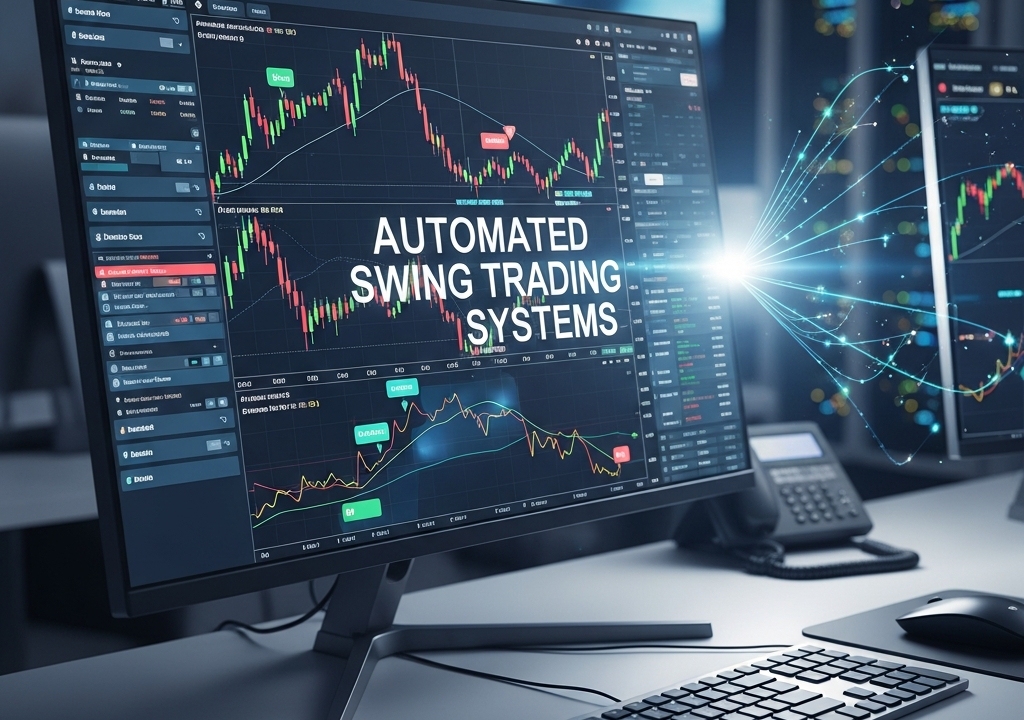
Swing trading has long been the preferred medium for investors who want to capture market trends over several days or weeks without the high-stress intensity of day trading or the agonizingly slow pace of value investing. However, as we move through 2026, the landscape has fundamentally shifted. The days of manually drawing trendlines and setting price alerts are being rapidly replaced by automated swing trading systems—sophisticated software capable of scanning thousands of tickers, executing orders in milliseconds, and managing risk with mathematical precision.
The transition to automation isn’t just about speed; it is about psychological resilience. In a world of 24/7 global markets and instant information flow, the human brain is often ill-equipped to handle the emotional volatility that comes with swing trading. This article explores the current state of automated swing trading systems, why they have become the gold standard for retail and institutional traders alike in 2026, and how you can leverage them to build a sustainable edge.
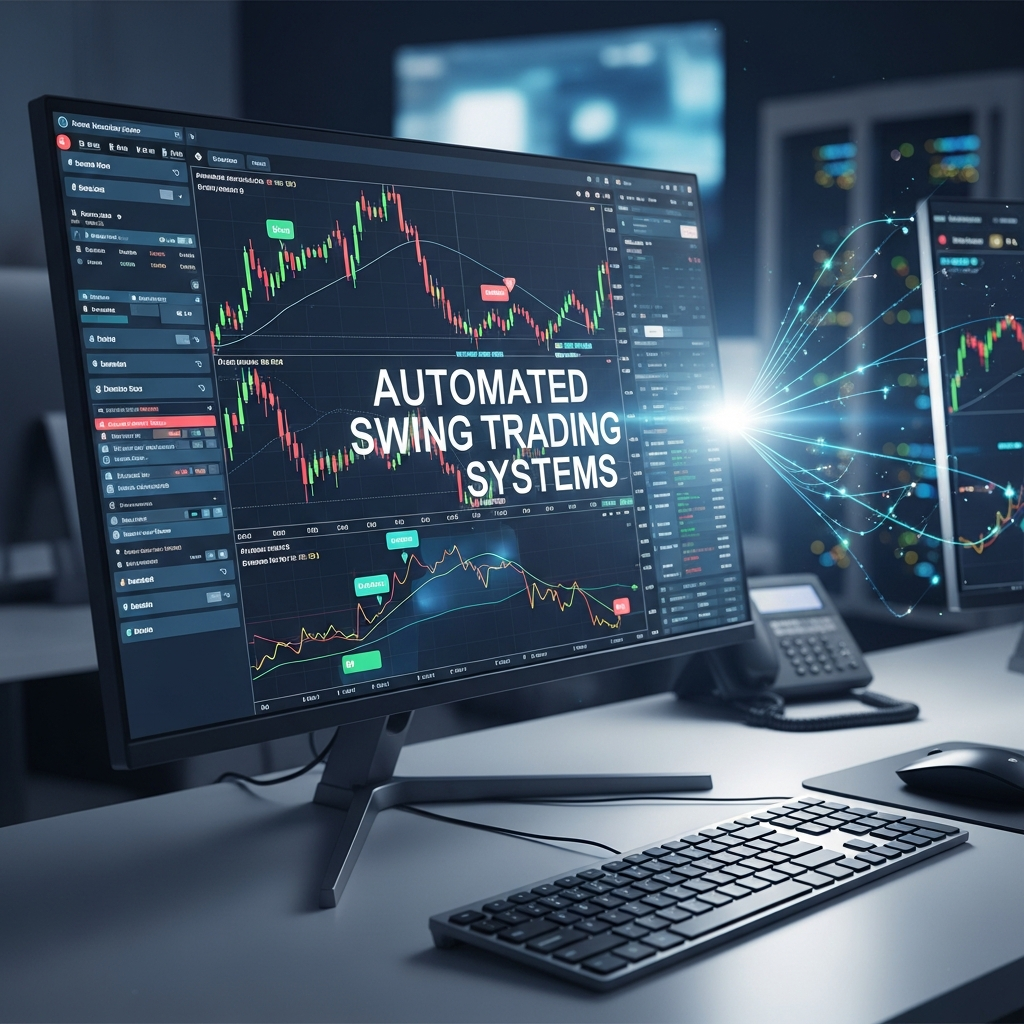
Understanding the Mechanics of Automated Swing Trading
At its core, an automated swing trading system is a set of rules—frequently powered by machine learning algorithms—that dictates when to buy and sell an asset. Unlike high-frequency trading (HFT) which operates on micro-intervals, swing systems focus on “intermediate” cycles. They seek to identify the ‘swing’ between oversold and overbought conditions or to ride a trend until it shows signs of exhaustion.
The Architecture of a Modern System
In 2026, these systems are no longer just simple “if-then” scripts. They are multi-layered architectures that typically include:
- Data Integration Layer: This pulls real-time price action, volume, and increasingly, alternative data like social sentiment or supply chain logistics.
- Signal Generation Engine: This is where the logic lives. It uses a combination of traditional technical indicators (RSI, MACD, Moving Averages) and predictive modeling to identify high-probability setups.
- Risk Management Module: This is perhaps the most critical component. It calculates position sizing based on account equity and current market volatility, ensuring that no single trade can derail the portfolio.
- Execution Gateway: The bridge between the software and the brokerage, designed to minimize slippage and ensure orders are filled at the best possible price.
The 2026 Shift: Why Automation is No Longer Optional
We have reached a tipping point where the sheer volume of data available makes manual swing trading nearly impossible for those looking for consistent alpha. In 2026, the market is characterized by “algorithmic dominance.” When large institutions deploy capital, they do so through execution bots. To compete, retail traders have had to level up.
Democratization of AI
Three years ago, building a custom AI trading bot required a degree in computer science. Today, low-code and no-code platforms allow traders to describe their strategy in plain English (Natural Language Processing), which the system then translates into executable code. This has opened the door for seasoned market veterans to automate their decades of experience without writing a single line of Python.
Sentiment and Contextual Awareness
One of the biggest breakthroughs we’ve seen in 2026 is the integration of local Large Language Models (LLMs) directly into trading systems. These systems don’t just look at price; they “read” the news, earnings transcripts, and even geopolitical reports in real-time. If a central bank governor makes a hawkish comment mid-trade, an automated system can adjust its stop-loss or exit the position before a human has even finished reading the headline.
Key Strategies Dominating Automated Swing Trading
While the tools have changed, the fundamental principles of market movement remain. However, automation allows these principles to be applied with rigorous consistency. Here are the leading strategies used in 2026:
1. Mean Reversion with Volatility Filters
This strategy assumes that price will eventually return to its average. Automated systems use Bollinger Bands or Keltner Channels to identify extreme deviations from the mean. In 2026, the “edge” comes from adding a volatility filter—only taking the trade when market noise is low, which increases the probability of a clean reversal.
2. Momentum and Trend Following
Automated trend following is about identifying the path of least resistance. Using multi-timeframe analysis, a system might look for a bullish trend on the daily chart and then execute trades based on pullbacks on the 4-hour chart. Automation ensures that the trader doesn’t “chase” the move too late, a common human error.
3. Statistical Arbitrage (Pairs Trading)
This involves trading two highly correlated assets against each other. For example, if two tech giants usually move in lockstep but suddenly diverge, the automated system will sell the overperformer and buy the underperformer, betting on the gap closing. The complexity of calculating these correlations in real-time makes automation essential here.
The Critical Importance of Backtesting and Walk-Forward Analysis
One of the most dangerous traps for new automated traders is “curve-fitting.” This happens when a system is optimized so perfectly for past data that it fails to perform in the live, unpredictable market. In 2026, professional-grade systems avoid this through a process called Walk-Forward Analysis.
Instead of testing a strategy on five years of data all at once, the data is broken into segments. The system is optimized on one segment (In-Sample) and then tested on the next segment (Out-of-Sample) that it has never seen before. This mimics live trading and provides a much more realistic expectation of future performance. If a strategy cannot survive a walk-forward test, it is discarded, regardless of how much profit it showed in a standard backtest.
Risk Management: The “Automated” Safety Net
The primary reason traders fail is not a lack of a good strategy, but a lack of disciplined risk management. Automated swing trading systems solve this by removing the human element from the “panic” phase of trading. Modern systems in 2026 utilize:
- Dynamic Stop Losses: Rather than a static price, stops move based on Average True Range (ATR). If the market becomes more volatile, the stop widens; if it calms down, it tightens.
- Correlation Checks: A system will prevent a trader from being 100% long in one sector. If the system already has three long positions in semiconductor stocks, it will automatically decline a fourth to prevent over-exposure to a single sector crash.
- Automated Deleveraging: If the account hits a certain drawdown percentage (e.g., 5% loss in a week), the system can be programmed to automatically reduce position sizes or stop trading entirely for a “cooling off” period.
Choosing the Right Platform for 2026
The market for trading platforms has matured significantly. Traders generally fall into two camps: the “Build” camp and the “Plug-and-Play” camp.
The Build Camp (Python & C#)
For those with technical skills, using libraries like Pandas, TA-Lib, and specialized APIs (like Alpaca or Interactive Brokers) offers the ultimate flexibility. In 2026, many traders use edge-computing devices to run these bots locally to minimize latency and maintain data privacy.
The Plug-and-Play Camp
Cloud-based platforms have become incredibly powerful. These services host your bots on their servers, ensuring 100% uptime. Many now offer “Marketplaces” where you can rent algorithms from proven developers. However, the caveat remains: always perform your own due diligence on any third-party system.
The Human Element: The “Pilot in the Cockpit”
It is a common misconception that automated trading is “set it and forget it.” In reality, the most successful traders in 2026 act like pilots. The autopilot handles the monotonous task of flying the plane, but the pilot is there to monitor the instruments, adjust for unexpected weather, and take manual control if the system behaves erratically.
This involves a weekly review of the system’s performance metrics, adjusting parameters as market regimes shift (e.g., moving from a trending market to a sideways market), and ensuring that the underlying logic of the strategy still holds true in the current economic environment.
Conclusion: The Future of Your Portfolio
Automated swing trading systems represent the pinnacle of modern retail finance. They provide the discipline, speed, and analytical depth required to navigate the complex markets of 2026. By removing emotional bias and implementing rigorous risk controls, these systems allow traders to focus on high-level strategy rather than the minutiae of execution.
Whether you are a seasoned trader looking to reclaim your time or a newcomer seeking a systematic approach to the markets, the path forward is clear. Automation is no longer a luxury for the elite—it is the essential tool for anyone serious about long-term capital appreciation in the digital age. The transition may require a learning curve, but the reward—a disciplined, emotionless, and scalable trading operation—is well worth the investment.