The Evolution of Execution: Why Speed Still Rules in 2026
The landscape of algorithmic trading has shifted dramatically over the last few years. As we move through 2026, the complexity of the markets and the sheer volume of automated orders have made the ‘latency gap’ a critical factor for success. For traders using MetaTrader 5 (MT5) and Expert Advisors (EAs), the infrastructure behind the trade is now just as important as the logic within the code. If your EA is executing on a home computer or a generic web server, you are likely losing money before the trade even hits the broker’s book.
Low latency isn’t just a technical buzzword; it is the physical distance between your strategy and the market’s liquidity. In this guide, we will explore why a dedicated MT5 VPS is the standard for serious traders and how to optimize your setup for near-instant execution.
Understanding Latency in the MT5 Ecosystem
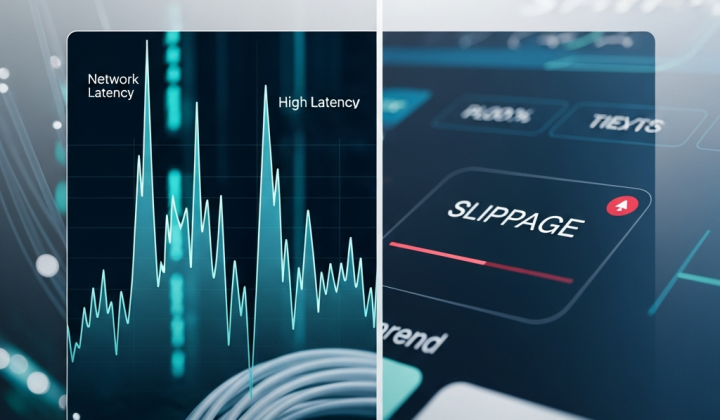
Latency is the time it takes for a data packet to travel from one point to another. In the context of MT5 trading, this involves a round trip: your EA detects a signal, sends an order to the broker’s server, and the broker acknowledges the execution. This is measured in milliseconds (ms).
While 100ms might seem fast to a human, it is an eternity for an EA designed for scalping or news trading. During high volatility, prices can move several pips in a matter of milliseconds. If your execution is delayed, you suffer from ‘slippage‘—the difference between the price you requested and the price you actually received. Over hundreds of trades, slippage can turn a profitable strategy into a losing one.
The Mechanics of Proximity Hosting
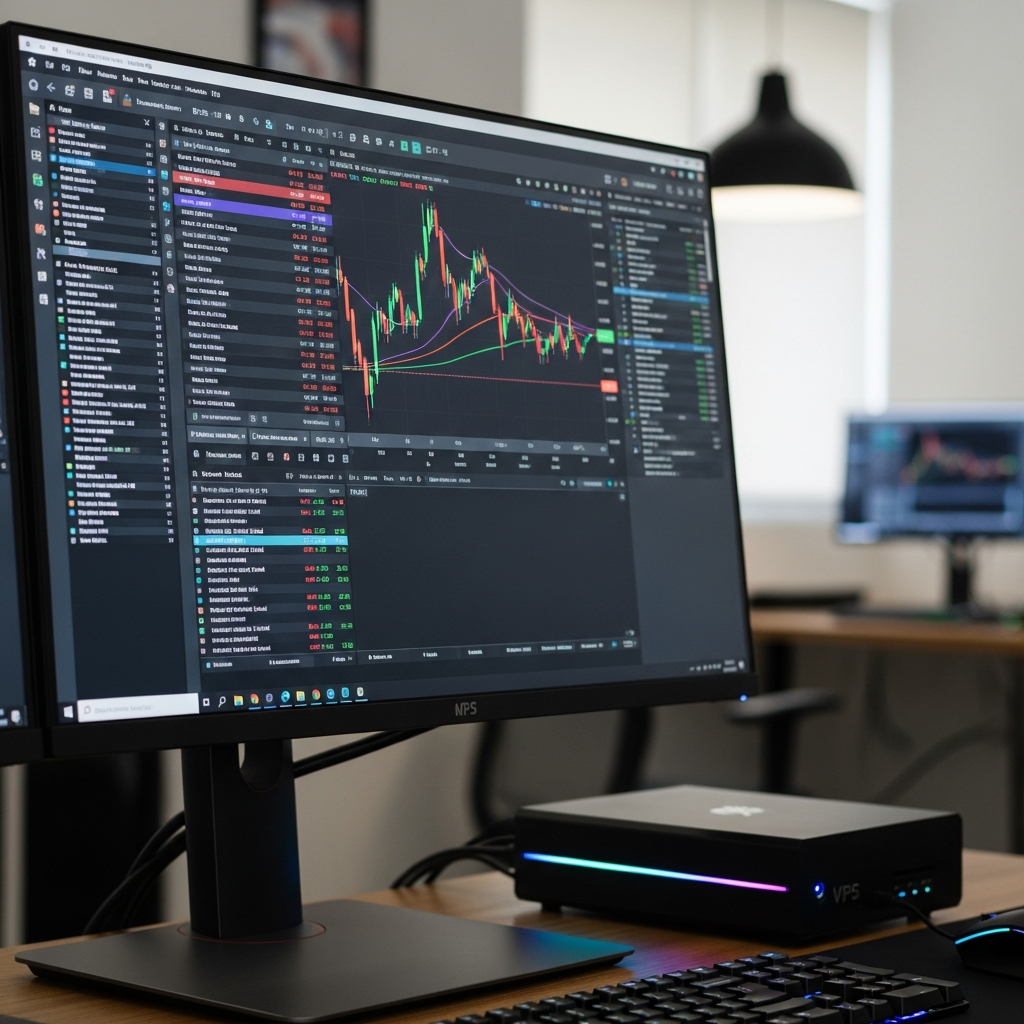
The primary way to reduce latency is proximity hosting. Most major forex and CFD brokers host their execution engines in specific data centers, such as Equinix NY4 (New York), LD4 (London), or TY3 (Tokyo). A low-latency MT5 VPS provider places their servers in these exact same buildings or within a very short fiber-optic distance. By using a ‘cross-connect,’ the physical connection between the VPS and the broker’s server, latency can be reduced to sub-1ms levels.
Why Your Home PC is Your Greatest Liability
Many retail traders start by running EAs on their personal computers. While this works for testing, it is a recipe for disaster in a live environment. There are three main reasons why a home setup fails compared to a professional VPS:
- Uptime and Reliability: A home PC is subject to Windows updates, power outages, and ISP fluctuations. A professional trading VPS offers 99.99% uptime with redundant power sources.
- Internet Routing: Your home internet is routed through various public nodes, which adds ‘hops’ and increases latency. A trading VPS uses optimized routing paths designed for financial data.
- Resource Contention: Running MT5 alongside a web browser, Spotify, or other applications causes CPU spikes that can delay EA calculations. A VPS provides dedicated resources solely for your trading terminal.
The Technical Architecture of a 2026 Trading VPS
The technology powering VPS hosting has evolved. In 2026, a ‘good’ VPS is no longer enough; you need high-spec hardware to handle the multi-threaded capabilities of MetaTrader 5. MT5 is much more resource-intensive than its predecessor, MT4, especially when running multiple EAs or complex indicators.
NVMe Storage and DDR5 RAM
Mechanical hard drives are long gone, and even standard SSDs are becoming secondary to NVMe (Non-Volatile Memory Express) drives. NVMe storage allows for significantly faster read/write speeds, which is crucial when MT5 is writing large log files or accessing historical data for backtesting. Coupled with DDR5 RAM, the throughput of data within the server ensures that your EA’s logic is processed without a bottleneck.
High-Frequency CPU Cores
For MT5, clock speed is often more important than the number of cores. Look for a VPS provider offering high-frequency CPUs (3.5GHz and above). Since the execution of a single EA’s logic is often a serial process, a faster single-core speed directly translates to faster trade signals.
The Impact of Slippage on EA Profitability
To visualize the importance of low latency, let’s look at a scalping EA. Imagine a strategy that aims for a 2-pip profit per trade. If your latency is high and you experience 0.5 pips of slippage on entry and 0.5 pips on exit, you have effectively lost 50% of your potential profit to technical inefficiency. In 2026’s hyper-competitive market, those 0.5 pips are the difference between a growing account and a stagnant one.
Virtualization: KVM vs. OpenVZ
Not all virtualization technologies are created equal. When selecting an MT5 VPS, always opt for KVM (Kernel-based Virtual Machine) virtualization. KVM ensures that the resources (CPU, RAM) allocated to your VPS are truly yours. Some providers use OpenVZ, which allows for ‘overselling’—sharing resources across many users. If another user on an OpenVZ server has a resource-heavy EA, it can slow down your terminal. KVM provides a ‘hard’ wall of resources, ensuring consistent performance regardless of other users on the host.
How to Measure and Optimize Your MT5 Latency
Once you have your VPS, you need to verify its performance. Inside the MT5 terminal, you can look at the ‘Network’ icon in the bottom right corner. Clicking this will show the latency to various broker access points. However, this only tells half the story. To get a true sense of execution speed, you should look at the ‘Journal’ tab after a trade is placed. It will log the time from ‘Request sent’ to ‘Order filled.’
Optimizing the MT5 Environment
Even on a powerful VPS, you should optimize the MT5 software to ensure maximum speed:
- Limit Max Bars in Charts: Go to Tools > Options > Charts and reduce ‘Max bars in chart’ to 5,000 or less. This reduces the RAM load significantly.
- Disable Unnecessary Sound Alerts: These consume minor but unnecessary CPU cycles.
- Minimize Visible Charts: Only keep charts open that the EA is actively trading.
- Hide Symbols in Market Watch: Only show the symbols your EA needs. MT5 updates prices for every symbol visible in the Market Watch, which can consume significant bandwidth during volatile sessions.
The Security Aspect: Protecting Your Intellectual Property
Your EAs are your intellectual property. A reputable VPS provider in 2026 offers more than just speed; they offer security. This includes hardware-level DDoS protection to prevent malicious actors from knocking your terminal offline during a trade. Furthermore, a professional VPS setup allows you to keep your EA running 24/7 without having your local computer vulnerable to remote access or physical theft of your trading logic.
Future-Proofing Your Trading Strategy
As we look deeper into 2026, the rise of AI-driven EAs has changed the requirements for VPS hosting. AI models require more computational power for real-time data analysis. We are beginning to see ‘GPU-accelerated’ VPS options for traders using neural networks for market prediction. While not necessary for standard EAs, it is a trend to watch if you are on the cutting edge of algorithmic design.
Conclusion: The VPS as a Competitive Advantage
In the modern era of trading, your infrastructure is an extension of your strategy. A low-latency MT5 VPS is no longer an optional luxury; it is a fundamental requirement for anyone serious about automated trading. By placing your Expert Advisors in a high-performance, proximity-hosted environment, you eliminate the variables of internet instability, hardware failure, and excessive slippage.
When choosing a provider, don’t just look for the lowest price. Look for proximity to your broker’s specific data center, NVMe-backed hardware, and KVM virtualization. In the world of EAs, those few milliseconds you save today will translate directly into the equity growth of your account tomorrow. High-frequency execution is the standard, and with the right VPS, your EA will have the environment it needs to thrive in the complex markets of 2026.